





Effective Mental Health Activities for Stressed High School Students
Benefits of Eustress | Cognitive Development | Problem-Solving Skills
How to stay sane, strong, and smart with mental health activities in the most chaotic years of your life?
High school life can feel overwhelming. Your backpack often feels heavier than your emotions. Deadlines appear like unwanted notifications. Everyone expects you to figure out your future quickly. Students face academic pressure, social expectations, and digital stress every day. These pressures add up quickly. Stress often becomes a constant part of high school life.
So how do students stay mentally stable, emotionally strong, and academically capable in this chaotic journey of high school?
The answer lies in smart, engaging, and scientifically backed mental health activities that help build resilience, not just quick fixes, but lifelong stress management skills. Let’s dive into the best mental health activities for high school students. For more articles like this, check out our JDN Tuition Blog Page and Google Business Profile.
Why is High School So Stressful for Students?
Before jumping into the solutions, it is better to understand why stress feels so intense during high school years. In 2018, a report by the Data Resource Center for Child and Adolescent Health demonstrated that 22.1% of children ranging from 3 to 7 years of age have a mental, emotional, developmental, or behavioral concern (Deaton et al., 2022). However, in 2024, the CDC report showed that the problem is getting worse: According to the data, in 2021, 40% of high school students persistently felt sad or hopeless during the past year (CDC, 2024). Here is why it gets so intense during high school years;
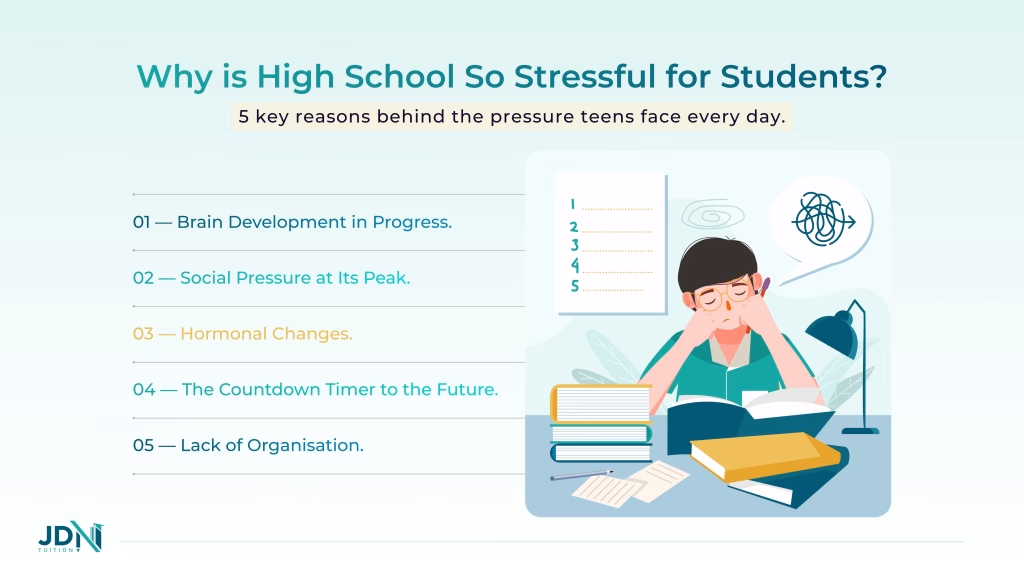
Brain Development in Progress
In their high school years, teenagers are still developing core areas of their brains, especially the ones responsible for cognitive development, decision-making, emotional regulation, and problem-solving skills. This translates into academic pressure, social expectations, and identity changes that feel heavier.
Social Pressure at Its Peak
Friendships, peer pressure, and social media put students in a constant comparison loop. Since strong social skills are still being developed, conflicts or loneliness can increase stress levels. This is where mental health activities can help students manage emotions, reduce comparison, and build healthier social confidence.
Hormonal Changes
Some students have just hit puberty, and others are also going through hormonal shifts. So, this is not just emotional– it’s hormonal. Therefore, hormonal shifts amplify reactions and sensitivity to stress.
The Countdown Timer to the Future
College admissions, career choices, exam results, extracurriculars– the pressure of doing ‘it all’ can turn a student’s life into a stress marathon.
Lack of Organisation
High school students are less likely to be organised. Students with poor organisational skills tend to experience more stress in high school. This is usually because students are not properly prepared for the tools and the understanding needed to learn.
Understanding these realities is the first step towards managing them with confidence.
Best Mental Health Techniques For Students
Here are some of the simple yet effective mental health activities and techniques for high school students to improve their coping skills.
1. Mindful Mornings
Most students wake up like they are in a high-speed chase; they hit the alarm, panic, rush, and repeat. However, a slow and calmer morning can make the rest of the day feel lighter. Some of the techniques that can help make your whole day better include breathing techniques for anxiety and positive self-talk at the start of the day.
Simple breathing techniques help activate the body’s parasympathetic nervous system, which is responsible for reducing anxiety and slowing down the heart rate. One of the best options for practising mindfulness is the 4-7-8 breathing technique.
- Inhale your breath for 4 seconds.
- Hold your breath for 7 seconds.
- Exhale is out in 8 seconds.
Positive self-talk in the morning sets a positive tone for the rest of the day. For example, instead of saying this, ‘I am going to fail today’s test because it’s my least favourite subject’, say this, ‘I have prepared well, and I’ve got this.’ Positive self-talk is not cheesy; it’s cognitive science. According to research, positive self-talk helps improve cognitive development, academic performance, and self-confidence. It shifts the brain focus away from fear and leads it toward problem-solving and critical thinking.
Remember, you attract what you say often.
2. Journaling
What does journaling do for mental health? Journaling for mental health feels like a personal unloading station for fears, thoughts, dreams, and emotions. Journaling is a very simple yet effective technique for teens and high school students to express their thoughts and emotions. By jotting down their emotions and reflecting on their experiences, high school teens can get clarity and insights into their emotional state. The journaling activity encourages introspection and helps high school students who are stressed with processing difficult events and recognizing their emotional patterns. It can also be a student’s safe space to vent frustrations, celebrate achievements, and keep track of their progress over time.
Practicing journaling in the classroom is also a simple and powerful way for students to practice self-reflection, emotional well-being, and stress management. Decades of research show that regular journaling practice is associated with improved mood, reduced anxiety, and greater self-awareness.
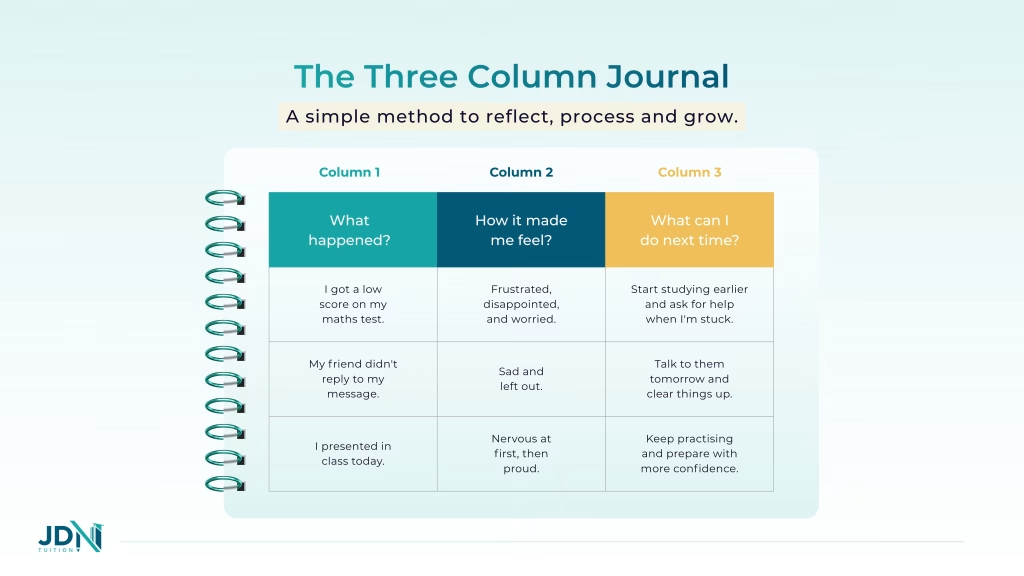
One effective method can be the Three Column Journal:
- Column 1 should include what happened.
- Column 2 must include ‘how it made me feel?’
- Column 3 should include ‘What can I do next time?’
In addition to this, journaling also helps support childhood development by strengthening emotional literacy, something schools rarely teach directly.
3. Art Therapy
Some feelings don’t fit into a sentence, but they can pour perfectly onto paper.
Creative art therapy includes activities like painting, drawing, or sculpture. These creative activities may have therapeutic effects for teens in high school. Creative arts therapy helps students to express feelings and emotions that may be difficult to articulate with words, providing them with a safe outlet for self-expression.
According to research, expressive arts include painting, drawing, crafting, playing music, writing, sculpting, and singing. These mental health activities help individuals unlock emotions and understand what is truly important to them (Vaartio-Rajalin, 2021).
Whether you are struggling with sadness, anxiety, or anger, the process of creating something artistic can help stressed high school students explore their emotions, and it opens the door for new perspectives. Moreover, a study in the journal Arts and Health demonstrated that just 45 minutes of creative activity significantly helps lower the cortisol levels. That’s not just fun; that’s therapy backed by science. Art activities can be performed individually or in a group setting, making them versatile tools for emotional exploration.
Students can try free drawing, painting emotions as colours, sculpting stress out of clay, colouring mandalas for relaxation, and making a vision board. As a result, these mental health activities create a healthy emotional outlet. Instead of bottling everything up, students get a powerful and creative way to express their feelings.
Hence, expressing through art hurts no one.
4. Physical Activity And Movement
Physical activity and exercise are one of the most underrated tools for mental health. Regular movement or exercise is not only good for the body but also for the mind. Students in high school don’t need gym membership or fancy yoga pants; just movement, in any form, boosts mental health dramatically. Engaging in physical activity helps increase endorphins (the happy hormones), serotonin (the mood stabilizer), oxygen flow to the brain, and social skills when done in groups.
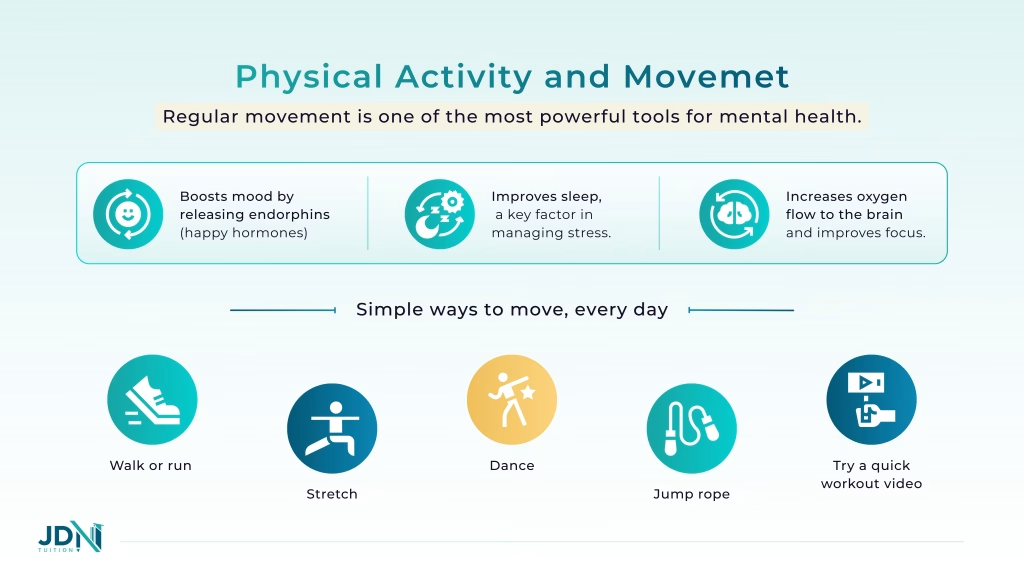
According to research, physical activity like running, swimming, walking, stretching, and dancing helps ease tension in the body, produces endorphins and other happy hormones, and supports a calm mind (Mikkelsen et al., 2017).
Furthermore, physical activity also improves sleep, a major factor in stressed high school students. Students can try dance breaks between study sessions, quick runs, a simple stretching routine, jumping rope, and simple YouTube workout videos. For extroverts, who enjoy social interactions, participating in team sports can also provide a sense of community and belonging, further enhancing their mental well-being. Therefore, these movement-based wellness activities are not just for physical health–they are for emotional balance.
Reminder: A healthy body has a healthy mind.
Feeling overwhelmed by work overload, exams, and school? JDN Tuition gives you a mental health boost through their personalised online tutoring that helps rebuild confidence, reduce anxiety, and turn studying into a calm and easy process. Our dedicated tutors not only help you understand complex subjects, but also help you find your own pace, and actually enjoy learning– a supportive system built for stressed high school students.
Book us now to start your mental health boosting learning journey today.
5. Relaxation Therapy Techniques
Relaxation techniques are powerful mental health activities that help students slow down an overactive nervous system. These techniques are mostly used by psychologists, counselors, and therapists around the world. Guided Imagery is one of the most popular examples of relaxation therapy techniques that involves visualising beautiful scenes or positive experiences. This method allows students to use their imagination to escape stressful thoughts and focus on calming and peaceful mental images.
How is guided imagery done? It can be done through audio recordings or by having a therapist or a trusted adult guide you through the process. It is a wonderful way for stressed teens in high school to practice relaxation, manage anxiety, and develop a sense of control over their emotions. Furthermore, some other relaxation therapy techniques include progressive muscle relaxation, music therapy, body scanning, and hot showers to relax tense muscles.
Even 10 minutes of focused therapy can reset the mind and promote stress management in students.
6. Active Learning: A Mental Health Booster
Wasn’t active learning a study technique? The majority of the students think that active learning is just a study technique, but it is also a powerful mental health activity. When students learn through discussion, movement, creativity, and hands-on activities, their brain releases dopamine, the motivation chemical. This chemical helps reduce stress, improve focus, and make learning fun by inducing positive thinking in students.
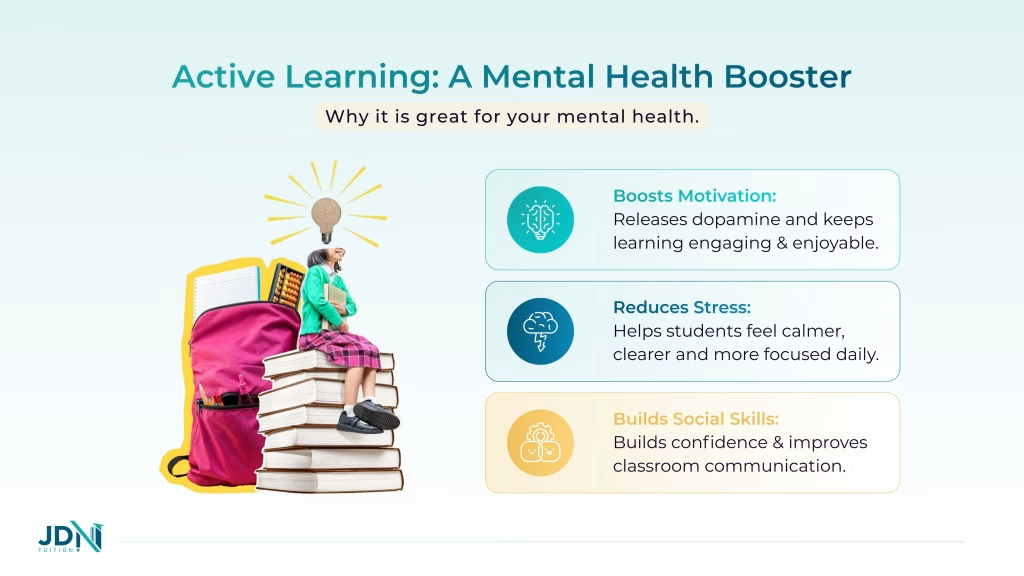
In addition to this, learning through discussion and hands-on tasks also helps strengthen social skills in students. Examples of active learning include explaining a difficult concept to a friend, using mind maps, and applying knowledge to real-life scenarios. Consequently, we can say that active learning transforms studying from a stressful chore into an engaging activity.
That’s a win-win; you learn, and your mental health thrives.
Bringing It All Together: Mental Health Activities for Students
Mental health for stressed high school students is not about eliminating stress completely; it’s about understanding how to manage it with strength, confidence, and balance. High school students do not just need academic skills; they need life skills, emotional resilience, and strong coping strategies to go through this complex and stressful high school time period.

Mental health activities such as journaling, art therapy, breathing exercises, active learning, and relaxation techniques help students manage stress more effectively. These activities build confidence, improve emotional well-being, and help students enjoy their school years instead of simply surviving them.
The goal is to redefine stress into strength, fear into focus, and confusion into a clear vision. With the right wellness activities, good habits, and a strong mental health care plan, every stressed high school can thrive, not just in school, but in life beyond class as well.
Choose JDN Tuition if You are Looking for Emotional Support Along with Academic Excellence
At JDN Tuition, we believe that students don’t just need academic help; they need emotional support too. That’s why we create personalised study plans for every student. Each plan matches their learning pace, mental health needs, and study style. This approach helps students build healthy learning habits and makes school feel less stressful.
Our dedicated tutors regularly check in with students and celebrate every achievement, big or small. They also teach simple stress-management techniques and create a safe, supportive space where students can share their worries without fear of judgment. We believe strong mental health is the foundation of strong academic success.
In Australia, Mental Health Awareness Month is observed every October, reminding families how important it is to support people of all ages emotionally. At JDN Tuition, we live that mission every day, helping students feel capable, calm, and ready to succeed. If you want that support in your child’s tutoring, contact us today and check out our reviews. Book a FREE consultation call today to get started with expert guidance and personalised support for your learning needs.
Improve Results. Start Today.
 Book a FREE Call: (02) 7202 1930
 Email us: [email protected]
What are the four major pillars of mental health?
The four major pillars of mental health are Emotional, Psychological, Social, and Physical well-being. Together, they shape how we handle stress, build relationships, make decisions, and maintain a healthy mind–body balance.
What are the five golden rules of mental health?
If someone you love is struggling with a mental health condition, follow these five be there golden rules to support them. Say what you see and show that you care. Hear them out without judgment. Know your role and offer support when needed. Finally, connect them with professional help if necessary.
What is the 3-3-3 technique in mental health?
The 3-3-3 rule in mental health is a quick grounding technique for anxiety: name three things you see, three things you hear, and move three parts of your body. It helps bring your mind back to the present moment and reduces anxious thoughts instantly.