





How Spaced Repetition Can Boost Your Exam Performance?
Brain Power | Benefits of Eustress | Study Schedule
If you have spent hours studying, only to forget half of the content by the time the exam or quiz arrives, you need spaced repetition. Students from all over the world face this same frustrating cycle: study, forget, repeat. But what if you have a smarter way to learn? Study method that actually helps you remember what you have studied, without increasing your workload.
Welcome to the world of spaced repetition, arguably one of the most impactful, scientifically backed memory strategies to ever exist. And the amazing part? It works every time, for every subject, every student, and every learning style.
Let’s dive deeper into how you can actually use it to improve your grades, boost your recall, and turn studying from a grind into a strategy.
How Does Learning Slip Away So Quickly?
Here is the not-so-fun truth: our brain is designed in a way that it forgets. In the 1880s, a psychologist named Hermann Ebbinghaus discovered the ‘forgetting curve’, which demonstrates that humans forget up to 60% of information within 24 hours, and around 90% in a week, unless we revise it.
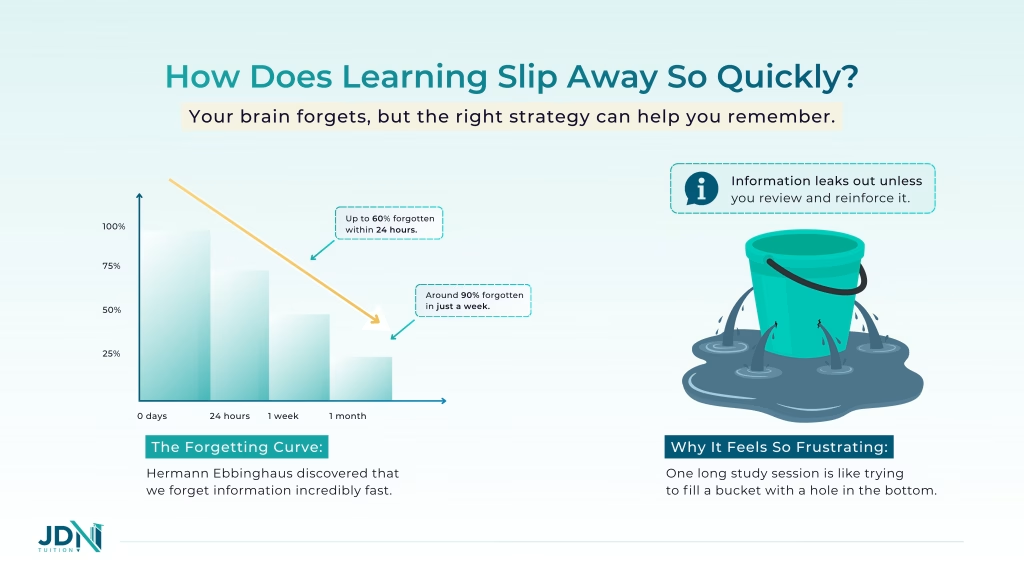 It means one lengthy study session is actually like trying to fill a bucket with a hole at the bottom of it.
But here is the plot: Ebbinghaus also discovered its antidote– a way to slow down the forgetting, strengthen memory, and lock information in place.
It is the Space Repetition method.
What Is Spaced Repetition?
Now, many people don’t even understand what spaced repetition is, and it is often overcomplicated on websites and videos. So here you go with its right definition in simple terms.
“Spaced repetition is reviewing your previously learned lessons repeatedly, adding increasing intervals of time between reviews, so that you remember the information for a longer period of time”.
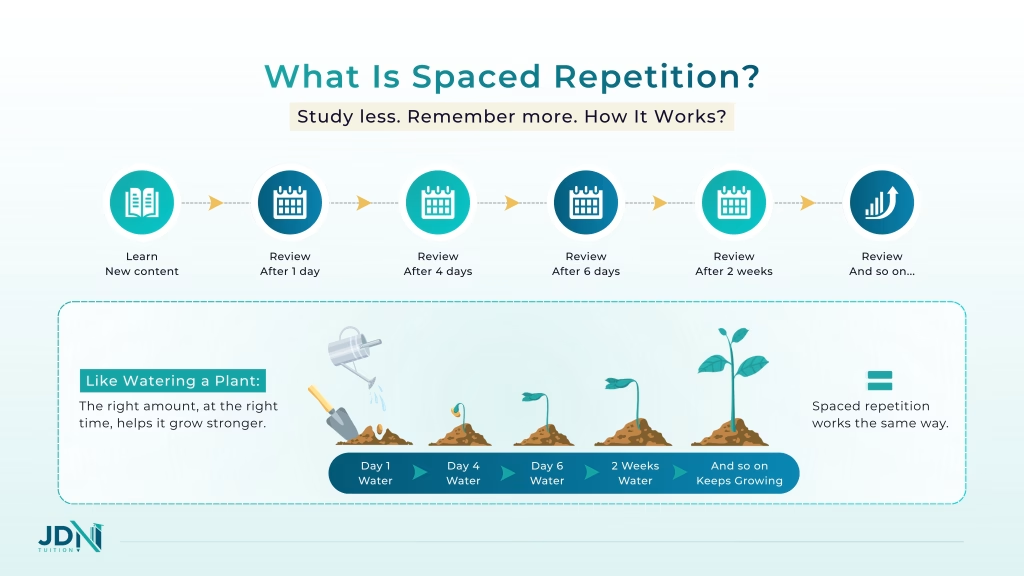
Spaced repetition is just like watering a plant. You don’t pour 20 litres of water on a plant one day and hope this water lasts the whole month. The plants need to be watered in intervals, just enough at the right time, for them to grow faster and stronger.
Spaced repetition works exactly the same way. You consume or take in content, then you review it at increasing intervals: after 1 day, then 4 days, then 6 days, then two weeks, and so on. Every time a student revisits a concept before they start to forget it, their brain power gets strengthened. Eventually, that data becomes deeply rooted and kind of impossible to shake off. This is why top learners, athletes, medical students, and memory champions use this study method.
Why Spaced Repetition Is Impactful?
This is not a trendy TikTok hack. It’s a studied and scientifically approved method backed by decades of cognitive science.
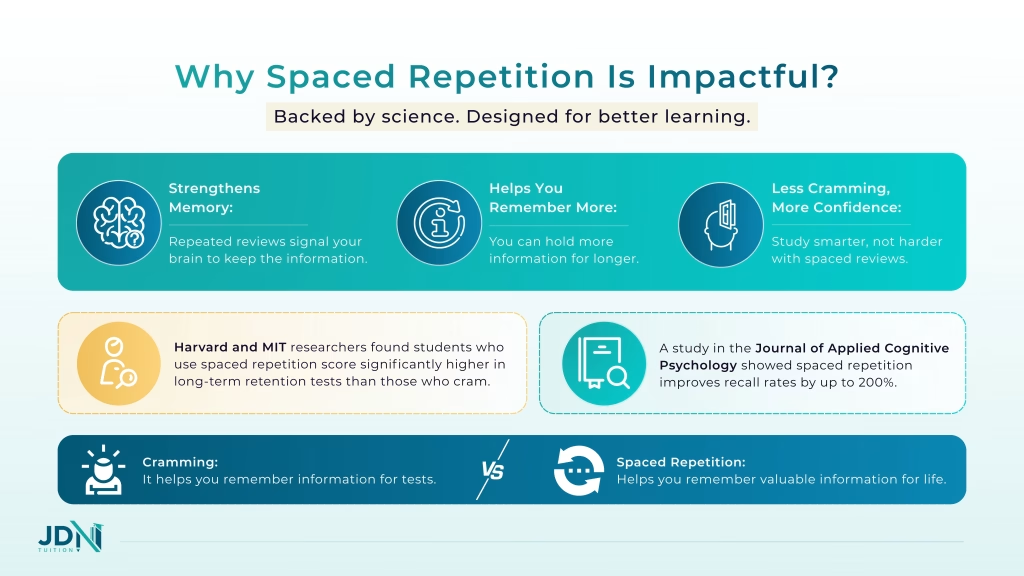
Our brain remembers what it labels as important, and a spaced review acts as a signal: ‘Hey brain, keep this information.’ These signals and gentle interruptions strengthen memory just like lifting slightly heavier weights over time. Combining spaced repetition with active recall– testing yourself instead of just cramming- significantly improves the results. Because our brain loves the challenge of moving information forward. Each spaced review helps strengthen neural pathways as revisiting information builds memory strength. When you schedule these review moments into your study timetable, studying starts feeling purposeful instead of chaotic. Moreover, each revision session helps create a solid chain of understanding. And the best part? It provides you with constant self-assessment opportunities. You can instantly look for your strengths and weaknesses.
According to research conducted by Harvard and MIT researchers, students who use spaced repetition score significantly higher in long-term retention tests compared to students who just cram. Additionally, another study from the Journal of Applied Cognitive Psychology showed that spaced repetition improves recall rates by up to 200%.
Therefore, in simple terms:
Cramming helps you pass a test, and spaced repetition helps you remember valuable information for life.
How to Use Spaced Repetition When Studying?
Spaced repetition is one of the most effective study techniques, and the best part is that any student can use it, whether you are preparing for VCE exams, HSC exams, or unit assignments. Now comes the fun part: turning all this science into an actual spaced repetition schedule that you can start using today.
Begin with Smart Notes
Before spacing your study sessions, you need good information and material to review. Think about how to take notes that make sense to you; clear, authentic, and visual. Some learners use colourful sticky notes, while others prefer mind mapping to connect concepts and ideas. Once your notes feel clear and organised, you are now ready to apply the spaced repetition method.
Decide on Appropriate Intervals
Open your planner and plan your review sessions over days and weeks. This is exactly where time management becomes your best friend. A simple spaced repetition cycle might look like this: review on day 1, then again on day 3, day 7, and day 14 after learning new material. Intervals need to increase and could be exponential. The intervals make your brain ‘almost forget’, making each repetition more powerful. You don’t need hours; a few focused minutes are enough for each review.
How Should Your Spaced Reviews Look?
What you do at each review will be slightly different.
- During the Initial review or day 1, you will study the material thoroughly for the first time. The initial review will focus on understanding and internalising the content.
- After the initial review comes the first interval recall. Here, the learner attempts to recall the information after the first interval without referring to the study material. This approach reinforces memory retention.
- Then come subsequent reviews. It means you will review the information at the predetermined intervals. Learners can adjust the frequency of intervals based on how well they can remember the information each time.
Pair It With Different Ways
Spaced repetition also works beautifully with other ways to study. Students can turn their notes into flashcards, teach the topic to their friends, or test themselves out loud. Mix different methods to keep things interesting.
Pro tip: If you are revising information for big assessments like VCE or HSC, rotate subjects to keep your brain fresh.
Test Yourself
Every review session should include some sort of self-assessment. For example, you can cover your notes and try to explain the key idea of a topic in your own words. If you struggle to explain the topic to yourself, that’s a sign to schedule a review session soon.
Many students fall into the trap of revising everything equally. Big mistake. Spaced repetition works best when you give more attention to weak concepts and less time to stronger ones.
This approach is not about studying longer; it’s about studying smarter, building a strong growth mindset, and making every minute of revision truly effective.
JDN Tuition, as one of the best private tutoring brands in Australia, helps students use spaced repetition by breaking big and difficult concepts into small, manageable reviews spread across the week. By guiding students through structured review cycles and personalised feedback, our skilled online tutors help turn study time into a consistent, confidence-building routine that strengthens memory and improves long-term academic achievement.
Book us now.
How Spaced Repetition Helps You Get Better Grades?
Here’s a myth that students believe;
“If I need to score better, I have to study more.”
Not essentially. Many students don’t need more hours to get better grades; they need a better strategy. In spaced repetition, instead of cramming everything the night before exams, you revisit information in small, well-timed intervals. This method teaches your brain how to memorise things fast.

Here’s how spaced repetition helps learners get better grades in exams.
- Long-term memory: Students tend to retain more information with less effort. This means no more staring at your notes and wondering, ‘Why can’t I remember this?’
- Strong Understanding: Spaced repetition is not just about remembering facts; it also deepens understanding. When combined with the Feynman Technique– explaining concepts in simple words– you instantly have insights into what you truly know and what needs more work.
- Confidence in Exams: You have already seen the content multiple times across days and weeks, so during exams, your recall feels naturally strong. Therefore, you perform confidently in exams, improving your grades big time.
- Reduced Stress: Students need to understand that cramming creates panic and spacing builds calmness. With spaced repetition, you know you are prepared, and that confidence alone is a big boost to your performance.
- Efficiency: With this technique, you stop re-reading the same concepts again and again. Instead, you focus on the concepts your brain has not locked in yet. Consequently, you get efficiency and better grades in exams.
Students using spaced repetition consistently score better grades, especially in subjects that require memorisation, like biology, health sciences, languages, etc.
Some Things to Consider
Here are some of the things that students should take into account while using the spaced repetition method for revising information.
- If you struggle to remember some specific concepts, try to review them more frequently. For simpler and easier concepts, you can extend the intervals between each review.
- You can use flashcards, certain apps, and other tools designed for spaced repetition to streamline your study progress.
- You don’t necessarily have to stick to your original review plan. Always track which content and information you have reviewed and how well you are retaining the information. Eventually, adjust the study plan accordingly.
At the end of the day, spaced repetition is like brushing your teeth. Consistency beats intensity.
Pros and Cons of Spaced Repetition
What can be the potential advantages and disadvantages of spaced repetition? Spaced repetition helps enhance memory retention and recall. It promotes active engagement to memorise things faster. In addition to this, there is another significant benefit of spaced repetition is breaking large tasks into manageable chunks for spaced learning.
However, for optimal results, you need to be consistent, and it requires daily commitment for maximum outcomes. Having said that, the benefits of this miraculous technique definitely outweigh the disadvantages.
Tools that Make Spaced Repetition Fun
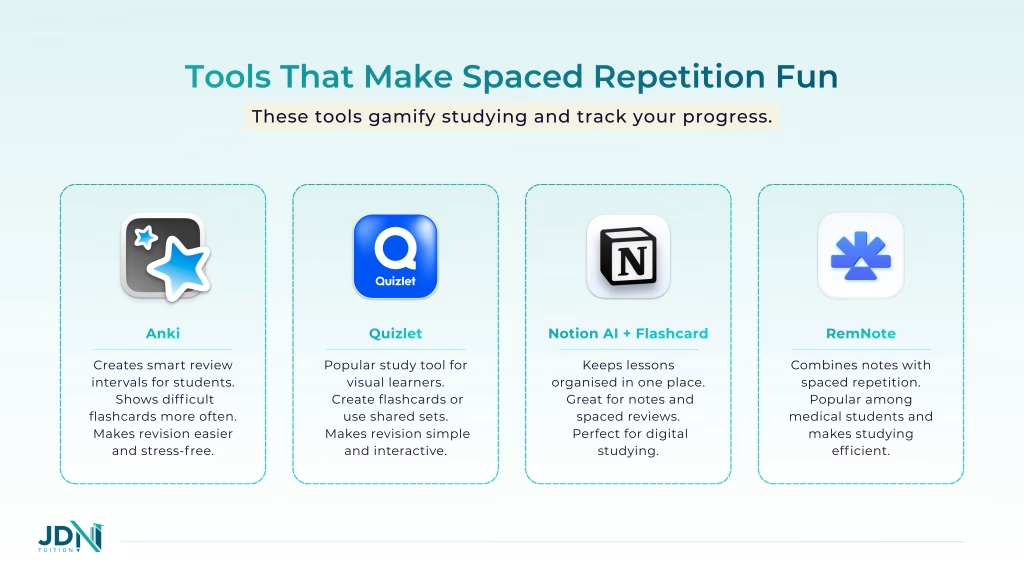 You can make a spaced repetition schedule with pen and paper, but technology makes it fun and even addictive.
Below are some student-favourite tools.
- Anki: Anki uses an algorithm to create a perfect spacing interval for you. It also shows you difficult flashcards more often to strengthen memory, and easier flashcards less often. Therefore, it all translates into no stress, no maths, just smart studying.
- Quizlet: Quizlet is a very common learning tool, which is great for visual learners. Students can create their own sets or use millions made by other students.
- Notion AI + Flashcard Database: Notion AI is perfect for students who love organising their lessons in one digital workspace.
- RemNote: RemNote is common among engineering and medical students because it helps combine note-taking with spaced repetition.
These digital tools help turn studying into something almost gamified. You’ll literally see your progress by integrating these tools into your study routine wisely.
Final Thoughts on How Spaced Repetition Improves Grades?
If you have ever wished you could remember more from textbooks, lessons, and study sessions, spaced repetition may become your favourite academic weapon. It does not require you to be a genius; it doesn’t require more study hours; it simply requires consistency and strategy.
Once you start using spaced repetition, your learning experience transforms from last-minute and stressful to structured, confident, and fun.
You’ll walk into exams with information and knowledge that feel familiar, because you have reviewed it exactly at the right times. It helps students gain better memory, better confidence, better strategy, and better grades.
It’s the same brain, a smarter method.
And that’s the power of spaced repetition.
Where Does Smart Study Begin?
At JDN Tuition, our dedicated tutors don’t just teach what to study; they teach how to study smarter. We guide students step-by-step in using the spaced repetition process, turning complex concepts into small, memorable chunks. With structured and personalised review cycles, active recall, and well-crafted study plans, we help students lock in content long before exam day. Even our own assessment plans follow the spaced repetition principles, reinforcing skills through timed reviews for deeper understanding.
Have a look at authentic reviews from students on our website and contact us today. You can also visit our blog or Google Business Profile page to have detailed insights into various interesting topics, like eustress, AI in education, and the VCE exam timetable. Stay connected with JDN Tuition—follow us on Facebook, Instagram, and LinkedIn for tips, updates, and student success stories.
To get started with spaced repetition today, book a free consultation call and take the first step toward boosting your child’s learning, memory, and academic success.
Let’s Improve Results. START TODAY.
 Book a FREE Call: +61 2 7202 1930
 Email us: contact@jdntuition.com.au
What is the 321 method of studying?
Read it 3 times: Familiarise yourself with the knowledge to build a strong foundation. Repeat 2 times: Reinforce your memory by engaging auditory processing. Write it 1 time: Strengthen your recall through active engagement.
What is the No.1 worst eating habit for memory loss?
Constantly consuming highly processed and sugary foods is one of the worst habits for memory health. Over time, this can lead to insulin resistance, impaired brain function, and an increased risk of developing neurodegenerative diseases like Alzheimer’s disease.
What is 75% of our brain made of?
About 75% of the brain is made up of water. This means that dehydration, even as slight as 2%, can harm brain function. Dehydration and a loss of sodium and electrolytes can cause acute changes in memory and attention.