




Why Tutoring Matters for Developing Soft Skills?
Communication Skills| Importance of Soft Skills | Study Skills
Discover how private tutoring helps high school students develop soft skills such as communication, confidence, and critical thinking for their future.
You’ve crammed, memorised, and somehow eked out a pass in your latest exam, but when the teacher asks you to explain your answer in front of the class, your brain goes blank. Sound familiar? That’s the everyday gap between being able to get the right answer and actually being able to use your learning when it counts. For many Australian high school students, it’s simply a skill they do without for most of their teen years, but with private tutoring, that doesn’t have to be the case.
But why do soft skills matter? Employers and educators have been saying the same thing for years: the future workforce needs soft skills in order to be able to survive in the adult world. Whether that be communication skills, adaptability, or active listening, soft skills development is a crucial part of life, sorely missed in traditional education.
In this article, we explain what soft skills actually are, why they matter for school and future life, and how exactly private tutoring helps develop them. Want more blogs on how to improve your child’s soft skills? Check out our JDN Tuition Blog Page.
What are Soft Skills?
Soft skills are the everyday people-to-people abilities that make school, work, and life less chaotic. These are skills such as communication, teamwork, time management, and problem solving that, although they appear unconventional, are some of the most important abilities a person can learn. Additionally, despite its name, “soft” doesn’t mean easy or unimportant. It just means that they aren’t the technical stuff you learn from a textbook or a single test, instead being transferable habits naturally picked up through practice, and tools like online tutoring programs.
In the real world, however, these interpersonal skills are almost always lacking in recent graduates. Many employers and universities expect these skills. However, many students lack the experience needed to enter adulthood with strong proficiency. By identifying areas for improvement and using the methods in this blog, students can better prepare for future careers.
Often, the difference between students who fall short of their dreams and those who succeed beyond their academic careers comes down to how JDN Tuition’s private tutors for high school students aid students in learning soft skills through all of our lessons.
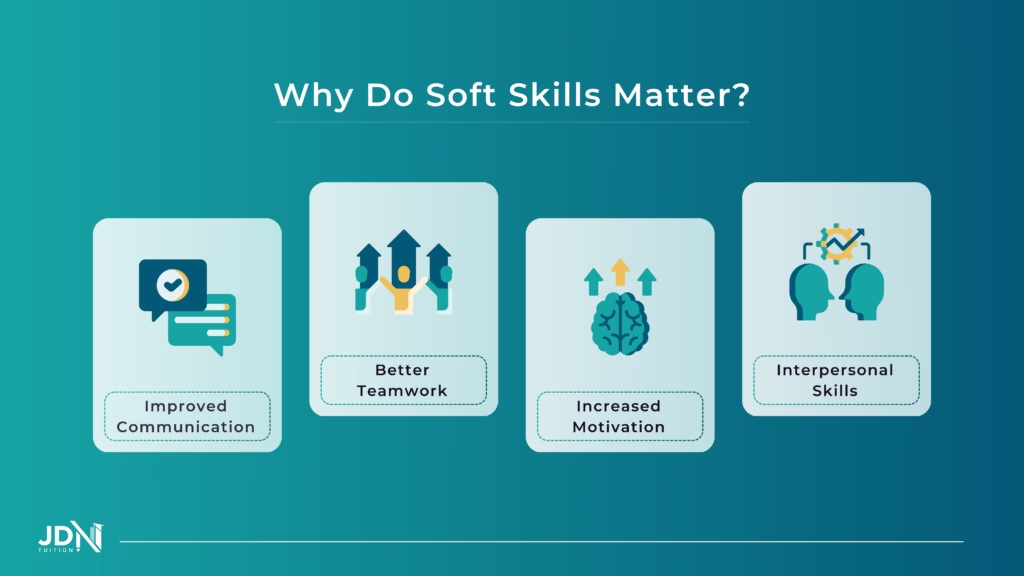
Why do Soft Skills Matter?
So what’s the importance of soft skills? The short answer is that grades aren’t the whole story. Students can memorise formulas all day long, and can still struggle with group presentations, miss job interview cues, or collapse under last-minute exam stress—all real examples that happen more and more as students progress through high school. These technical skills are the mental and social tools that turn knowledge into results, which have increasingly become what separates the students who get ahead from those who get left behind.
How Soft Skills Win in the Short-Term
In short, soft skills help you use what you know and improve daily life at minimal cost. Learning to explain your thinking clearly helps avoid marks lost for ‘no work shown.’ It also reduces panic and embarrassment when your name is called in class. Simple as that: better study habits + clearer communication = better grades and less stress.
Furthermore, Better time management techniques mean fewer all-nighters and higher-quality results. Clearer communication helps teachers understand your answers. It also helps group members collaborate on time and without tension. Developing these skills takes time. The benefits may seem small at first, but they add up and create a strong short-term boost.
How Soft Skills Pay Off in the Long-Term
If you think marks are the whole story, you’re not wrong; it just means you don’t get hired. While improved marks are one of the biggest benefits of private tutoring, the soft skills students learn might arguably be better in the long term. Employers and workplaces are increasingly listing problem solving skills, communication, and emotional intelligence, as top-priority abilities for resumes. And although employment might not be the biggest thing on a child’s mind, developing soft skills prepares them for when they need it the most.
Economies are changing fast with automation and AI replacing routine technical tasks. But what they can’t replace is human judgment and empathy, something that soft skills work towards. A rising proportion of new grad jobs will be “soft skill intensive” in the future, so investing time in these abilities now makes your child more hirable and will build resilience for the long run. This is where JDN Tuition comes in. With personalised learning, we prevent your child from being left behind and push them past their peers to academic success. Secure your spot today and book now for a free consultation.
How to Develop Soft Skills
Soft skills are built the same way you build muscle: deliberately, a bit painfully, and with some consistency. In general, students should start small with vague intentions like “be more confident” before moving to concrete actions they can begin practising each week. Of course, these methods won’t work for everyone, so doing a bit of note taking, reviewing what worked, and removing what doesn’t will get you results when actually implemented into your study timetable. This loop of trying, getting feedback, and tweaking is the actual engine behind soft skill growth.
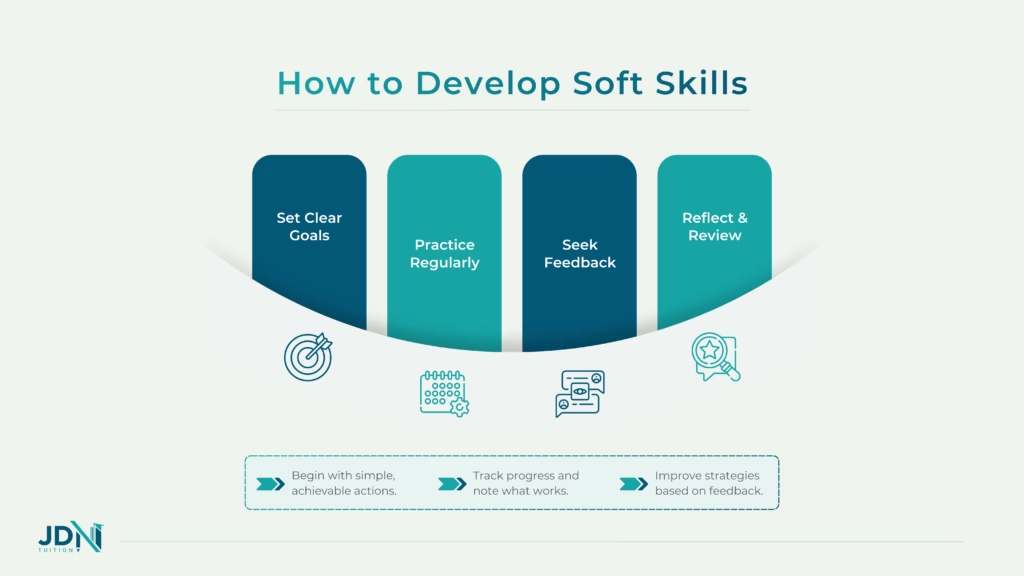
Over time, repeated practise strengthens skills like communication, teamwork, and problem-solving. It also builds confidence and self-awareness. This makes it easier to apply these skills in exams, projects, and real-world situations. Pairing these exercises with mentorship from tutors or peers accelerates growth, giving students both guidance and accountability as they progress.
However, out of all the soft skills, there are three most important for high school students, namely: teamwork, motivation, and learning skills. Below are three practical ways to improve the soft skills that matter the most.
How to Improve Your Teamwork Skills
Teamwork skills are some of the most important soft skills a student can have. As students progress into university and employment, they’ll find themselves having to collaborate with others, with real consequences upon failure. Some people think communication skills for teamwork are innate. They are not. They are habits that can be built over time.
Start by treating group work like a small workplace. Agree on roles upfront, such as director, researcher, slide maker, or proofreader. Set deadlines and plan collaboration dates. Add clear consequences for missed goals, such as peer marking. Use a shared Google Doc to improve accountability. This also prevents multiple versions of the same paragraph. When communicating with your team, practice short, clear messages: “I’ll draft slides by Wednesday; please complete the speech by Friday.” This removes the drama and gives you the competency that will stop future communication accidents in the workplace.
How to Boost Your Motivation
Despite its complexity, self-motivation isn’t magic. In reality, it’s systems and tiny rewards. Begin by breaking down big goals (HSC revision, important exams) into weekly, then daily, actions that feel doable. Use a simple tool like the Eisenhower Matrix. If a task is urgent and important, do it now. If not, schedule it for later, delegate it, or discard it.
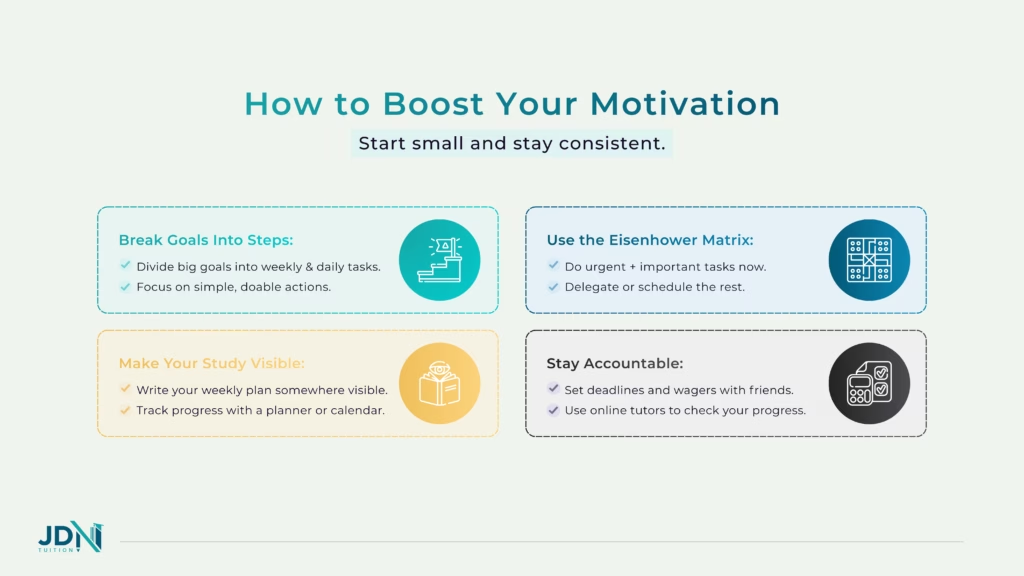
Furthermore, make your study visible, use project management software, write the week’s plan on a noticeboard, or use a shared calendar so you can see progress instead of only noticing how much is left to do.
Most importantly, be accountable. Set deadlines, make wagers with friends that include punishments if you don’t succeed at a task. For students, online tutors are perfect for this, providing regular input from a professional in a position of authority that can ensure your child is on task.
How to Develop Learning Skills
Learning skills are what, in the end, let students study smarter, not harder. By developing learning skills, students prepare themselves for the future, and dutiful study helps them overcome whatever challenges lie ahead.
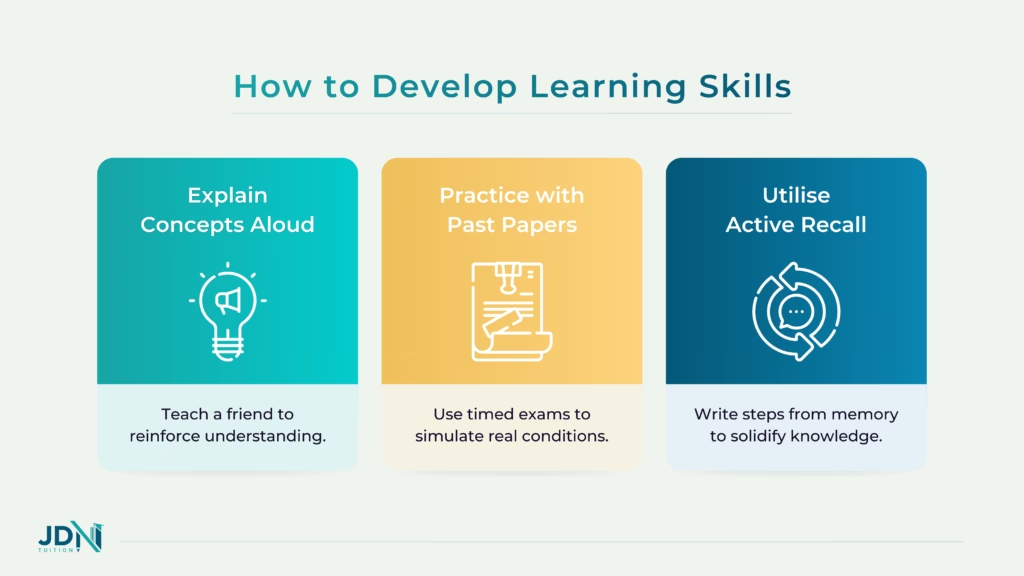
To train this skill, start with active recall. Stop re-reading notes. Instead, explain concepts out loud, teach a friend, or close the textbook and write steps from memory. Use past papers under timed conditions to practise the application. This helps you apply your knowledge when it counts. High-impact tutoring comes in handy here, providing students with all the resources they need to get started while actively implementing active recall in their lessons, perfect for students who need to get ahead.
Over time, these strategies build consistency and improve retention. They also help students approach exams with greater confidence and clarity.
How Private Tutoring Helps Soft Skills Grow
One-on-one tutoring is one of the most practical ways to let your child’s soft skills flourish. A good tutor does three things at once. They develop teamwork through structured activities, boost motivation by creating accountability, and also improve learning through active recall. This kind of private tutoring teaches lifelong skills. It also boosts academic outcomes and creates the scaffolding that supports future success.
Furthermore, where classrooms aim for coverage, tutors aim for understanding, with a variety of learning styles suited to your child’s needs. Tutors spot the exact step where a student’s thinking goes off the rails and provide real-world strategies to fix it with worked examples so that your child can spot the mistake next time. Additionally, tutors help put systems in place so soft skills don’t live only in the tutoring room. They give constructive feedback, set measurable checkpoints, and run mock exams so that students can practice teamwork and presentation skills under low-stakes conditions. Over a few months, these small guided habits lead to noticeable gains. Students become more organised and gain experience for the real world. They also build confidence in handling tasks independently. This prepares them to face real challenges with ease.
JDN Tuition: Supporting Student Growth in Every Lesson
This is where JDN Tuition comes in, providing subject specialists who use soft skill learning as the backbone of lesson plans: not just explaining content but also helping students work on their own. With local high school tutors in Melbourne, Sydney, and online tutoring across Australia, we help your child achieve their maximum potential. Check our Google Business Profile to find out how we can best assist your child.
Don’t let your child waste hours of study time not learning the soft skills they need for their future. JDN Tuition tutors train students to study properly, so that when exams arrive, they have the confidence to succeed. Check out our reviews to see why Australia’s parents choose JDN Tuition. To make sure your child excels, contact us today and make the best of their academic journey.
Conclusion: Soft Skills Are Key to Lifelong Success
Investing in private tutoring is not just about grades — it’s about nurturing soft skills that help students succeed in school, work, and life. With guided support from experienced tutors, your child can develop communication, teamwork, and problem-solving abilities that last a lifetime. These skills also give students the confidence to tackle challenges independently and thrive in any environment. As students progress, they become more disciplined and self-aware in their learning. This not only improves academic performance but also prepares them for future responsibilities.
Improve Results. Start Today.
📞 Book a FREE Call: (02) 7257 0299
📧 Email us: [email protected]
What are Soft Skills?
Soft skills are what allow you to apply your knowledge at school or in the workplace. Put simply, they allow you to express and explain your ideas in a way that can be understood, and break down communication barriers. Soft skills include teamwork, motivation, communication, and learning skills.
How do I develop Soft Skills?
Soft skills take deliberate practise to develop. Begin by putting yourself in small, repeatable situations that require soft skills, like short presentations, timed study blocks, or group tasks. Get specific feedback from peers or teachers. Then reflect briefly on what changed. Using tutors and mentors to create low-stakes rehearsals and measurable goals is highly effective.
Does Tutoring Help Improve Soft Skills?
Yes, tutoring does help grow soft skills. One-on-one sessions give you a safe place to practise explaining ideas and lead small tasks. You also get immediate feedback, which is exactly how confidence and teamwork skills grow.
How Long Does it Take to Build Soft Skills?
Soft skills may take weeks to months of development before finally being noticed. Soft skills can’t be built overnight, and can vary from person to person depending on their effort. Additionally, soft skills improve through repeated practise and feedback. You may notice small wins at first. Over time, they build up and make a huge difference.