




Effective Strategies to Enhance Your Child’s NAPLAN Writing Skills
What is NAPLAN | Different Writing Styles | Writing Skills
Learn how to support your child’s writing skills and the best ways to use NAPLAN preparation to give them the best shot at the NAPLAN Writing Test.
The National Assessment Program — Literacy and Numeracy is also known as the NAPLAN. Its annual arrival often brings a cloud of apprehension into many Australian households. For many students, this represents one of their first ‘real’ standardised assessments. These results may go on to impact their future studies and entrance exams significantly. One of the biggest components is the fabled Writing Test, a timed segment that forces your child to think and act quickly under high pressure utilising both their reading fluency and creativity to craft a perfect story.
Preparing for the NAPLAN can be difficult, but with the proper positive reinforcement and support, your child can go from developing their reading skills to achieving an exceeding result. In this article we go over how to prepare your child for the NAPLAN Writing Test both at home and in class, and what to expect once they enter the exam room. For more NAPLAN support, take a look at our JDN Tuition Blog Page.
Understanding the Marking Criteria of NAPLAN
To help your child improve in NAPLAN writing, let’s first go over how markers actually grade their paper. Firstly, despite being a national assessment, the Writing Test is marked by your state’s education authority such as NESA (New South Wales Education Standards Authority). This means that depending on where you live, the specifics of what is being marked can change.
In general however, the criteria looks like the following, with different marks allocated to each of the ten criteria including use of sentence structure, creativity and spelling and punctuation.
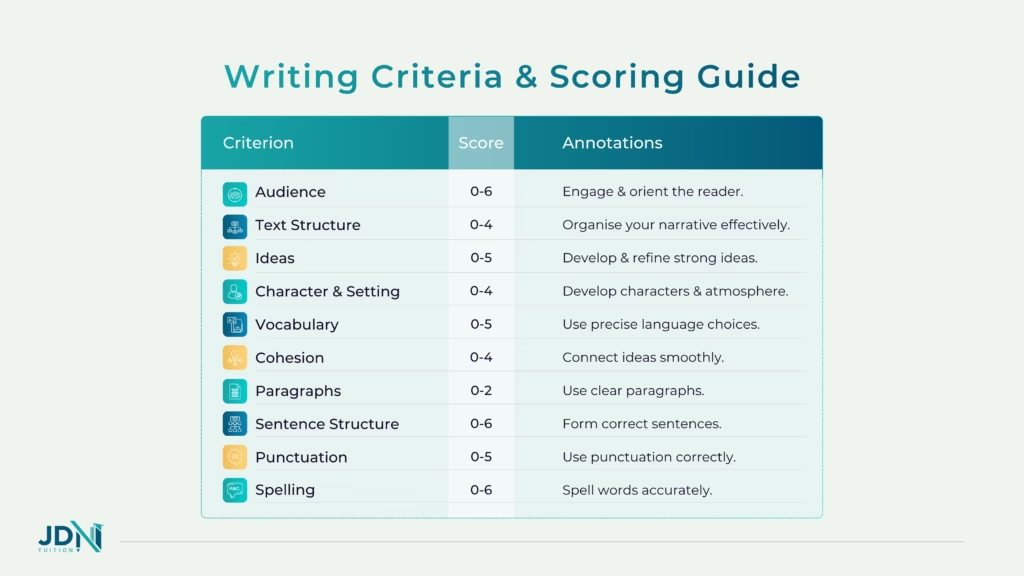
NAPLAN markers will use this rubric when grading your child’s writing test, so if you choose to do NAPLAN practice tests, using the above table is essential.
This rubric adapts with your child’s year level as well, becoming increasingly more complex as they enter Year 7 and 9, tests beginning to expect skilled use of English literary techniques to evoke emotions and persuade the reader. Simultaneously, your child must be able to overcome the more technical side of NAPLAN, showcasing their use of authorial voice (the distinct style of their writing), whilst adhering to the strict 40-minute time limit.
Understanding this rubric is one of the first steps in mastering NAPLAN literacy requirements. Going over the marking criteria with your child is one of the best ways to help them navigate the rigid NAPLAN format.
Feel like your child is falling behind in their writing? JDN Tuition can help. With Australia’s best specialised NAPLAN tutors, we support your child from the backline so they can put their best foot forward on exam day. Check out our Google Business Profile and hundreds of reviews to see why JDN Tuition is the perfect fit for your child.
Mastering the Two Genres: Narratives and Persuasives
The NAPLAN writing task creates high levels of stress for many students. This is because they do not actually know the specific writing genre beforehand. They must wait until they open the test booklet on the day to discover it. It’s basically a coin toss between narrative writing and persuasive writing. This specific uncertainty often presents a major hurdle for students with a preferred writing style. Sometimes the NAPLAN allows your child to choose between two different options. However, the test can also force them to write in one specific genre instead.
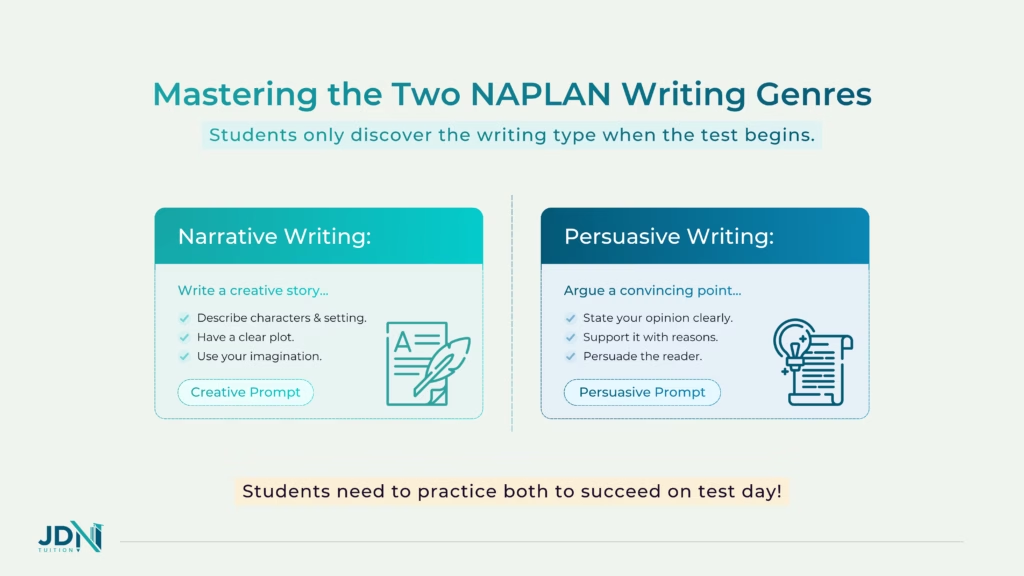
Your child may indeed win the coin toss and receive their preferred writing style. However, they might still struggle if they do not get an engaging or useful prompt. No matter what, your child should be ready to write both creatively and persuasively with proper grammar and punctuation without having to rely on a story they’ve rehearsed over and over again at home. And the key to that is a good structure.
How to Get the Structure Right Every Time
Regardless of the prompt, markers are looking for clear text structures. For your child’s story, this means moving away from telling the reader what’s going on and the general “then this happened, then after that,” style of writing. To do this, encourage your child to use interesting sizzling starts and writing prompts to grab attention. Instead of “One day I went to the park,” ask them to take a step out of their comfort zone and show the audience what’s actually happening. The kind of creative writing that instantly sets a student apart is one that allows the marker to become immersed in their story
In a persuasive piece, structure becomes even more vital. A child needs a strong opening statement that clearly defines their position on the topic and gives powerful reasons why they are right. Most importantly however, just like in debating, your child should be able to signpost: the ability to spell out your arguments in a digestible format.
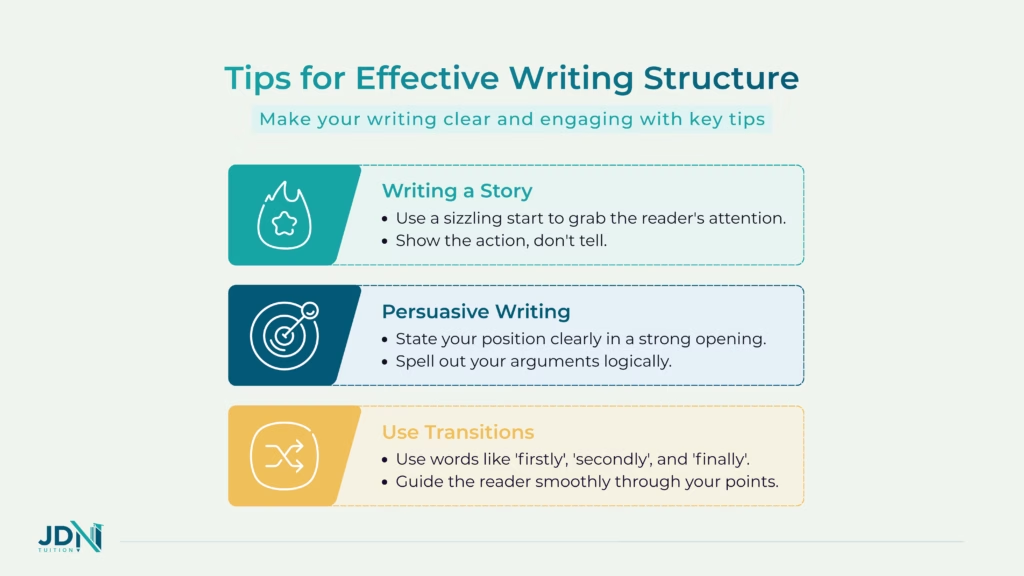
In practice writing, encourage transitional words like ‘firstly,’ ‘secondly,’ and ‘finally.’ By enumerating your arguments, you leave a trail of crumbs for the marker to follow that tells them how to think and likewise mark your child’s persuasive piece.
Overall, make sure your child is prepared for both possible writing styles, equipping them with the creative writing techniques and persuasive know-how necessary to succeed.
Practical Strategies to Prepare for the NAPLAN at Home
Counter-intuitively, some of the most effective NAPLAN preparation happens right at your doorstep. Teachers certainly do their best to help your child conquer the NAPLAN. However, they are often burdened by the twenty or more other students within the classroom. At home, however, you or an in-person tutor can use personalised learning to make NAPLAN writing, comprehension, and even numeracy skills easy. Below are a few easy ways to excel in both creative and persuasive writing in the NAPLAN.
Creative Writing Strategies
When it comes to stories, children often get stuck at the very beginning. To help them, focus on the specific idea that they are authors making deliberate choices. The story they are writing for the NAPLAN is a showcase of their skills. One great way to build these skills is to read specifically in order to write. In other words, look at accomplished authors and analyse what they have done to succeed. Encourage them to ask questions like, “Why do you think the author chose that specific word?” They should also ask, “How do they use imagery here?”

Doing this helps your child understand the tools an author has at their disposal and inspires them to incorporate them into their own work. Simply reading even 15 minutes a day will help them tremendously.
Additionally, a major part of succeeding in NAPLAN writing is being able to generate ideas quickly. Brainstorming techniques are major parts of the planning process of any creative work, and if absent, can spell disaster for your child, especially with so little time on the clock. You can practise this with them by turning brainstorming into a fun game. Give them a random writing prompt or a simple object as a starting point. Challenge them to come up with multiple story ideas in just two minutes. Even if the ideas are bad, making sure they’re brain is moving during the exam is the exact kind of mental agility these writing activities attempt to simulate, and what they need to succeed in the test.
Persuasive Writing Strategies
For persuasive tasks, one of the biggest challenges is giving more than a surface-level opinion. As your child moves up through the years, markers expect them to explore more complex ideas around a topic. They are also expected to present nuanced and well-informed perspectives. To support this development, encourage your child to consider different viewpoints. Prompt them to think about what they personally believe about a topic. At the same time, ask them to reflect on what others might think and why. Keeping them informed on the news and contemporary issues additionally helps them think outside the box.
Another useful strategy is encouraging the use of high-modality words such as “definitely,” “extremely,” and “essential” in their daily speech. Modality, or the strength of a word, dictates the emphasis placed on a specific phrase. High-modality terms outperform weak-sounding, low-modality words to improve the quality of persuasive work significantly. This specific choice signals the strong conviction of the author directly to the reader. Out of many language conventions, high modality helps your child sound more authoritative, and is one of the tell-tale signs of a good persuasive work for many NAPLAN markers.
How to Handle NAPLAN Online
Beginning in 2017, NAPLAN has made a shift from physical writing to online writing tests. Year 3 students still take their first NAPLAN on paper. However, parents should prepare them for future online testing and keyboard use. Many children see typing as a positive change. It often feels faster and less draining than handwriting long pages of text. Ultimately, your child’s preference is up to them, but no matter what, they should be prepared to do their NAPLAN writing test online.
Luckily, NAPLAN provides an easy way to practise for the online NAPLAN tests whilst simultaneously ensuring that your child’s device is fit for the task. Parents and students can simply head to the NAPLAN public demonstration site, or Google “NAPLAN public demonstration site” and then begin by selecting their corresponding year group.
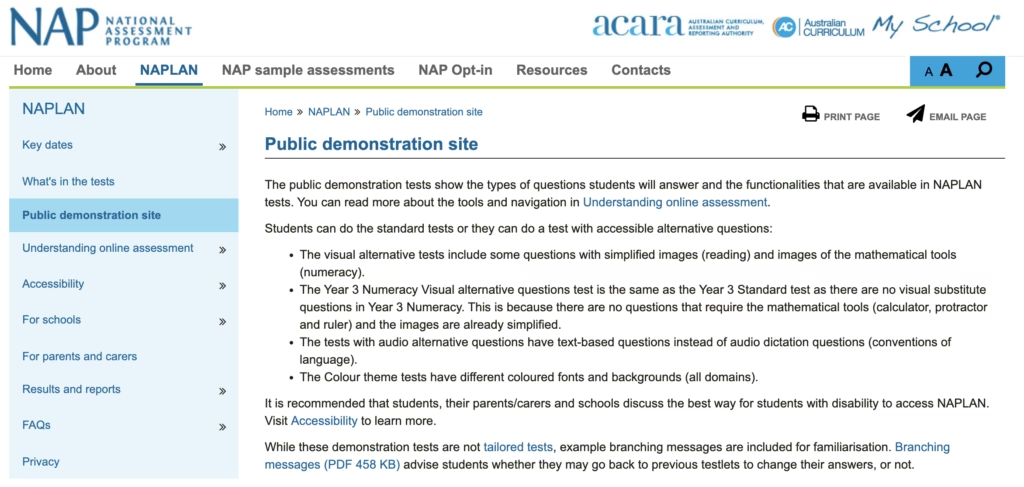
On this website, students can be sure that their devices are working properly and familiarise themselves with the format of each test.
Managing Stress and Keeping Perspective
At the end of the day, it is important to remember that NAPLAN is just a point-in-time snapshot of a student’s progress. It does not define their overall ability or future success. It is natural for your child to feel some pressure during the timed writing task. However, this experience should never become a source of genuine distress for them. If you feel your child may struggle under NAPLAN conditions, speak with their school. They can help assign a scribe or provide a learning environment that better suits your child.
As a parent, you must be careful during the lead-up to the NAPLAN. Make sure you do not place too much unnecessary stress on your child. Focus on fostering a growth mindset at home. Treat NAPLAN as a helpful diagnosis that shows what your child has mastered and where they may need some improvement. No matter the outcome, continue to support them every step of the way. Be there to encourage and lift them, regardless of their final result.
Final Tips for the NAPLAN Writing Task
Overall, helping your child with their NAPLAN writing preparation is important. It does not have to be a stressful or overwhelming ordeal for the family. Shift the focus from the final result to the core building blocks of literacy. Emphasize elements like structure and authorial voice. This helps your child develop essential skills for long-term learning. This approach gives them a toolkit they can use throughout the rest of their schooling. Just be sure not to put too much pressure on them.
Turn your child’s NAPLAN writing anxiety into academic achievement. JDN Tuition provides expert primary school tutoring and high school tutoring designed to meet students exactly where they are, no matter their skill level. We help learners build the skills and certainty needed to master NAPLAN and flourish in the classroom. Contact us today to secure your child’s path to success.
Improve Results. Start Today.
📞 Book a FREE Call: (02) 7257 0299
📧 Email us: contact@jdntuition.com.au
How do I help a child improve their writing skills?
The best way to help is to encourage consistent, low-stakes practice, such as keeping a journal or writing grocery lists. Reading together and discussing an author's word choices also builds the necessary vocabulary and structural knowledge they need to succeed.
How do I help a child that has slow handwriting?
Focus on building hand strength through activities like drawing or writing 15 minutes every morning. Encourage them to focus on readability over speed.
Do ADHD kids struggle with handwriting?
Many children with ADHD experience difficulties with fine motor skills and sustaining focus. This can lead to messy or slow handwriting during tasks. Providing supportive tools, such as pencil grips, can make writing more manageable. It also helps to allow frequent breaks during writing sessions. These strategies can reduce the physical demands of the task. If you feel your child may struggle during an exam, speak with their school about possible accommodations.