





Why Is Tutoring Important for Student Mental Wellbeing?
Practising Mindfulness | Benefits of Eustress | Social Environment
Discover how the right tutoring support can not just improve your marks, but also helps reduce academic anxiety and improves student mental wellbeing.
It is 9:30 pm on a Tuesday. You are staring at a blank Google Doc, the cursor blinking at you like a rhythmic taunt. Your textbook is open to page 142, but the words might as well be written in ancient hieroglyphs. Your chest feels tight, and the thought of tomorrow’s English exam makes your stomach churn.
Sound familiar?
For thousands of Australian high school students, this specific brand of academic anxiety has become a daily reality. Students face immense pressure in maintaining a competitive ATAR while navigating complex social dynamics. Between these stressors and looming final exams, it is no wonder stress levels are high.
In this blog, we go over the value of one-on-one tutoring when it comes to your child’s mental wellbeing, and how they can improve it. Want to read more blogs on student mental health? Check out our JDN Tuition Blog Page for more.
The Confidence-Competence Loop
Psychologists and educators often discuss the link between competence and confidence. They argue that what a student can do directly shapes how they feel about it. When a student falls behind in class, it rarely stays an isolated academic issue; it strikes at their self-worth. Understanding the importance of mental health in an educational setting means acknowledging that feeling “lost” or “uninformed” is a massive drain on a teenager’s emotional battery.
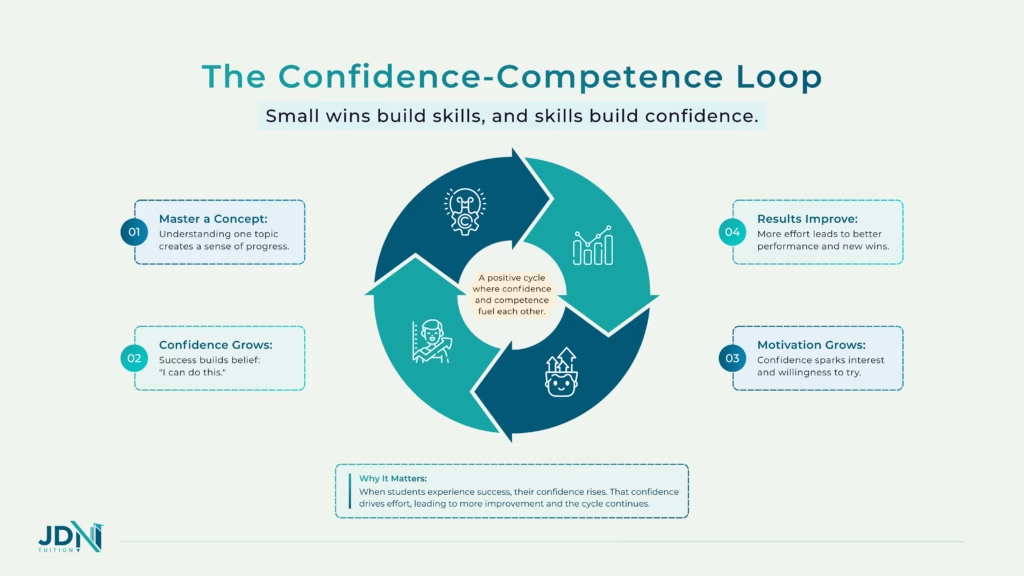
The negative version of this cycle often starts with a single missed concept. Your child might miss one step in a complex calculus equation, and suddenly, the whiteboard transforms into a wall of indecipherable alien code. This confusion quickly leads to avoidance. In fact, what many parents mistake for laziness or procrastination is often one of the classic signs of stress. Students avoid the work because it makes them feel incompetent, which puts them further behind, effectively doubling their anxiety. It is a vicious downward spiral that is hard for a teenager to break alone.
How Professional Tutoring Reverses the Gears
This is where professional tutoring services step in to reverse the gears. A good tutor doesn’t just dump information on a student; they help them master one small, manageable concept at a time. That specific moment of clarity, their “Ah, I get it now!” moment, releases dopamine and suddenly, the task doesn’t feel impossible anymore.
As your child starts to master the content, their cortisol levels drop, and their willingness to participate rises. You might even notice them putting their hand up in class for the first time in months, a clear indicator of improved student engagement. This shift is critical for their broader personal development. They stop seeing themselves as ‘bad at school.’ Instead, they start seeing themselves as capable learners who simply need the right roadmap to succeed.
Is your child stuck in a vicious cycle of stress? Break the pattern today. Check out our Google Business Profile and book a free assessment with JDN Tuition to help build your child’s confidence one lesson at a time.
The “Safe Space” to Fail
In a typical Australian high school classroom of 25 to 30 students, the social stakes are often higher than the academic ones. For a teenager, the fear of asking an “uninformed question” in front of peers is overwhelming. This fear of public embarrassment often leads students to stay silent when they are confused, nodding along while internally panicking. This survival mechanism might save face in the moment, but it creates significant gaps in knowledge that fuel anxiety later on and can leave them wondering how to improve self esteem.
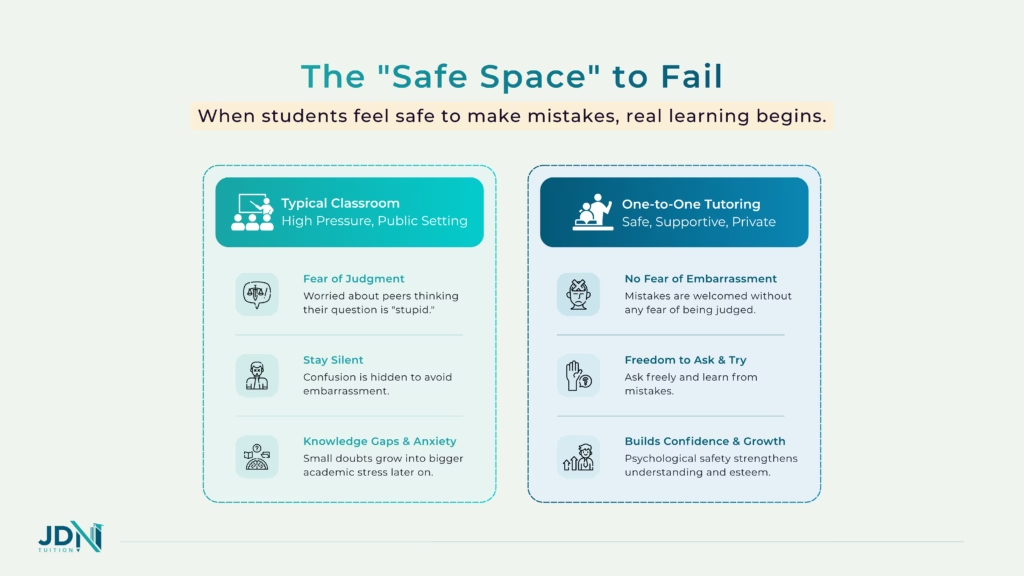
One of the most profound benefits of private tutoring is the creation of a positive learning environment where the audience is removed. In the quiet safety of a one-on-one session, the pressure to perform for peers evaporates. Your child can get an answer wrong five times in a row without fear of judgment. This psychological safety is essential for healthy child development, particularly during the volatile teenage years when self-esteem is inextricably linked to perceived competence.
Transforming Mistakes into Data
Within this safe container, a tutor does more than just correct errors; they reframe failure. In a supportive relationships between a student and a mentor, a wrong answer isn’t a sign of unintelligence but instead a data point showing what needs to be worked on next. This shift is vital for a student’s mental wellbeing.
When a student struggles with a difficult concept, an expert tutor utilises positive reinforcement to validate the effort rather than the result. They might say, “I’m actually glad you made that mistake now, so we can catch it before the exam.” This subtle shift rewires the brain. Instead of associating difficulty with shame, the student begins to associate it with growth.
Over time, this fosters a robust positive mindset. Students stop viewing challenges as threats and start viewing them as puzzles to be solved. Furthermore, a tutor equips your child with practical coping strategies for when they hit a wall. Instead of crumbling under pressure during a difficult HSC assessment, they learn to pause, breathe, and apply the problem-solving frameworks they practised in the safety of their tutoring sessions. By normalising the struggle, we empower the student to persevere through it.
Taming the Organisation Beast
It is a common misconception that academic stress stems solely from difficult content. More often, it comes from the sheer volume of it. For many students, panic sets in while checking their calendar. Realizing they have three assessments, a Maths quiz, and a Science report due in the same week creates intense pressure. This state of overwhelm is a major threat to a student’s social and emotional wellbeing.
The reality is that the teenage brain is still undergoing significant cognitive development, particularly in the prefrontal cortex, the area responsible for planning and impulse control. We expect high schoolers to manage complex timelines that would stress a corporate project manager. Often, we fail to provide the actual tools they need for this task.
How Tutors Take on Organisational Challenges
This is where the role of a private online or home tutor extends far beyond simply teaching algebra or analyzing Shakespeare. A holistic tutor acts as an academic project manager. They help step in to bridge the gap between your child’s workload and their current executive function skills.
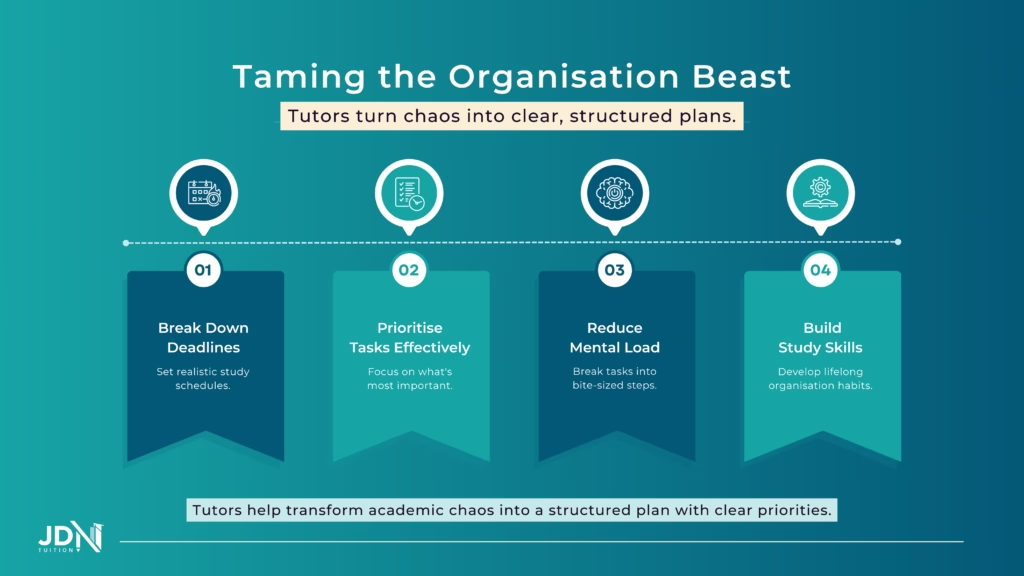
Rather than letting your child drown in a sea of deadlines, a tutor works with them to build an effective study schedule. This isn’t just about color-coding a calendar; it is about teaching the student how to prioritise tasks realistically. A tutor reviews daunting major works, like an English reflection or a History project. Then, they help the student break these down into non-threatening, bite-sized pieces to tackle one lesson at a time.
Reducing the Mental Load
By establishing a collaborative learning environment, the tutor and student work together to map out the term. When a student knows exactly what they need to achieve in the next hour, the paralysis of “I have so much to do” vanishes. This explicitly teaches time management skills that will serve them well beyond their HSC exams. When the roadmap is clear, the mental load lightens, allowing your child to focus their energy on learning rather than worrying.
Is your teenager overwhelmed by deadlines? Don’t let disorganisation impact their results or their mental health or mental wellbeing. Contact us today and see how JDN Tuition can match your child with a mentor who can help them build a structured, stress-free path to success.
The Mentor Factor: Not a Teacher, Not a Parent
There is a unique friction that often occurs when a parent tries to teach their own child. Even the most well-meaning advice can be interpreted as nagging, and homework help often devolves into arguments. This is where the specific role of tutors becomes so valuable. They occupy a distinct “third space” which is left unfilled by both parents and teachers, but is needed for so many teens.
This is because tutors act as mentors. Having recently navigated stressful exams like the HSC, our mentors possess immediate relatability. They instantly build a strong, supportive bond with your child. This dynamic allows for private tutoring to become a space where your child feels truly understood, rather than judged.
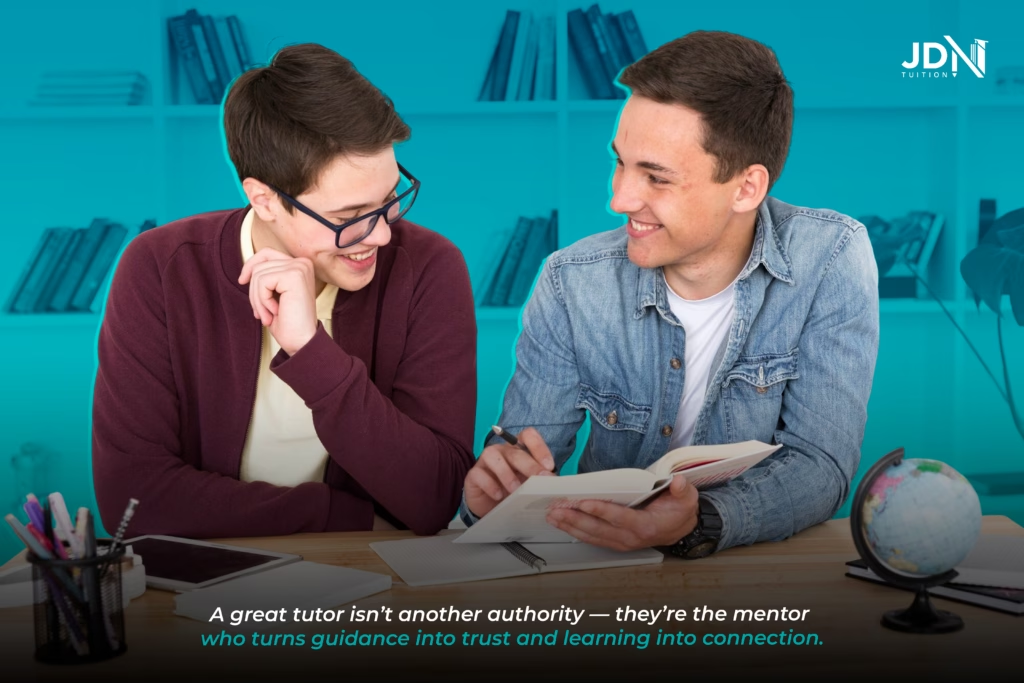
This mentorship does more than just fix grades; it models good communication skills. In 1-on-1 sessions, your child is required to articulate their confusion, ask questions, and engage in dialogue. This regular interaction significantly boosts their interpersonal skills and social skills, particularly for introverted students who might disappear in a crowded classroom.
Whether through face-to-face sessions or flexible online tutoring, this rapport is the secret sauce. When a student likes and respects their tutor, they are more likely to listen when that tutor suggests effective study skills or time management hacks. The advice feels like a tip from a teammate rather than a rule from an authority figure. This trust is the foundation that leads to improved academic outcomes, reducing resistance to learning and helping your child feel supported rather than scrutinized.
Reducing Text Anxiety Through Preparation
Anxiety often thrives on the fear of the unknown. For many students, the exam room feels like a black box where anything could happen. One of the most effective mental health activities your child can engage in is simply demystifying that experience. Tutors act as guides who turn the “unknown” into the “familiar” through consistent simulation and preparation.
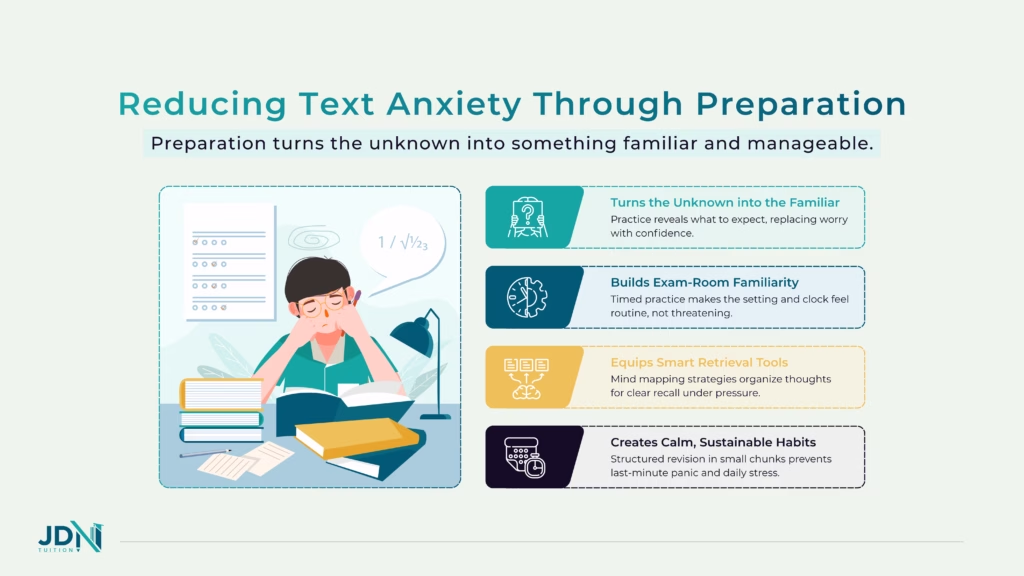
Instead of passively reading notes, a tutor will encourage active learning, such as getting your child to complete practice papers under timed conditions. This exposure therapy is crucial. By the time the real exam arrives, the silence of the hall and the ticking clock feel routine rather than threatening. Tutors also equip students with specific retrieval tools, such as mind mapping, which helps organize chaotic thoughts into clear, recallable structures during high-pressure moments.
While a tutor does not replace a professional mental health care plan, they play a vital supportive role in reducing daily stressors. They help instill organisational habits like breaking down revision into manageable chunks that prevent the last-minute cramming panic. These positive habits turn exams from a source of dread into a routine task. Your child gains the confidence to face the exam hall.
The Connection: Tutoring and Mental Wellbeing
A report card number or ATAR rank cannot measure the true value of tutoring. It reaches far deeper, impacting your child’s overall mental wellbeing. While better grades are a fantastic outcome, the most significant return on investment is often your child’s peace of mind. Tutoring provides a safety net, a roadmap, and a mentor. These supports strip away the academic friction that can grind a teenager down daily.
It is time to reframe how we think about extra help. Engaging a tutor isn’t a sign that your child is failing; it is a sign that you are proactively investing in their mental wellbeing. It allows them to reclaim their Sunday nights from dread and replace anxiety with a sense of capability. Sharing the academic load lifts the weight from their shoulders. It allows them to focus on growing into happy, resilient adults.
At JDN Tuition, we don’t just teach the syllabus; we nurture confidence and resilience. Whether your child needs help with organization, exam technique, or specific subjects, our mentors are ready. They will guide them and improve their mental wellbeing. Check out our reviews to see how we have helped other students, or contact us today to discuss your child’s unique learning needs.
Improve Results. Start Today.
📞 Book a FREE Call: (02) 7257 0299
📧 Email us: [email protected]
How Does Education Improve Mental Health and Wellbeing?
Education fosters a sense of purpose and achievement, which are key drivers of self-esteem. When your child feels capable and engaged in their learning, it naturally boosts their resilience and reduces feelings of helplessness. A supportive educational environment creates a positive feedback loop, where knowledge leads to confidence and emotional stability.
How does tutoring help students?
Tutoring provides personalised attention that addresses your child's specific gaps in knowledge, preventing them from falling behind in class. By breaking down complex tasks into manageable steps, tutors reduce the overwhelming cognitive load that often causes stress. This targeted support not only improves grades but significantly lowers anxiety by creating a clear path to success.
What is the most important thing a tutor can do for a student?
Beyond teaching content, the most critical role of a tutor is to build your child's self-belief. By creating a safe, judgment-free space to make mistakes, a tutor transforms fear of failure into a growth mindset. This mentorship empowers students to trust in their own ability to solve problems, a skill that lasts a lifetime.