





How to Prepare for HSC Exams with a Smart Study Plan?
HSC Exam | High School Tutoring | HSC Exams Past Papers
The HSC year arrives fast. One moment, your child is starting Year 12, and the next, the exam timetable is pinned to the fridge. For many families, it brings a mix of determination, anxiety, and more than a few late nights. Understanding how to prepare for HSC exams can make this challenging period far more manageable. With the right study plan, consistent revision habits, and strong family support, students can approach their exams with greater confidence and less stress, setting themselves up for the best possible results.
The good news is that strong HSC exam results are rarely the product of raw talent alone. They come from preparation, and preparation is something every student can get better at.
This guide walks you through exactly how to prepare for HSC exams in a practical, no-nonsense way. From understanding HSC subjects and building a study routine, to managing stress and knowing when to seek extra support, every section is written with both students and parents in mind.
Whether your child has just started Year 12 or the exams are around the corner, the strategies here can make a real difference. The average ATAR your child achieves starts with the decisions made right now. HSC exam preparation does not need to be overwhelming. It just needs a plan.
Want more educational articles like this? Find it on the JDN Tuition Blog Page.
What is the HSC and What Should Your Child Expect?
The HSC is the credential NSW students earn at the end of Year 12, and understanding how it works takes a lot of the mystery out of preparing for it.
Most students are surprised to learn that their final result is not based on exams alone. The HSC combines two streams of assessment: school-based tasks completed throughout the year and external written exams sat in October and November. Both streams feed into your child’s final HSC scores, and neither can be ignored.
How are HSC Courses Structured?
Each of your child’s HSC courses carries its own rules. Some subjects weigh internal assessments heavily. Others lean almost entirely on the external exam. Knowing the breakdown for each subject early helps your child allocate effort where it counts most. The HSC syllabus for each course is publicly available through NESA and is the single most important document your child should be familiar with.
Understanding the Exam Calendar
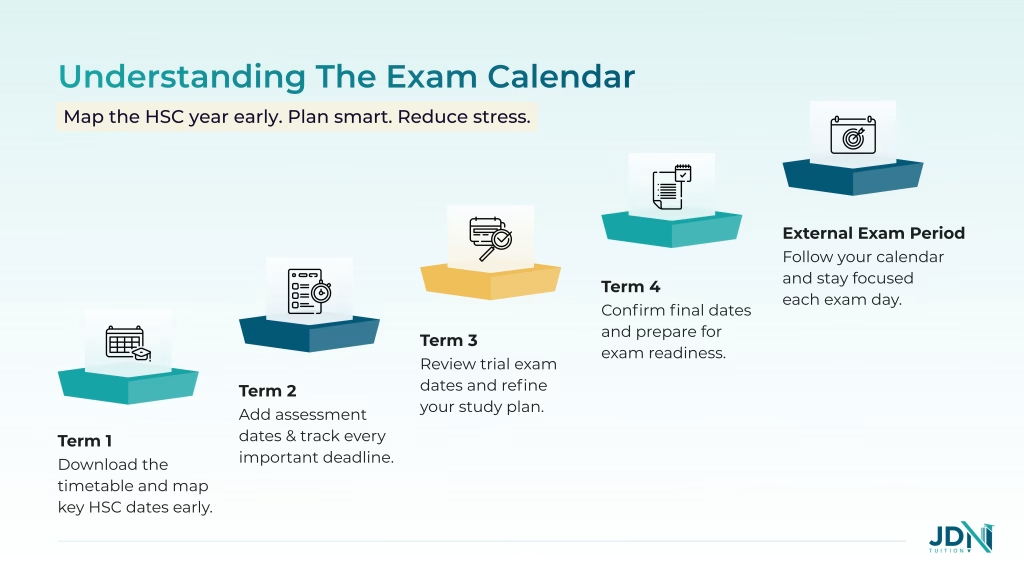
The official HSC exam timetable is released well in advance, and your child should download it the moment it goes live. Mapping HSC exam dates 2026 onto a calendar immediately gives the whole year a shape. It turns an abstract pressure into a concrete countdown, which is far easier to plan around.
 What does the ATAR Actually Measure?
The ATAR is not a raw mark. It is a ranking of your child’s performance relative to every other student in NSW. Understanding this distinction changes how your child should approach their study. Competing well in their chosen subjects matters more than chasing perfection across the board.
How Do You Build an Effective HSC Study Plan?
Understanding how to prepare for HSC exams is key here.
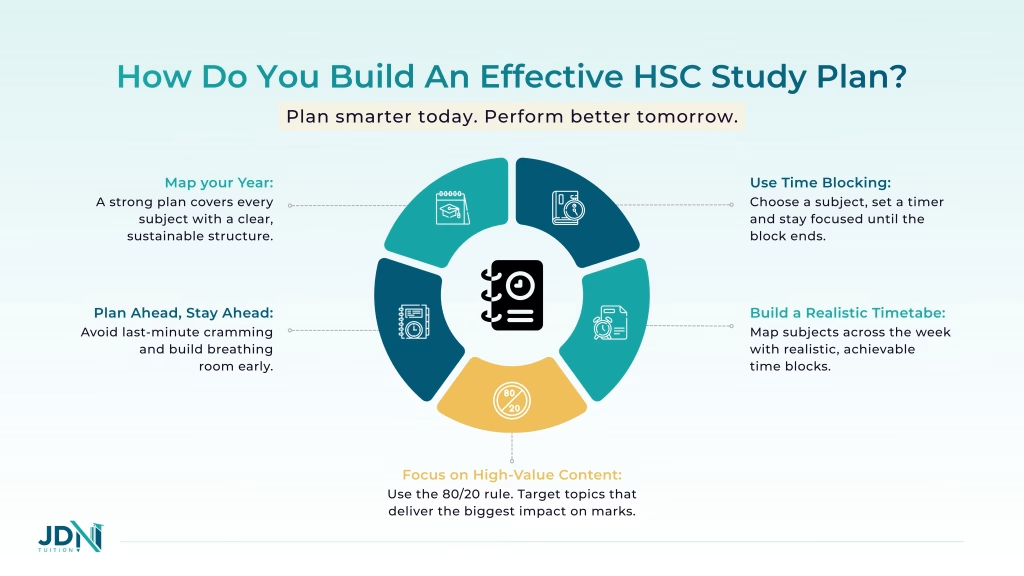
A strong HSC study plan maps out every subject, prioritises the most valuable content, and gives your child a clear, sustainable structure across the whole year.
Scrambling through content the week before an exam is one of the most common and costly mistakes HSC students make. A structured plan prevents that entirely. The earlier your child builds one, the more breathing room they have when assessments stack up.
1. Create a Realistic Study Timetable
A study timetable is the foundation of any effective HSC year. Your child should map out every subject across the week, assigning dedicated blocks to each one. Timetables work best when they are realistic. Blocking out ten hours on a Saturday rarely survives contact with real life.
2. Use Time Blocking & 80/20 Rule for Focused Study Sessions
From there, time blocking for HSC study keeps each session focused. Your child picks a subject, sets a timer, and works on nothing else until the block is done. This reduces the decision fatigue that derails so many students mid-session. Not all content carries equal weight, either. The 80/20 rule tells us that roughly 80 percent of marks come from 20 percent of the content. Reviewing past exam questions and syllabus dot points helps your child identify those high-value topics early. That is how to make an effective study plan that works smarter, not just harder.
3. Include Breaks and Weekly Review Sessions
Rest matters too. Short breaks between blocks improve retention, and weekly review sessions help consolidate what your child has covered. The best HSC study tips from high-performing students almost always include deliberate downtime as a non-negotiable.
4. Get Support from High School Tutors
JDN Tuition’s high school tutors work with Year 12 students to build a personalised study plan from day one. Rather than leaving your child to figure it out alone, JDN Tuition pairs them with an experienced tutor who understands exactly what the HSC demands. Reach out today to learn more about JDN Tuition’s high school tutoring services.
What Study Techniques Work Best for HSC Students?
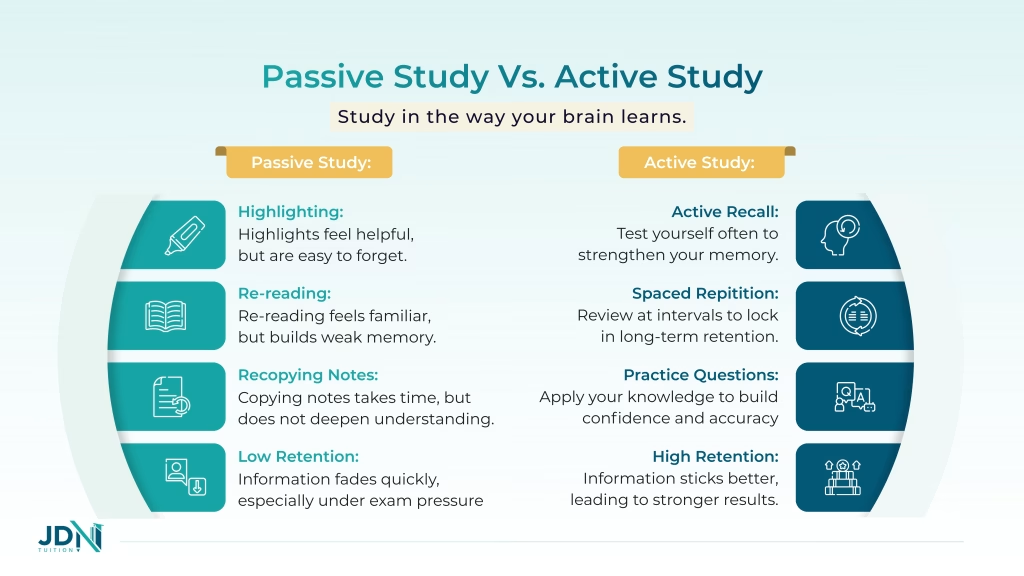
The most effective study techniques for the HSC are the ones that push your child to actively recall and apply knowledge, rather than just read over it again.
I think studying can feel like you are doing something when you just read over your notes again and again. You like to highlight things, read them again, and copy them out because it is easy to do. The truth is, when it is time for the exam, you will not remember as much as you thought you would. Many students struggle with how to prepare for HSC exams because they rely too much on passive study methods.
-
Active Recall Method
The HSC is a deal, and your child needs to be prepared. I believe that active recall is the way for your child to study for the HSC. So what is active recall? It is when your child closes their book and tries to remember everything they learned. They try to write down all the HSC English essays, HSC Chemistry equations, and HSC Physics calculations they can remember. It is hard to do. That is what helps your child remember things for a long time. Active recall is a key part of learning how to prepare for HSC exams effectively.
-
Spaced Repetition Method
Spaced repetition takes active recall further. Rather than covering a topic once and moving on, your child returns to it at increasing intervals over time. Free tools like Anki make this straightforward to implement. Students who use spaced repetition consistently across their HSC Business Studies and science subjects report feeling significantly more confident heading into exams. This is another important strategy in how to prepare for HSC exams.
Knowing how to study effectively also means knowing when a study method is not working. If your child is spending hours on a topic and still cannot explain it clearly, the method needs to change before the time investment grows. Switching to practise questions, teaching the concept aloud, or working through it with a tutor can break the cycle quickly. Strong study techniques are not about studying more when learning how to prepare for HSC exams. They are about studying in the way the brain actually learns.
Why Should Your Child Be Practising With HSC Past Papers?
Practising with HSC past papers is one of the highest-impact things a student can do in the lead-up to their exams.
No other preparation method replicates the real exam experience as accurately as sitting a past paper under timed conditions. Your child learns how questions are worded, where marks are allocated, and how much time each section genuinely takes. That knowledge is impossible to build from notes alone.
HSC exams’ past papers are freely available through the NESA website, going back many years across every subject. Encourage your child to work through them systematically rather than cherry-picking questions they already feel confident about. The uncomfortable questions are almost always the most valuable ones.
When your child finishes a paper, that is when the real work begins. Looking at each answer and checking it against the marking guidelines shows you where your child is losing marks. A lot of students are surprised to find out that they know the material. They are not answering the questions in the way that the people who mark the papers want them to. Past papers are very useful for this. The difference between knowing something and being able to explain it is where a tutor can really help your child. One-on-one tutoring with papers can make a big difference. Past papers and one-on-one tutoring go together.
JDN Tuition’s high school tutors work through past papers with students to pinpoint weaknesses and build real exam confidence. Read what other families have to say on JDN Tuition’s Google Business Profile and check out their reviews to see the results for yourself. JDN Tuition also offers primary school tutoring for younger students, making it a trusted choice for families at every stage of schooling.
How Does Time Management Affect HSC Performance?
How your child manages their time across the HSC year and during their exams often matters as much as how hard they study.
Consistency is better than intensity every time. If a student studies for 90 minutes every day, they will do better than someone who studies for a time on the weekend. You should tell your child to think of their study time as important and not something they can change. If they study a bit every day, it will make a big difference by the end of the school year. Strong time management habits built early in Year 12 make the final exam stretch far less brutal.
A student running on no sleep and constant stress does not perform at their best, regardless of how many hours they put in. Rest, exercise, and time away from study are not luxuries. They are part of a high-performing routine. Supporting your child’s positive mindset through the HSC year is one of the most meaningful things a parent can do. Acknowledging the pressure without amplifying it goes a long way.
Structured support reduces time pressure considerably. When a student has a tutor guiding their sessions, they spend less time figuring out what to study and more time actually studying it. HSC tuition through online tutoring Australia gives students flexible, expert support without the commute. JDN Tuition offers both in-person and online options, so your child can access the right support in whatever format suits your family best.
How Can Parents Support Their Child Through the HSC?
Parents play a powerful role in the HSC journey, and thoughtful support at home can make a genuine difference to your child’s results and wellbeing.
The most practical thing you can do is understand how to prepare for HSC exams and create a study environment that makes it easy to focus. A quiet desk, reliable internet, and minimal interruptions during study blocks are small investments that pay off consistently. Beyond the physical setup, the emotional environment matters as much.
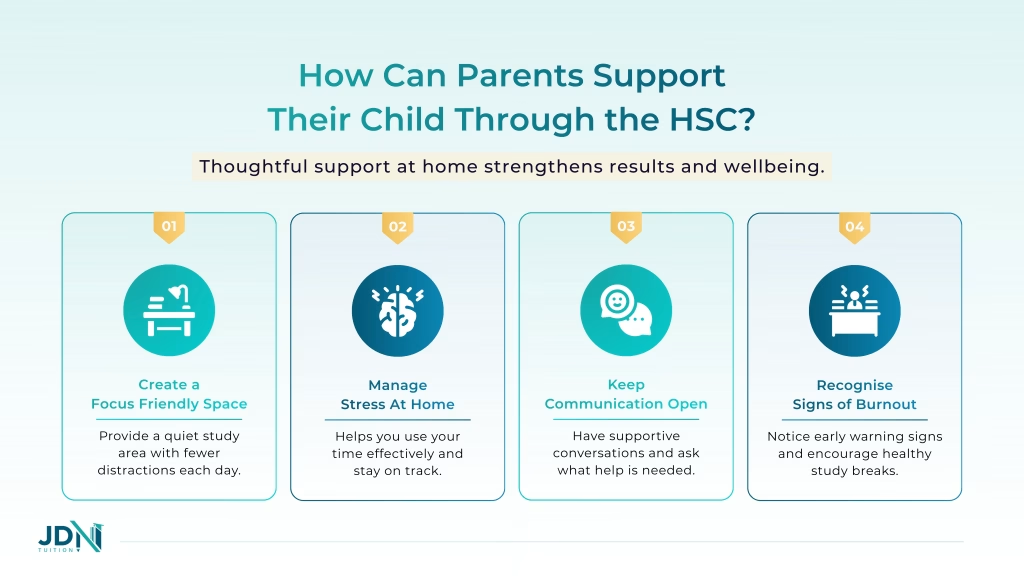 Try to keep conversations about the HSC solution-focused rather than pressure-heavy. Ask your child what they need rather than telling them what to do. Students who feel supported at home rather than monitored tend to manage stress more effectively and maintain better study habits across the year.
Watch for signs that your child is struggling beyond normal exam nerves. Persistent sleep disruption, withdrawal from activities they enjoy, and a noticeable drop in motivation can all signal that extra academic support would help. Catching those signs early and acting on them makes a genuine difference to where your child lands in October.
How to Prepare for the HSC: Final Tips
With a clear study plan, the right techniques, and reliable support in place, your child has everything they need to tackle the HSC with confidence.
The strategies in this guide on how to prepare for the HSC exams. Building a realistic HSC study plan, practising with HSC past papers, applying active recall, and managing time consistently are the habits that separate well-prepared students from overwhelmed ones. None of it requires perfection. It just requires a plan and the willingness to start.
If your child needs help with HSC, JDN Tuition is here to support them. Our tutors are. Work with Year 12 students in all major subjects. They help build skills and confidence, which leads to HSC results.
You can also visit our website to help your child succeed in HSC with JDN Tuition. We can help your child achieve HSC success.
Boost Confidence. Improve Results. Start Today.
 Book a FREE Call: +61 2 7202 1930
 Email us: contact@jdntuition.com.au
When should my child start preparing for the HSC?
The best time for HSC preparation to start is really at the beginning of Year 12 not when the final term arrives. When HSC preparation starts early, your child has time to get into a routine before things get really tough with HSC preparation.
How many hours a day should my child be studying?
The thing is, there is no one way to do it. I think it is better to study a little bit every day. This is a lot better than trying to cram everything into one session. What really matters is that you are paying attention and doing work, not just how many hours you are putting in.
What should my child do if they are falling behind in the HSC?
The most important step is to acknowledge it early rather than hoping it resolves itself. Speaking with their teacher or hiring a tutor can quickly help your child close the gap before it widens.