






Time Blocking Guide: The Ultimate HSC Study Timetable Strategy
Study Timetable | HSC Exams | HSC Tutors
Stop drowning in assessments and start dominating your schedule. Learn the time blocking method top students use to maximise focus and reduce stress with this guide from JDN Tuition.
It is 4 pm on a Tuesday. You are staring at the mountain of textbooks on your desk. Your Chemistry notes are a mess, you have an English reflection due in two days, and you haven’t even started your Maths homework. You frantically write a to-do list, hoping it will help. But looking at that long, scribbled list of tasks doesn’t make you feel organised. It just makes you want to scroll through TikTok for two hours to avoid the panic.
Sound familiar?
Here is the brutal truth about standard to-do lists and your current time management skills. They are great for groceries but terrible for high-performance study. They tell you what to do but fail to tell you when to do it. This lack of balanced lifestyle and structure is exactly why you end up procrastinating until 10 pm.
That’s why you need time blocking.
In this article, we show you how to time-block for your perfect HSC timetable for daily study in crunch time. Want to learn more about how to ace your HSCs and other assessments? Check out our JDN Tuition Blog Page.
What is Time Blocking and Why Does it Work?

If you have ever spent a whole Saturday “studying” but felt like you achieved absolutely nothing by dinner time, you have fallen victim to unstructured time. This is where time management techniques like the time blocking study method changes the game.
Unlike a simple checklist where tasks sit indefinitely until you tick them off, exactly what is time blocking? Simply, it’s the practice of dividing your day into distinct blocks of time, with each block dedicated to accomplishing a specific task or group of tasks. Instead of an open-ended goal like “Study Modern History,” you schedule “Modern History: WWII Source Analysis” from 4:30 pm to 5:30 pm.
During that block, you do nothing else. No phone, no snacks, no “quickly checking” emails. When the timer hits 5:30 pm, you stop and move to the next block.
The Science of Structure
Why is this simple shift so effective? It comes down to a psychological concept called Parkinson’s Law, which states that “work expands to fill the time available for its completion.” If you give yourself all weekend to write a practise essay, it will take all weekend. But if you assign a strict two-hour block on Saturday morning, your brain kicks into high gear to get it done.
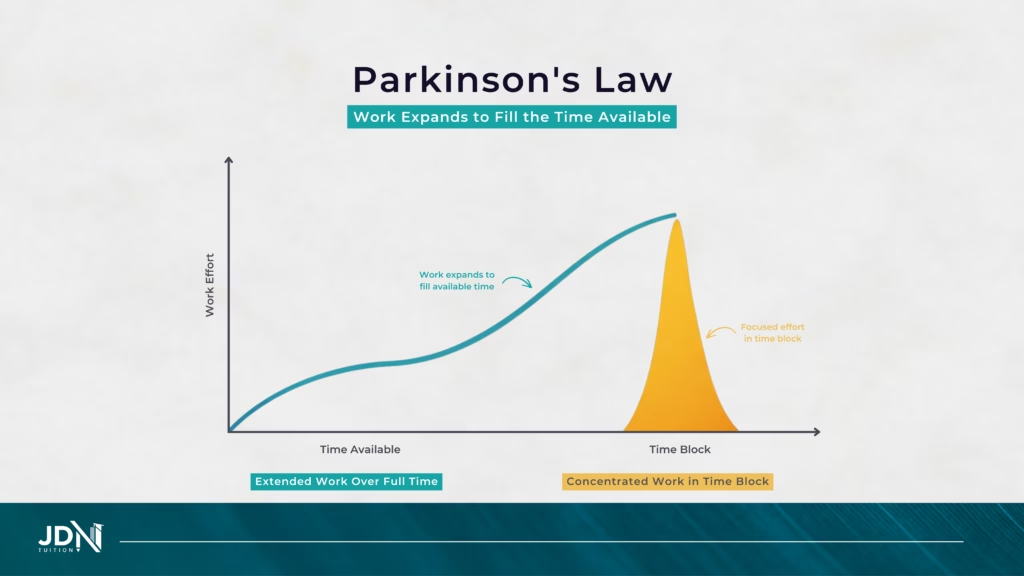
This structure also protects you from the silent killer of productivity: context switching. Every time you flip between the HSC syllabus and a text message, your brain has to recalibrate. Research suggests it can take up to 20 minutes to regain deep focus after a distraction. By grouping your tasks, you eliminate that friction and enter a state of “flow” much faster.
Deep Work vs Shallow Work: The High-Achiever Difference
This distinction is crucial for the importance of time management for students. High achievers understand the difference between “Deep Work” (cognitively demanding tasks like memorising quotes or solving complex equations) and Shallow Work (organising folders or printing past papers).
Time blocking forces you to prioritise Deep Work. It stops you from falling into the trap of “fake productivity,” where you feel busy because you colour-coded your diary for three hours but didn’t actually learn anything. It is the ultimate productivity technique for the HSC because it treats your energy like a limited resource, which, let’s be honest, it is.
Searching for study motivation tips creates a short burst of energy, but a solid HSC study schedule creates consistency. Motivation gets you started; habit keeps you going.
Need help building a routine that sticks? At JDN Tuition, we don’t just help you solve equations; we help you solve your schedule. Our mentors can sit down with you to identify your peak performance hours and build a custom time-blocked calendar that maximises your marks. Take a look at our Google Business Profile and reach out today to reclaim your time.
The “High-Performer” HSC Framework
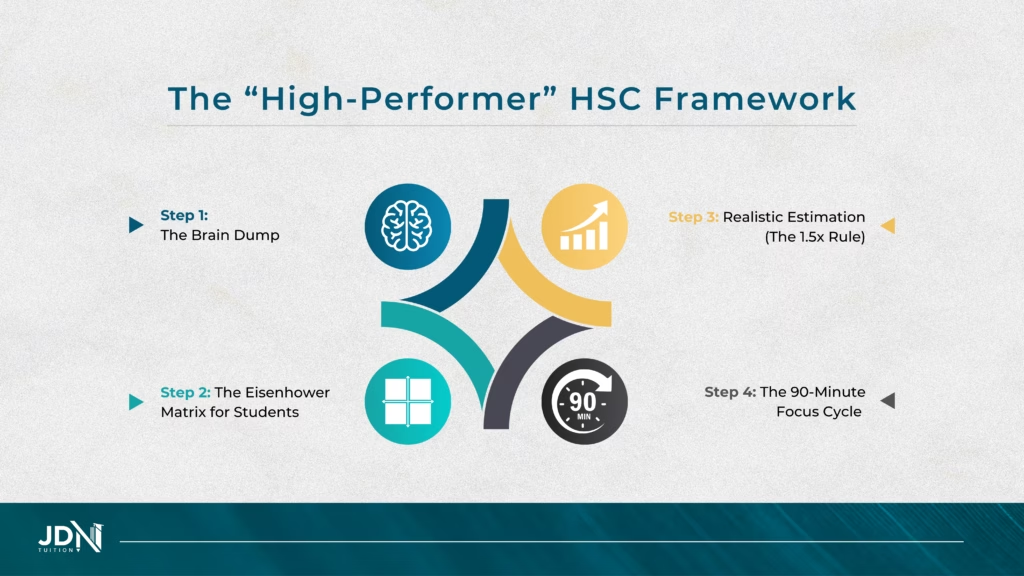
You can’t just open digital tools like Google Calendar and start dragging colourful boxes around without a strategy. That’s a recipe for a pretty schedule that you ignore by Tuesday. To time block like a high performer, you need a framework that filters the noise, such as the below four step schedule.
Step 1: The Brain Dump
Your brain is for having ideas, not holding them. The first step to clearing mental clutter is getting everything out of your head. Write down every single impending deadline, homework task, and revision goal for all your HSC subjects. Do not worry about order yet; just get it on paper. This simple act reduces anxiety instantly because you can finally see the “enemy” in front of you.
Step 2: The Eisenhower Matrix for Students
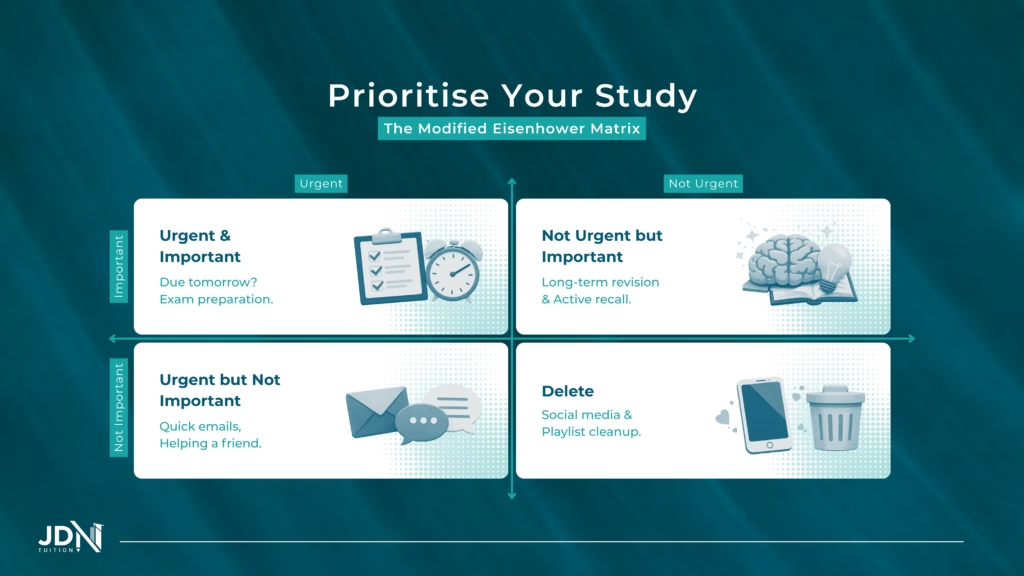
Now, you need to know how to prioritise tasks. Not all study is created equal. We recommend using a modified Eisenhower Matrix to sort your list:
- Urgent & Important: Assessments due tomorrow, preparation for an imminent exam.
- Not Urgent but Important: This is the “High-Performance Zone.” It includes long-term revision, active recall practice, and working on major works before the panic sets in. This is where the Band 6 magic happens.
- Urgent but Not Important: Answering non-critical emails or helping a friend with their notes.
- Delete: Scroll time, reorganising your Spotify playlists.
Step 3: Realistic Estimation (The 1.5x Rule)
One of the main reasons students abandon schedules is that they are too optimistic. You might think writing an essay takes 45 minutes, but realistically, with research and editing, it takes over an hour. A good rule of thumb is to take your initial time estimate and multiply it by 1.5. This buffer prevents the domino effect where one late task ruins your entire evening.
Step 4: The 90-Minute Focus Cycle
Finally, we tackle how to stop procrastinating. Human beings are not designed to focus for six hours straight. Research on ultradian rhythms suggests that our brains work best in 90-minute cycles followed by a break. Structuring your blocks this way maintains high student engagement and prevents burnout, ensuring the quality of your study remains high from the first minute to the last.
How to Build Your Time-Blocked Schedule: A Step-by-Step Guide
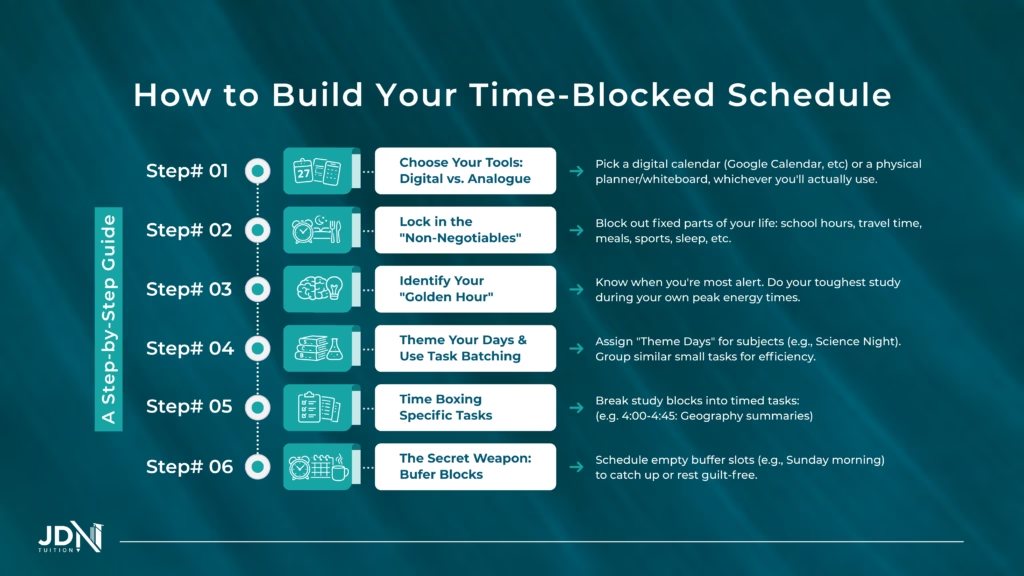
Now that you understand the theory, it is time to build the machine. Learning how to use time blocking effectively is about trial and error, but setting up the foundation with an HSC study planner correctly will save you hours of frustration. Here is how to construct a schedule that survives contact with reality.
1. Choose Your Tools: Digital vs. Analogue
The first decision is where your schedule will live. For many students, digital calendars like Google Calendar or Apple Calendar are the best option because they allow you to easily move blocks around when plans change. Digital tools also offer notifications, which act as a strict bell to start and stop your sessions. However, if you prefer the tactile feel of writing things down, a physical planner or whiteboard works too. The best tool is simply the one you will actually look at every day.
2. Lock in the “Non-Negotiables”
Before you schedule a single minute of study, you must block out the fixed parts of your life. This includes school hours, travel time, meals, sport, and sleep. Be honest about your sleep needs; cutting sleep to study is a false economy that kills your memory retention. This step gives you a visual representation of the actual “free” time you have available, which is the starting point for a realistic study plan.
3. Identify Your “Golden Hour”
This is where personalised learning comes into play. Are you a morning lark who can crush complex Maths Extension 2 problems at 6 am? Or are you a night owl who writes better English essays after dinner? Schedule your most cognitively demanding tasks, such as active recall sessions or practice exams, during your peak energy times. Save low-energy tasks, like organising notes or mind mapping ideas for a Visual Arts body of work, for when you are naturally feeling a bit sluggish.
4. Theme Your Days and Use Task Batching
To reduce the mental load of switching between five different subjects in one evening, try using “Theme Days” or “Subject Blocks”. For example, make Tuesday night your “Science Night” where you focus solely on Chemistry and Biology.
Within these blocks, use task batching. This involves grouping similar small tasks together to be done in one go. Instead of answering emails from teachers or sorting out loose worksheets sporadically throughout the day, dedicate a single 30-minute block to “housekeeping” and get it all done at once.
5. Time Boxing Specific Tasks
Within your larger study blocks, use time boxing to add urgency. Instead of a 2-hour block called “Study Geography”, break it down: “4:00–4:45: Geography Summaries”, “4:45–5:00: Break”, “5:00–5:45: Geography Past Paper Questions”. Specificity is key to effective study techniques.
6. The Secret Weapon: Buffer Blocks
The biggest mistake students make is creating a schedule with zero margin for error. If you pack every minute, one delayed bus will ruin your whole week. This is how to avoid burnout. Schedule “Buffer Blocks” (e.g., Friday afternoon or Sunday morning), which are left completely empty. If you fall behind during the week, you use this time to catch up. If you are on track, you get guilt-free time off.
Don’t be left behind when building your time-blocking schedule. At JDN Tuition, we help our students navigate this process daily, helping you build a time blocking template that has been road-tested by high achievers. Whether you need help organising your diary or mastering the content inside it, our online tutors for junior school students and high school tutoring are here to guide you. Check out our reviews and see how we can transform your chaos into a clear path to success.
Conclusion: Time Blocking for HSC Exam
Ultimately, time blocking is about freedom. It sounds contradictory, but by structuring your hours, you actually create more free time. It gives you the permission to close your laptop at 8 pm and watch Netflix without that nagging voice in the back of your head whispering that you should be studying. You can relax because you know the work is done, and you know exactly when you will pick it up again tomorrow.
We challenge you to try this for just seven days. Do not worry about getting it perfect instantly; just focus on the rhythm of working in focused blocks.
However, the best schedule in the world is useless if you cannot stick to it. Sometimes, you need an external accountability partner to help you build the discipline required for a high ATAR. This is where professional hsc tutoring transforms from simple teaching into holistic mentoring.
Whether you need face-to-face one-on-one tutoring to drill down into complex topics or flexible online tutoring in Australia to fit a busy routine, our team is ready to help.
Ready to take control of your Year 12 experience? At JDN Tuition, we do not just teach you the syllabus; we teach you how to master your time. Contact us today to book your free consultation, and let’s build a study roadmap that works as hard as your child does.
Boost Confidence. Improve Results. START TODAY.
📞 Book a FREE Call: +61 2 7257 0299
📧 Email us: [email protected]
Is time blocking effective for students?
Yes, time blocking is highly effective because it transforms vague goals into concrete action plans, significantly reducing procrastination and decision fatigue. By dedicating specific windows to deep work, students can retain information better and avoid the stress of last-minute cramming.
How to time block correctly?
What are the best apps for time blocking?
Google Calendar is the gold standard for most students due to its drag-and-drop interface and ability to colour-code different subjects visually. For those who prefer combining notes with their schedule, Notion is a powerful digital alternative, though a simple physical diary works perfectly for many.