





The Importance of the HSC Exam for Students in NSW
Higher School Certificate | HSC Exam Timetable | HSC Maths
Discover why the HSC Exam matters for NSW students, and how it can lead to universities and job opportunities
The HSC Exam is one of the largest school milestones students face in NSW. But how important is it in modern Australia? For Year 11 and 12 students, the HSC can feel overwhelming. It marks the culmination of 12 years of schooling and can feel like a single test deciding what comes next. Although that may sound dramatic, HSC marks directly contribute to a student’s ATAR. They also open doors to scholarships and tertiary education. However, it is not the only pathway available to students.
In this blog, we explain why exactly the HSC exam matters, when it happens, and how students can make the most of their time when studying for it. Want to read more blogs on the HSC? Check out our JDN Tuition Blog Page.
What is the HSC Exam?
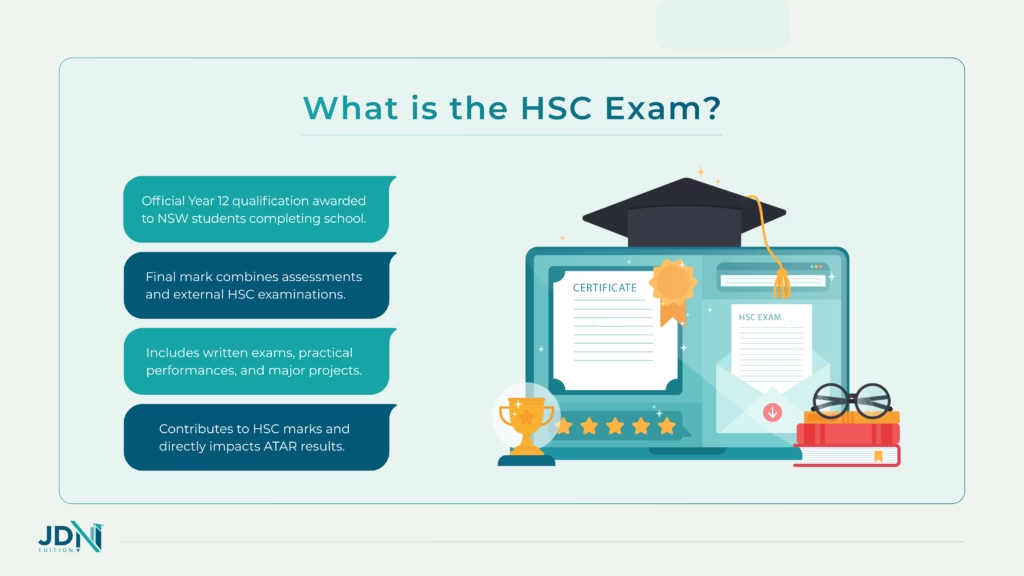
So what is the HSC? The HSC, or Higher School Certificate, is the official senior secondary qualification for students who complete Year 12 in New South Wales. Developed, administered, and marked under rules set by the NSW Education Standards Authority (NESA), it serves as a badge of honour. The HSC certifies completion of the NSW curriculum for universities and potential employers.
Additionally, the HSC is not a single sit-down test, but the result of the whole Year 11-12 program. For most board-developed courses, your final HSC mark combines school-based assessments and external exams or practical tasks. Schools create and mark the internal assessments, while the external exams—often called the HSC Exam—are among the most stressful periods for students. For most courses, school-based assessments contribute around half of the final mark, while the HSC exam contributes the rest.
On exam day, there are several assessment types students may face depending on their subjects. The HSC includes a range of assessment formats. Students may sit traditional written exams that present unseen questions, complete practical exams or performances (such as drama, music, or language speaking tests), and submit major projects or portfolios for subjects like Visual Arts, English Extension 2, or Design and Technology. The results of these projects directly contribute to a student’s HSC Marks and ATAR.
Finally, the HSC serves a vital role as an academic performance indicator, allowing teachers and the Department of Education to measure the educational impact of their HSC subjects. With this data, the department can improve courses to cover student shortfalls and engineer content that will push them further.
What is an ATAR?
It’s important to note that HSC Marks are not the same thing as an ATAR. The HSC provides marks and band levels for each subject. The Australian Tertiary Admission Rank (ATAR), calculated separately by the Universities Admissions Centre (UAC), ranks students relative to their peers for university selection. Depending on a student’s ATAR score, they may be considered for universities over others, and this is incredibly important when applying for their desired course.
In short, the HSC measures how a student has performed in a course, while an ATAR indicates a student’s statewide ranking for university applications.
When is the HSC Exam?
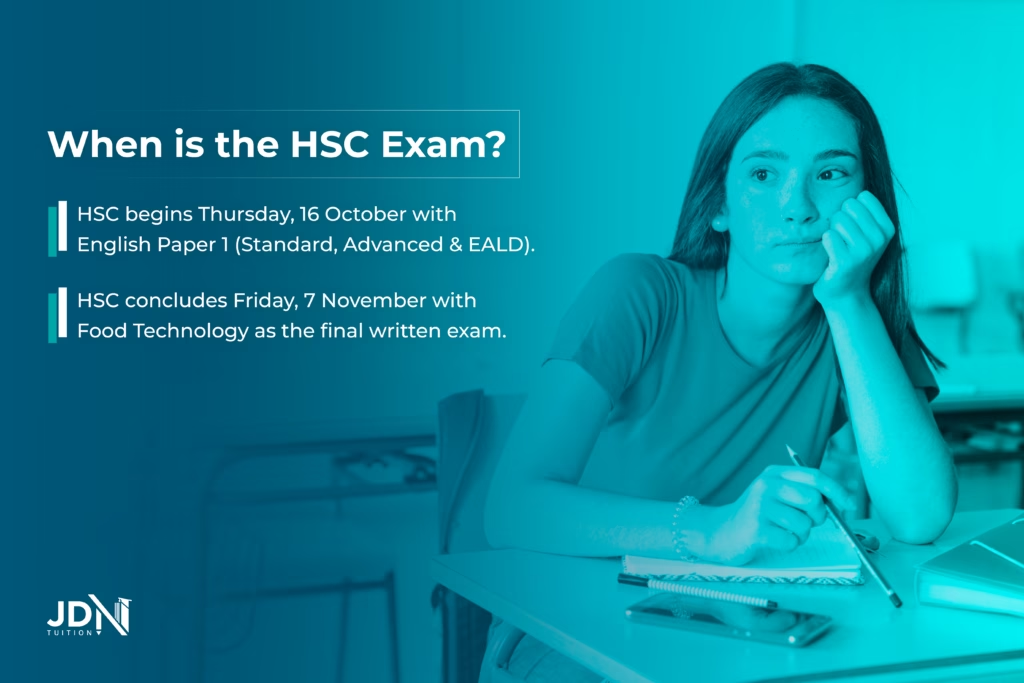
Each year, NESA releases the official HSC written exam timetable in term 2, with the written Exam block generally running from mid-October to early/mid-November and lasting three to four weeks. Students are able to find their personal timetable on Students Online.
For the HSC exam, there are a few things to note:
- When does the HSC Start? — The HSC begins on Thursday, 16 October, with paper 1 for HSC English Standard, EALD, and HSC Advanced English.
- When does HSC end? — The HSC ends on Friday, November 7, with Food Technology as the final written exam.
Why is the HSC Exam Important?
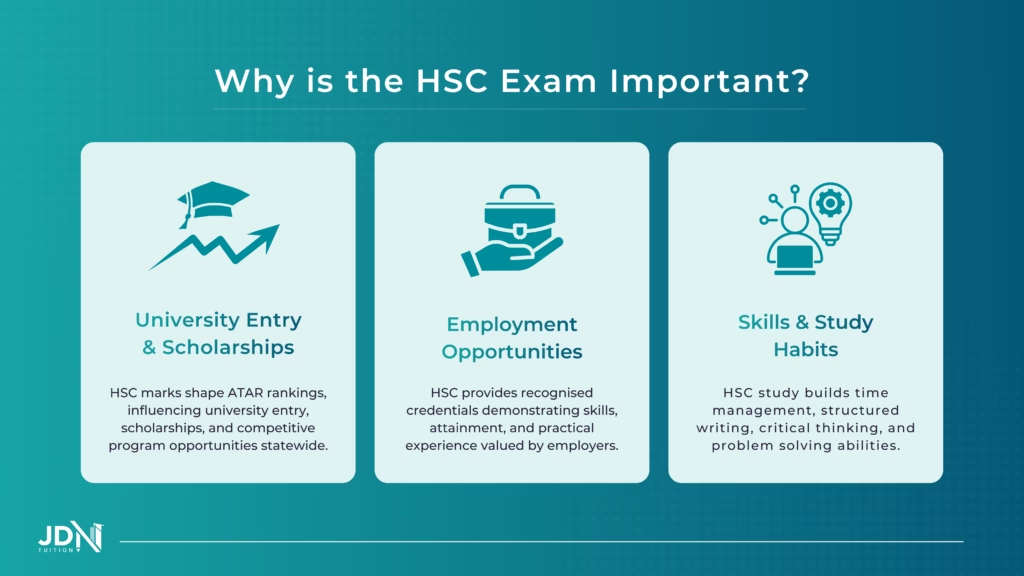
The HSC matters because it provides one of the clearest and most widely recognised measures of a student’s achievements by the end of Year 12. For many, it acts as a gateway to university and competitive entry programs. For others, it serves as the credential employers and training providers use when deciding whom to interview. Beyond the paperwork, doing well in the HSC and even the HSC Trials, where students make the most mistakes, shows employers and scholarship panels that a student can meet long-term goals, manage deadlines, and perform under pressure. Overall, the HSC is a standardised credential across the state. It provides a common language that universities and workplaces can use to compare achievement.
That said, the HSC is best thought of as a tool to get where students need to go. Strong HSC marks can make life simpler by widening choices and opportunities, but they aren’t the only way to reach a good outcome. If students understand exactly what the HSC opens for them, they can make smarter critical thinking choices and excel in their future.
For parents who feel their child is not seeing the HSC’s value, JDN Tuition can help with targeted, syllabus-aligned private tutors for high school students that build subject confidence, clarify what high-value study looks like, and turn uncertainty around the HSC into benefits that will last them a lifetime. Check out our Google Business Profile to see how we can help your child see why the HSC is important.
University Entry & Scholarships
One of the HSC’s most visible effects is on university entry. Your child’s HSC marks form the basis for calculating their ATAR, the percentile ranking most Australian universities use to compare applicants. In NSW, the UAC calculates ATAR from a student’s eight best units of HSC study, including two mandatory English units. The results are then scaled to produce the final ATAR. This means that both HSC subject choices and strong exam performance affect a student’s final ranking and university entry.
Additionally, high HSC results can open up scholarship opportunities and entry into competitive programs. Many universities run early-offer or guaranteed-entry schemes that consider Year 11 or HSC exam results. Merit scholarships and faculty-specific awards often rely on HSC performance as part of the selection process. Some universities also offer alternative entry options. These options assess HSC subject profiles rather than only scaled ATARs. This approach can benefit your child if their subject strengths match course expectations.
Employment
Even for students not planning immediate tertiary study, the HSC is a useful credential on a resume. Employers, apprenticeship panels, and TAFE providers look for evidence of relevant skills and a level of attainment. The HSC, including VET courses and major project work, gives students evidence they can use as a practical advantage. This proof can strengthen applications for future jobs and training opportunities.
Skills and Study Habits
Beyond marks and rankings, one of the most valuable outcomes of HSC study is the skillset you build. Time management strategies, learning to write tightly under HSC exam pressure, structuring complex arguments, using evidence, and solving unfamiliar problems are all soft skills students learn as they prepare and finally complete the HSC syllabus. Employers and industry reports consistently flag these “employability” skills as critical. Schooling and structured assessments give students repeated opportunities to practise them.
How to Prepare for the HSC Exam
To get the most out of the HSC exam, students need to avoid last-minute panic. They should build a steady, exam-ready routine with HSC study tips that fit their timetable. The goal is to turn vague “I should study” energy into a repeatable plan. This plan targets the specific skills and knowledge each subject requires, whether it is HSC Maths or a subject that demands specific scientific terminology. Below are a few study techniques students can prepare for the HSC exam.
The Pomodoro Technique
The pomodoro technique is an accessible way to turn lengthy study into short, intense bursts with guaranteed breaks, something particularly important as long HSC days turn into burnout and damage student wellbeing. The classic cycle is 25 minutes of concentrated work followed by a 5-minute break, with a longer break after four cycles.
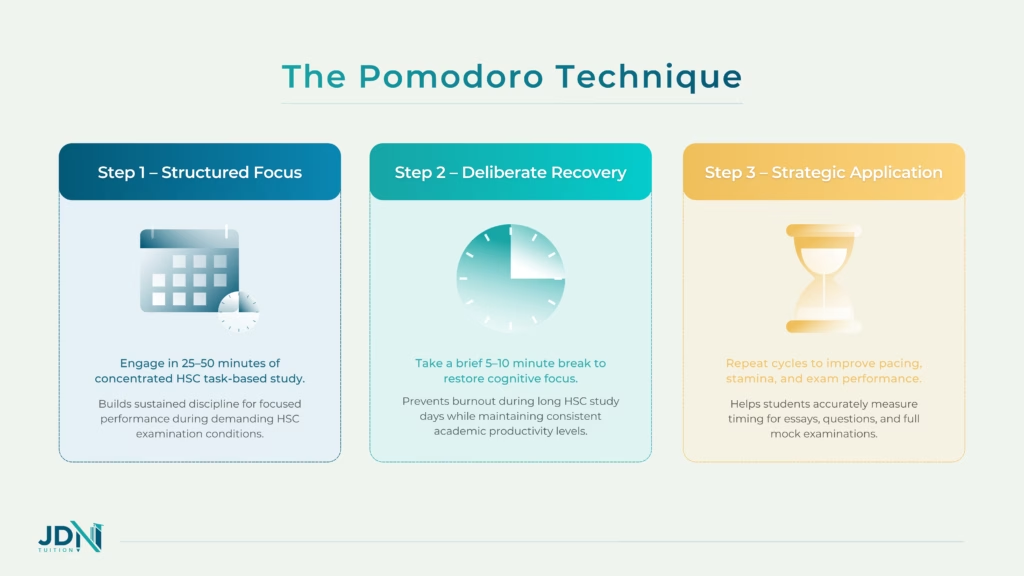
For many HSC students, small adjustments to study routines can make a big difference. A structured approach works well for deep-focus tasks. For example, studying for 50 minutes followed by a 10-minute break helps when writing practise essays or tackling extended-response questions from the HSC Legal Studies syllabus. However, some students may need to experiment with different time blocks to discover the rhythm that suits them best. Consistency matters most. Start the timer and remove distractions. Put your phone on Do Not Disturb, lock your browser, and choose your music playlist in advance. Then treat those 25 or 50 minutes as a pact with yourself. Focus only on the task in front of you.
Beyond stopping procrastination, using the pomodoro technique in the HSC exam helps you collect useful data about your pace. Students learn that one type of question may take a single Pomodoro, while a mock essay could take three. This knowledge helps them plan each study session and prepares them for future tasks. During these short breaks, students can move, stretch, or make a quick snack. These physical breaks reset focus far more effectively than scrolling on social media. Over weeks, they build disciplined study habits that can help students excel in the HSC.
Active Learning, Spaced Repetition, and Past Papers
Active learning, also known as active recall, is the difference between feeling like you “recognise” a topic and actually being able to produce it under pressure. Instead of highlighting or using note taking strategies, students can use retrieval practice: closing their books and writing what they can remember, answering past-paper questions, explaining a concept out loud as if they’re teaching it, or creating exam-style practice answers before marking them against the rubric. Spaced repetition, the process of revisiting material across days and weeks, can additionally cement memory far better than one long session.
In the weeks leading up to the HSC, transitioning from rote memorisation to active learning is one of the best ways to boost performance. Supplementing this with HSC exams past papers under exam conditions takes this further, allowing students to effectively rehearse for something they will only ever get one shot at. After each paper, students should spend at least as much time HSC marking and analysing the mistakes they made. This allows them to find their recurring errors and devote time to fixing those specific weaknesses. For essay questions common in the year 12 english standard, and related subjects, practise planning answers in five minutes, then writing under timed limits. For the year 12 chemistry syllabus or maths, practise full working and creating clear, readable answers that markers can follow with minimal checking of your formula sheet.
How Private Tutoring Helps Students in the HSC Exam
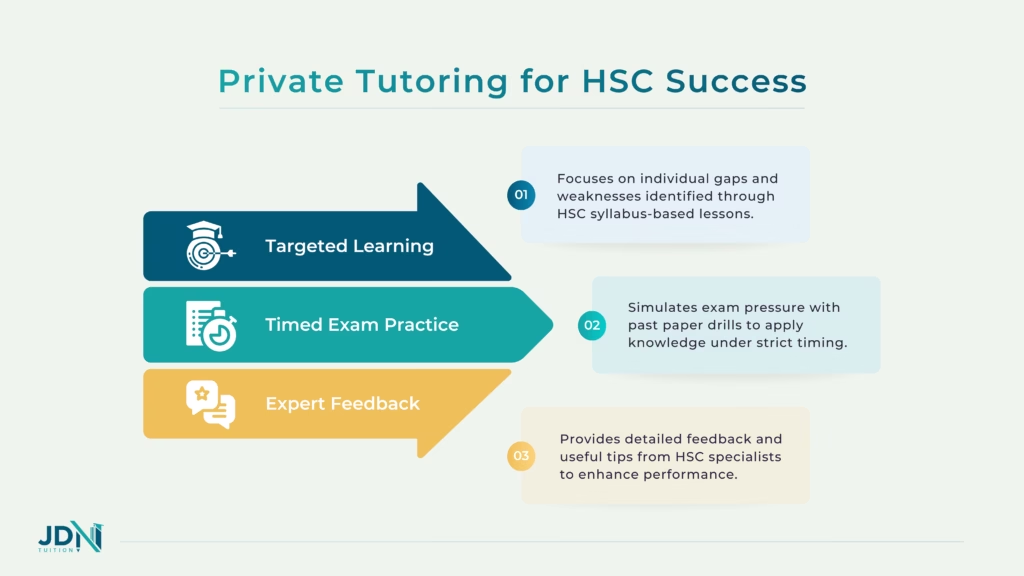
HSC tutoring may not be a magic fix, but when done well, it can turn worrying about the HSC exam into a focused plan of action that pushes your child to the next level. High-quality tutoring targets the exact gaps a student has. The HSC exam resources offered by these tutors, such as past papers and expert marking criteria, easily translate into the classroom. HSC tuition additionally allows students to simulate the pressure of the HSC by running timed mock exams and then giving additional marking feedback that students can use in the real thing.
Online tutoring, instead of in-person tutoring, does more than just prepare your child to excel in the HSC; it also helps them understand exactly what makes the HSC matter by providing years of experience and the knowledge of dozens of student journeys in an accountable and accessible framework. Don’t let your child become detached from the HSC and their peers. Let JDN Tuition close the gap with HSC specialists who can match the pace with your child and carry them to classroom success. Check out our reviews to see why Australia’s parents choose JDN Tuition for the HSC and see how we can show your child why the HSC really matters.
Conclusion: The HSC Exam for NSQ Students
The HSC exam matters because it brings together a student’s final senior years into a recognised credential. This qualification opens doors to universities, scholarships, and job opportunities. It also helps students build skills that last beyond school. With clear planning, students can turn the HSC from a source of stress into a stepping stone for future success.
Don’t let your child miss the importance of the HSC. To make sure your child truly knows why the HSC matters and to help them succeed, contact us today.
Improve Results. Start Today.
📞 Book a FREE Call: (02) 7257 0299
📧 Email us: [email protected]
Why is HSC so Important?
The HSC is the official senior-secondary qualification for NSW and forms the marks that feed into your ATAR. The ATAR is used by universities to select applicants, meaning that, depending on your HSC marks, entry into universities can become a lot easier. Good HSC marks also allow for greater access to scholarships and employment.
Does your school matter for HSC?
No, your school does not matter for the HSC. The NSW Education Standards Authority standardises assessment moderation, so that bias cannot be placed depending on your school. Schools can still affect outcomes by providing superior teaching quality, resources, and subject availability.
What are the benefits of an HSC?
The HSC opens direct pathways to tertiary education through receiving an ATAR, which is calculated through your HSC marks. Additionally, depending on the results of your HSC, it can open up scholarships and many early-offer schemes. Some employers also use an HSC as a requirement for employment.
What happens if you don’t go to an HSC exam?
If you miss an HSC exam due to illness or misadventure, you must apply through NESA’s Illness/Misadventure process and provide supporting evidence. Your eligibility depends on whether your school has submitted an assessment or estimated marks for that course. If you do not submit a valid application with evidence, you may receive no mark for that exam. This outcome can affect your final HSC mark and ATAR. Contact your school immediately for guidance.