





The Role of a Growth Mindset in Achieving Better HSC Results
Benefits of Eustress | HSC Exams | 80/20 Rule
The growth mindset is more than just a motivational buzz-phrase. It is the idea that your intelligence or abilities are not fixed or immutable from birth, but can be developed or polished with effort, strategies, and good support if you are taking the High School Certificate (HSC) and wondering how to boost your exam performance. Adopting a growth mindset can make a huge difference, and here is how.
In this blog, you will discover what a growth mindset exactly is, how the power of positive thinking influences academic performance, and why it matters for HSC. We’ll keep things solid and simple, so that you can implement them right away.
Introduction to Growth Mindset

First things first: What is a growth mindset? Some fortunate learners tend to acquire knowledge and skills effortlessly, while others are more achievement-focused than their peers are, and still others exhibit unusual talent. While such enviable traits are not evenly distributed among individuals, they are not necessarily out of reach for learners who are not ‘natural’ high-achievers. The concept of a growth mindset was pioneered by psychologist Carol Dweck. In simple terms, it means that a person’s capacities and talents can be improved over time with dedication and willingness to learn from mistakes.
In studies that are conducted to examine the mindset, participants are presented with statements like ‘You have a specific level of intelligence, and you cannot do much to change it’. The participants who disagree with such statements are considered to have a growth mindset. On the other hand, agreeing with such a statement gives an impression of having a ‘fixed mindset’.
Growth Mindset vs. Fixed Mindset
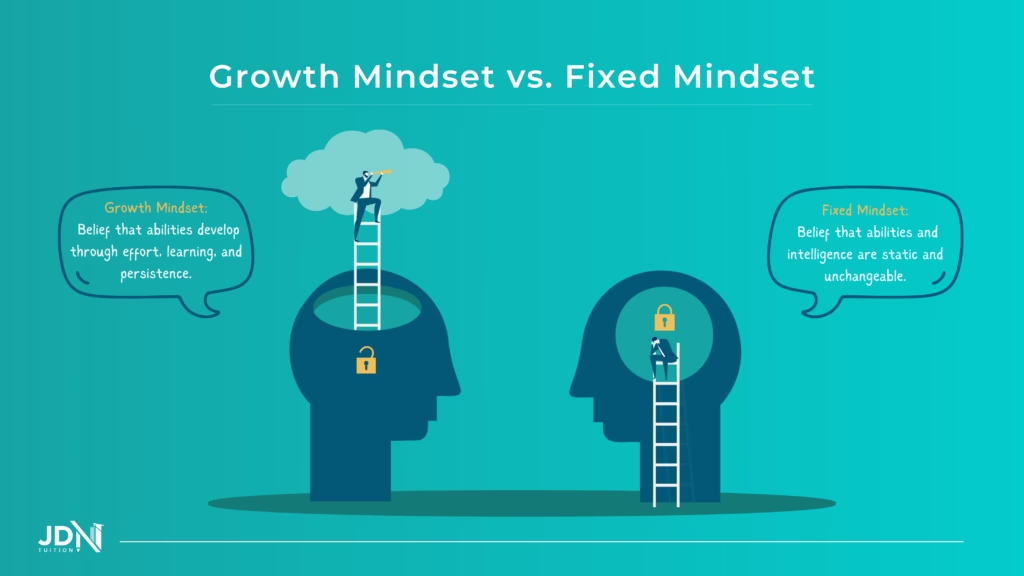
Let’s compare fixed vs. growth mindset. A fixed mindset fosters a belief that your abilities, talents, or intelligence are innate or static and cannot be changed. Individuals with a fixed mindset have a high fear of failure. For example, ‘I am just not good at driving’ is a fixed-mindset belief.
In contrast, a growth mindset is the belief that abilities and intelligence can be developed through dedication and effort. ‘I am not good at driving yet, but I can definitely improve by overcoming my mistakes’ is an example of a growth mindset belief.
What will it translate into in an educational context? In an educational context, it means students who possess a growth mindset tend to look at mistakes and failures as opportunities to learn and grow. Learners with a growth mindset persist when things ot tasks get tough rather than just shutting down. Such students utilise feedback and reflection to improve themselves.
Therefore, when you are approaching HSC exams, believing that you can get better and improve by using the right study techniques really matters for your academic achievement.
Why Growth Mindset Matters for HSC Scores?
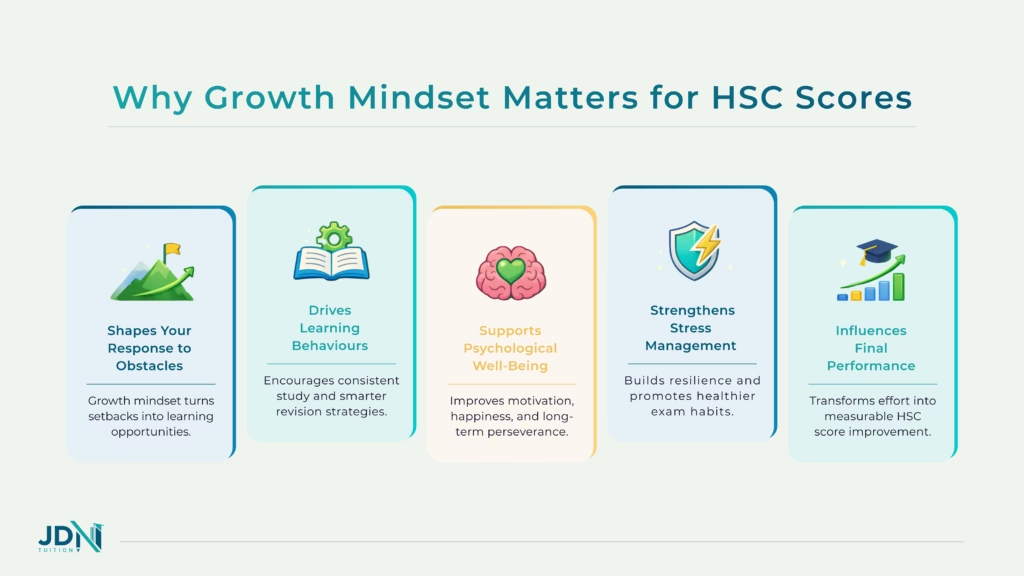
Let’s draw the result between mindset and results, especially when it is a high-stakes exam like HSC. Proponents of the theory of growth mindset contend that adopting a growth mindset (while rejecting a fixed mindset) can help individuals be more open to success.
Mindset Influences How You Deal With Obstacles
While studying for the HSC exam, you will come across difficult topics, receive unexpected lower grades in practise exams, or feel overwhelmed and burnt out. All these factors act as obstacles, but if you have a fixed mindset, you might end up saying, ‘I can’t do it, I am not smart enough. ’ However, with the mindset of outgrowing any obstacle, you are more likely to say things, such as ‘This topic needs a different approach, I’ll ask for help and revise.’ This mindset helps you recover and improve.
Mindset Affects Learning Behaviours
According to research, students with a growth mindset tend to adopt adaptive learning strategies to improve and master skills, focusing on mastery rather than just grades or performance (Nalipay et al., 2021). Such students do not hesitate to seek help, and they persistently use feedback to improve themselves. For HSC exams, it translates into consistent study, stress management, smart revision techniques, and incremental improvement.
Mindset Links with Psychological Health
Mindset is strongly linked with psychological well-being and motivation. According to a study conducted on high school students, a growth mindset positively impacts their ‘learning subjective well-being’ (how happy they feel about the learning process), and this in turn links to motivation, achievement, and grit (long-term perseverance) (Zhao et al., 2024).
In simple words, if students believe that they can grow, it is more likely for them to enjoy the journey and stick with it.
Physical Health and Stress Management
Other than psychological health, mindset has a great influence on physical health and stress management as well. According to scientific research, students with a growth mindset tend to have greater mental health and more resilience to stress. However, students with a fixed mindset have worse mental and physical health, and they are less resilient to stress (Nalipay et al., 2021). In other words, students with healthy habits and a growth mindset are likely to have better mental as well as physical health.
Therefore, for HSC students, adopting a growth mindset won’t magically increase their score overnight; instead, it changes their perspective. It changes how they engage with studies, how they get up from setbacks, and how they make use of their time. These are exactly the kind of behaviours that matter while preparing for a high-stakes exam like HSC.
How Growth Mindset Specifically Improves Your HSC Scores
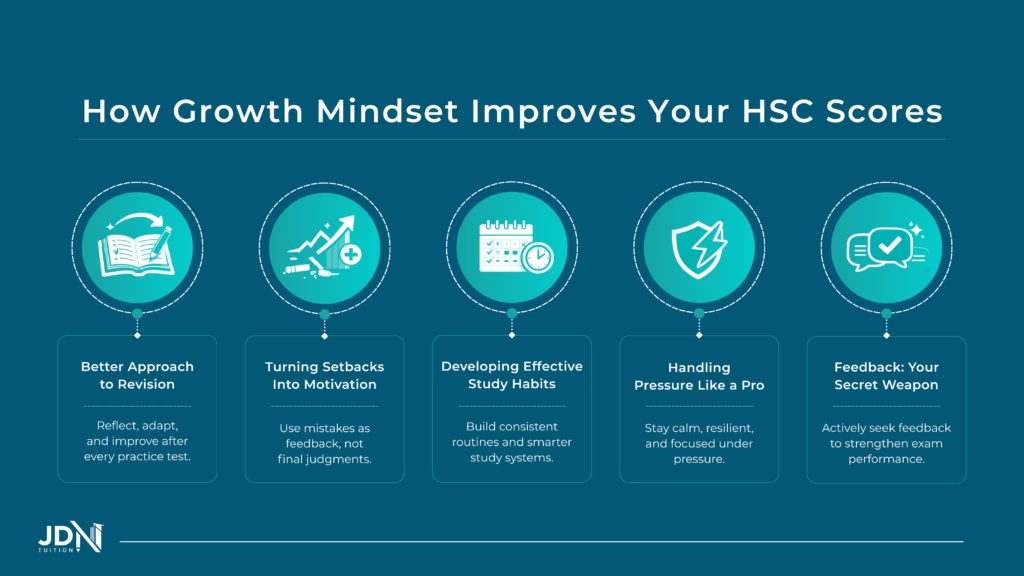
Let’s break this down in some concrete ways that a growth mindset can help improve students’ HSC results. Here are some of the ways you can change your perspective about learning and improve your grades.
1. Better Approach to Revision
Instead of treating a low practice score as ‘I am not good at this’, you treat it as ‘I need to try a new approach.’ This way, you will reflect, ask for help, and tweak your approach to improve your score. Valuing time and effort will bring a new approach to learning, for instance, ‘if I keep working on this topic, I’ll improve.’ This reflects a growth mindset. On the contrary, ‘If I don’t get it done today, I will never be able to do it’ is an example of a fixed mindset. Seeking feedback actively and working on it will also help improve the HSC score. In addition to this, a growth mindset encourages you to pick harder and more challenging questions rather than easier ones, because you see them as opportunities to grow. Consequently, this helps improve your HSC scores.
2. Turning Setbacks Into Motivation
The HSC journey comes with countless assessments, practice questions, mock exams, and sometimes disappointing grades. Students with a growth mindset take these setbacks not as failures, but as useful insights into what needs more attention.
Instead of saying, ‘I am not good at science diagrams,’ they say, ‘I am not good at drawing diagrams yet, but I can improve with feedback and focus.’ This shift in thinking leads to commendable practical action, such as practising active learning, seeking teacher guidance, and revising drafts. As a result, their performance starts to strengthen, as reflected in improved assessment scores and final HSC exam grades.
3. Developing Effective Study Habits
Students with a growth mindset do not rely on last-minute cramming or luck. They plan smart. They build smart study skills, make a study timetable, break tasks into manageable chunks, and stay consistent.
A growth mindset helps transform studying from a boring obligation into a process of discovery of what works, what helps me improve, and what leads to results. Every time you push through a tricky concept, your brain grows new connections. That’s a scientific fact! And that’s exactly how growth-minded students walk through exams with clarity and confidence.
At JDN Tuition, our mentors are trained to inculcate a growth mindset in students. For example, instead of just grading your performance, they take into account the valuable work and persistence that students have put behind achieving their performance. This makes our classrooms more productive, less threatening, more positive, and more fun. Additionally, in this environment, learning becomes easier for students.
4. Handling Pressure Like a Pro
The HSC year can feel like a marathon with no visible finish line. Stress, self-doubt, and sleepless nights are all parts of this marathon. But here’s exactly where mindset makes or breaks you.
Students with a growth mindset don’t crumble under the crushing pressure of the HSC exams; they adapt. However, they keep in mind that progress is not always linear, so they maintain realistic expectations. That calm resilience not only keeps them mentally strong but also helps them perform with confidence under exam pressure.
5. Feedback: Your Secret Weapon
Want to know how to build confidence? Here is a simple truth: feedback is a student’s best friend. Most of the students who thrive in HSC aren’t really afraid of red ink or comments given by their teachers. They actually chase it. Each piece of advice and feedback becomes a stepping stone toward success. And when you constantly work on your essays, problem-solving skills, and exam techniques, your scores naturally start to get better.
How to Develop a Growth Mindset?
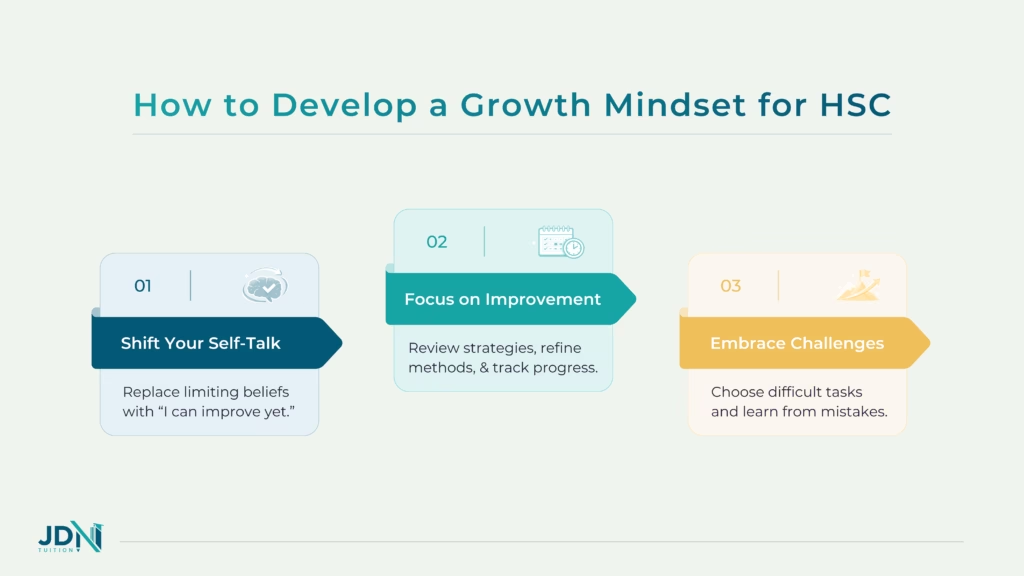
Okay, so now we know why it matters. Let’s look into how you can cultivate a growth mindset and apply it during your HSC year. Here are some actionable and impactful strategies.
Change your Self-Talk
Changing your beliefs and self-talk makes a huge difference. Replace phrases like ‘I am not good at Business Studies’ with ‘I am not good at Business Studies yet, but with effort, I can improve.’ Keep a journal or a reminder that reminds you, ‘I can improve, because mistakes help me learn and do better’. Also, try adding the word ‘Yet’ at the end of sentences. For example, ‘I am not good at Physics yet’. This sounds better than ‘I am not good at Physics.’ Therefore, changing your self-talk to positive affirmations really makes a major difference.
Focus on Process, Not Just Outcomes
After each mock exam or assignment, take 10 to 15 minutes to analyze a few key points. These include: what strategy did I use? What worked for me and what did not? And what should I change to get better? Make your goals about improvement rather than just results. For example, say ‘I will work on the core concepts of Physics in Module 2 by next week’ instead of ‘I must get 90% by hook or by crook in my next physics assignment.’ This mindset turns your fixed mindset into a growth mindset.
Take Risks and Challenges
Pick HSC past papers that are harder than your current level. Look at them as your growth opportunities. When you are stuck on a question and do not understand how to solve it, pause, reflect, try another strategy, check answers, and learn from your mistakes. Additionally, instead of running away from topics that you find difficult, ask your high school tutors for help, dedicate a few study sessions to them, and tell yourself, ‘This is how I’ll improve and get better. ’
At the end, as one of the finest private tutoring brands in Australia, we recommend our students to reflect and revamp or adjust their strategies after every week or month. This helps them stay a step ahead of others.
Final Thoughts on Improving HSC Grades Through Growth Mindset
If you’re gearing up for the HSC, having a growth mindset isn’t about sticking motivational quotes on your wall; it’s about changing the way you see yourself and your learning journey. It’s about knowing you can get better, putting in the effort to do so, and being open to learning from every mistake along the way. Real progress happens when you combine that belief with smart study habits, time management, and genuine self-care. Remember, success doesn’t come overnight; it’s built bit by bit. So keep showing up, stay curious, and trust the process. One step, one strategy, one reflection at a time, you’ve got this.
Why Choose JDN Tuition for your HSC Tutoring?
At JDN Tuition, we take a holistic education approach that goes beyond textbooks. Our dedicated tutors help students develop a growth mindset by teaching practical ways to stay focused and motivated, including how to stop procrastinating and manage study stress effectively. We combine academic support with strategies that build discipline, confidence, and resilience. Through engaging lessons, regular reflection, and even highlighting physical activities that boost focus and well-being, we help students perform their best inside and outside the classroom. At JDN Tuition, we don’t just prepare students for exams; we prepare them for lifelong learning and success.
Have a look at authentic reviews from students on our website and contact us today. You can also visit our blog page to have detailed insights into various interesting topics. Stay connected with JDN Tuition—follow us on Facebook, Instagram, and LinkedIn for tips, updates, and student success stories.
Boost Confidence. Improve Results. Start Today.
📞 Book a FREE Call: (02) 7257 0299
📧 Email us: contact@jdntuition.com.au
What are the 5 characteristics of a growth mindset?
The 5 characteristics of a growth mindset are accepting flaws and mistakes as opportunities, recognising setbacks as part of the learning process, seeing intelligence as developmental over the course of time, embracing challenges, and being open to feedback.
What are the four steps to developing a growth mindset?
Developing a growth mindset starts with self-reflection and obsessing over the problem instead of the solution. After these two steps, make it safe for yourself to fail and own your growth. Lastly, transform praise and feedback loops.
What are the 4 pillars of a mindset?
The four major pillars of a mindset are emotional intelligence, empathy, growth, and gratitude. It all comes together to transform anxiety and burnout into personal empowerment.