



The Importance of Tutoring in Child Development
Study Skills | Teaching Methods | Growth Mindset
As a parent, nothing matters more than supporting your child development and giving them the best chance to thrive both academically and personally. School today is tough. The curriculum gets heavier, deadlines stack up, and every child and teenager seems to be running to keep up. For many kids, traditional classrooms simply aren’t enough. It’s easy to fall behind, feel overwhelmed, or lose confidence when the pace doesn’t match their learning style.
That’s where expert tutoring steps in. Becoming an increasingly popular choice among Australian families, tutoring provides a pathway for your child to build important life skills: self-confidence, motivation, good habits, resilience, and a growth mindset.
In this article, we’ll explore what we mean by “child development,” why it matters now more than ever, and how tutoring can play a crucial role in supporting that development. Want to read more blogs about how to support your child’s development? Check out our JDN Tuition Blog Page.
What is Child Development?
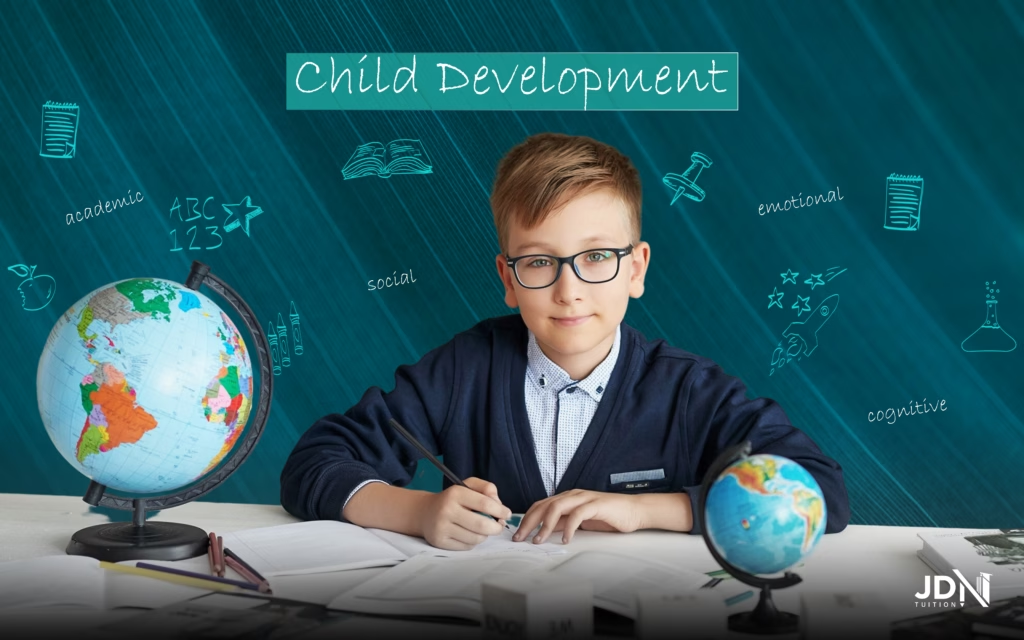
Child development is the foundation for how they grow into capable, confident, and independent individuals. From the early years right through to high school and beyond, their personal growth refers to the ongoing process of learning, adapting, and maturing across several key areas: cognitive, emotional, social, and academic.
As a parent, you’ve likely seen firsthand how different children’s developing minds grow at different rates. One child may grasp abstract maths concepts with ease but struggle with confidence. Another may be socially outgoing but find it hard to stay organised or focused on schoolwork. These differences are natural, and they’re why understanding child development is so important.
Every child has unique strengths, challenges, and learning styles. With the right guidance and support, these differences can become real advantages. When you understand your child’s stage of development, you can offer the right encouragement. You can also provide a clear structure to help them thrive at school and in life.
What are the Types of Child Development?
Your child develops in four main dimensions:
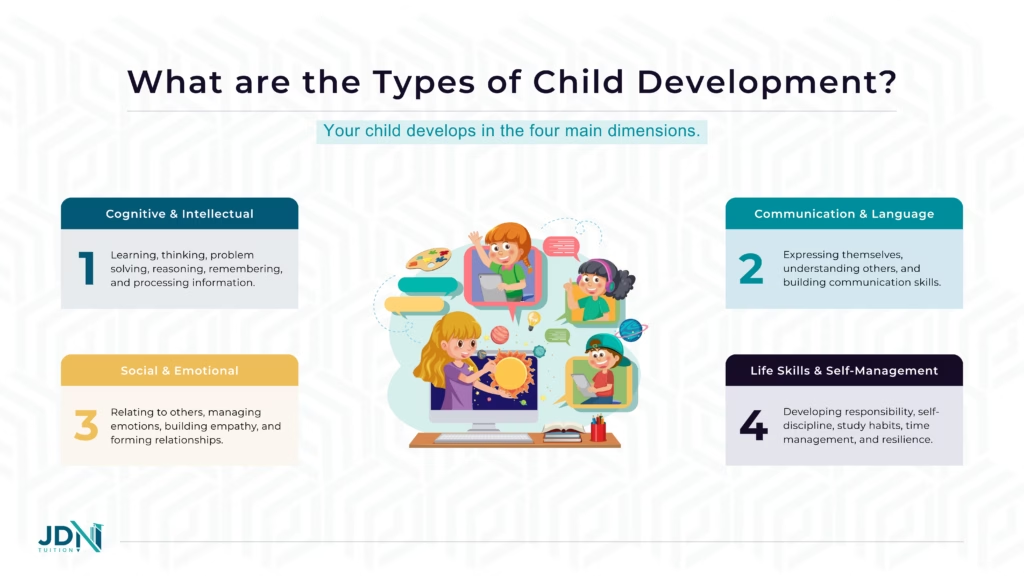
- Cognitive and intellectual development: Also known as academic development, this includes how children learn to think, understand concepts, solve problems, reason, remember, and process information. Developing their cognitive function helps them learn.
- Communication and language development: From babbling as babies to full-blown conversations and nuanced writing later on, language skills are a core aspect of development. These skills help children express themselves, understand others, and build the foundation for academic learning and social interaction.
- Social and emotional development: Children also learn how to relate to others, manage emotions, build empathy, cooperate, and form relationships.
- Life-skills and self-management: Over time, children build habits and capabilities that support their independence, such as self-discipline, responsibility, good study habits, time management, decision-making, and resilience when facing challenges.
Why is Your Child’s Development Important?
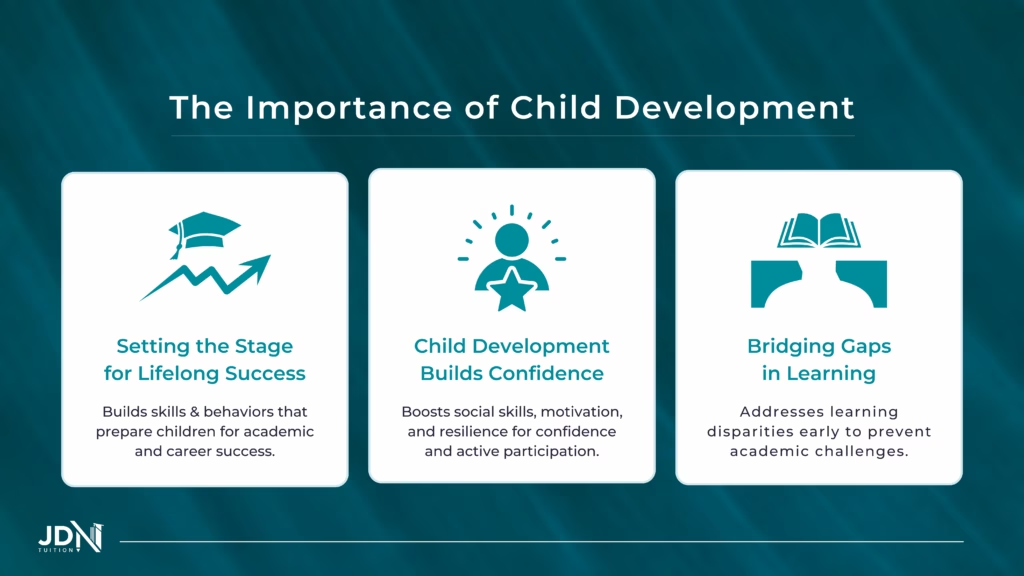
Your child’s development is the foundation of their future positive work environment and career. It shapes not just how well they do in school, but how they approach life, interact with others, and respond to challenges. When we invest in their development early, we give them the behavioural skills to grow emotionally, socially, and simultaneously enhance their academic skills both now and long after they leave the classroom. Below are a few reasons why maximising your child’s development is important.
Setting the Stage for Lifelong Success
The skills your child builds during their school years don’t just determine test scores or grades. They form the habits and mindset that will carry them through university, the workforce, and adulthood. The simple fact is that children who develop strong problem-solving abilities, emotional resilience, and a love for learning early on are far better prepared for the ever-changing world they’ll enter as adults.
Don’t let your child lose these key developmental skills. JDN Tuition’s primary school tutoring is personalised, supportive, and designed to guide both the academic and personal growth of your child. We help students build confidence, stay motivated, and develop habits that lead to long-term success.
Child Development Builds Confidence
Confidence and student wellbeing isn’t just something a child has or doesn’t have. It develops over time, much like literacy or numeracy skills. When a child experiences consistent success, feels supported, and sees their progress, they begin to believe in their own capabilities. That belief becomes a powerful motivator, influencing their willingness to try new things, speak up in class, and persist through challenges.
However, children who repeatedly struggle without support can develop the opposite: self-doubt, anxiety, and a reluctance to engage leading child development to stall, their lack of confidence debilitating their ability to learn. Don’t force your child to learn how to improve self esteem years down the line when it’s far too late. Much like putting your child through maths tutoring, to improve their learning skills however, you need to do the same for your child’s development, or risk them being left behind. JDN Tuition’s tutoring philosophy prevents this; the development of your child scales with their maths and English tutoring. Take a look at our Google Business Profile and book a consultation today to see how our expert tutors can help your child develop.
Uneven Development Can Create Long-Term Gaps in Your Child’s Learning
Child development doesn’t move at a uniform pace. Some children excel in reading but lag in maths. Others are socially advanced but struggle with focus and organisation. These uneven patterns in skill development are completely normal, but they can become problematic if left unaddressed.
Without timely intervention, small learning gaps can compound over time. A missed concept in Year 7 English might lead to lost writing skills in Year 9, and by then, the child’s confidence and motivation may have eroded. These gaps don’t just affect academic performance but can even affect how a child sees themselves as a learner and a thinker.
That’s why early, tailored support and personalised education plans are so critical. Tutoring allows educators and families to identify and bridge gaps before they become barriers. Recognising each child’s unique developmental path is key to helping them grow into capable, balanced individuals.
How Tutoring Helps Your Child’s Development?
Tutoring is often thought of as a way to boost grades, but its true value runs much deeper. At its best, tutoring supports the full spectrum of a child’s development from intellectual growth to emotional well-being and personal maturity. It creates the kind of learning environment that nurtures not just knowledge but also builds confidence, independence, and lifelong skills. Here’s how the impact of tutoring plays a crucial role in shaping well-rounded, capable learners. Below are a few ways tutoring develops the life-essential skills necessary for our kids.
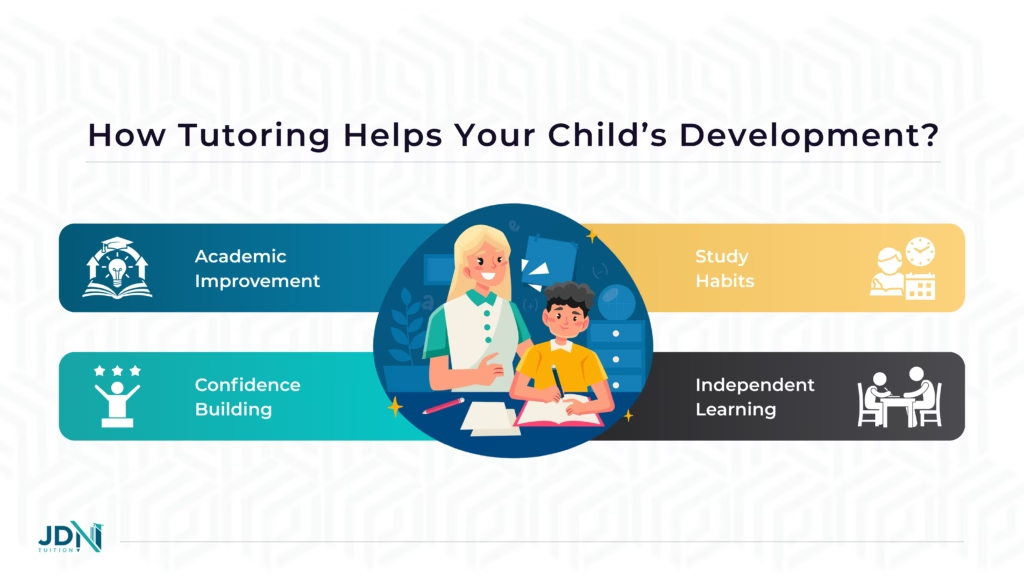
Individualised Learning Stimulates Cognitive Growth
In a typical classroom, teaching is standardised out of necessity. One teacher, many students, limited time. But children don’t all learn in the same way or at the same pace. Some need more time to process information. Others benefit from visual explanations or thrive when learning is broken into smaller, more manageable steps.

The benefits of tutoring allow for this kind of personalisation. Whether delivered one-on-one or in a small group, it gives your child the opportunity to learn in the way that suits them best without interrupting their study timetable. This personalised approach is critical for cognitive development. It helps solidify core concepts, reinforces memory, and strengthens a positive attitude that will keep them learning.
Moreover, tutors can identify specific knowledge gaps that may otherwise go unnoticed in a busy school environment. Addressing these gaps early and building study plans can prevent frustration and confusion from setting in later. With time, students become more confident in their thinking, more capable in their reasoning, and more independent in their learning.
Positive Mentorship Builds Emotional Resilience and Motivation
While school environments can be academically demanding, they often lack the holistic approach, time and space to support students emotionally. For many children, feeling unseen or misunderstood in a classroom can lead to a decline in confidence, increased anxiety, or disengagement from learning altogether.
The importance of tutoring provides a valuable counterbalance. Tutors offer a consistent, positive reinforcement in a setting where students feel safe to ask questions, express confusion, and take intellectual risks without fear of judgment. This kind of relationship builds trust and helps children reframe challenges as growth opportunities rather than signs of failure.
Over time, this leads to greater emotional resilience. Students learn that it’s okay to struggle and that improvement comes through persistence and guided support. That mindset shift is transformational. Children begin to develop internal motivation, not just to get the right answers, but to genuinely understand, explore, and master what they’re learning.
Tutoring Instills Self-Management Skills for Lifelong Learning
Strong academic performance is how a student manages their time, stays organised, and approaches learning. These self-management skills are vital to a child’s development but are rarely taught explicitly in schools, and many students drift through their education without ever learning time management skills, how to structure their workload, or plan for exams.
Tutoring services fill that gap. A skilled tutor doesn’t just cover subject content but also helps students build routines, develop effective study strategies, set achievable goals, reflect on their progress, and teach them how to focus on study. Combined with a flexible learning environment, tutoring sets up your child’s development long into the future. It also nurtures confidence and independence, empowering students to take ownership of their learning journey.
How JDN Tuition Can Support Your Child’s Development
At JDN Tuition, we understand that supporting your child’s development goes far beyond helping them with homework or preparing for the next test. We believe tutoring should support the whole learner. It builds strong academic foundations. It also develops confidence, motivation, and independence. These skills help students thrive well into adulthood. That’s why every aspect of our approach is tailored to the way your child learns best.
A Range of Tutoring Types to Suit Every Learner
There’s no one-size-fits-all approach when it comes to your child’s development, which is why JDN Tuition provides a variety of tutoring types. From in-person tuition to helping your kid learn how online tutoring works, as well as online tutoring for junior high school students and private tutors for high school students, we adapt to your child’s needs, goals, and learning style.
Our experienced High School math tutors, for example, work closely with students to build subject mastery and confidence in high-stakes areas like the HSC. These senior students aren’t just memorising equations but also developing critical thinking, time management, and analytical reasoning that prepare them for university and beyond.
How to Choose the Right Tutor for Your Child’s Development
Tutoring isn’t just for struggling students. It’s for every child who could benefit from extra encouragement, deeper understanding, or greater academic stretch. Why tutoring is important boils down to one key principle: every child deserves the opportunity to realise their full potential. Whether that’s closing a learning gap or aiming for top results, the right tutor can make all the difference.
But how to choose a tutor that’s right for your child? Look for more than qualifications. The best tutors are those who connect, understand, and adapt whilst treating each child as an individual with unique strengths and needs. At JDN Tuition, our tutors are carefully selected for their subject expertise, emotional intelligence, and genuine commitment to nurturing growth.
 At JDN Tuition, we believe in tutoring that empowers your child not just for the next test, but for the future. We offer in-person tuition, innovative online tutoring, or a blend of both. Our goal is to support your child’s development in the most meaningful way.
Our personalised approach ensures every student receives the attention, guidance, and encouragement they need to thrive. We help students grow in confidence and build strong foundations. We also foster critical thinking and inspire a lifelong love of learning.
Help your child grow into a confident, capable learner ready to succeed in school and thrive in life. Contact JDN Tuition today and take the next step in your child’s development journey. JDN Tuition is ready to support them every step of the way. Contact us today to improve your child’s development.
Let’s Improve Results. START TODAY.
📞 Book a FREE Call: (02) 7257 0299
📧 Email us: contact@jdntuition.com.au
How can a tutor support you?
A tutor supports you by providing personalised guidance tailored to your learning style, strengths, and challenges. They help clarify difficult concepts, boost confidence, and build strong study habits. Most importantly, they offer consistent support that empowers students to become independent, motivated learners.
What is the main purpose of a tutor?
The main purpose of a tutor is to enhance a student’s understanding of academic content while supporting their overall development. Tutors help bridge learning gaps, reinforce classroom teaching, and adapt lessons to suit individual needs. Beyond academics, they foster confidence, resilience, and a positive attitude toward learning.
What are the benefits of tutoring?
Tutoring offers targeted support that improves academic performance, boosts confidence, and strengthens learning strategies. It encourages personal growth through better time management, self-discipline, and problem-solving. Over time, students become more independent and capable of handling academic and real-life challenges.