





One-on-One Tutoring or Classroom Learning: Which Works Best?
In-Home Tutoring Services | Teaching Methods | High School Tutoring
Have you ever seen your child come home from school, drop their bag and flop right onto their bed without even a word? For many Australian parents, this is a daily reality. One on one tutoring can help when a busy classroom does not provide enough individual attention. Schools work hard, especially with the relentless effort of teachers, but sometimes 30 students can be too much to manage. Your child can easily get lost in the shuffle.
That’s where one-on-one tutoring enters the picture. More families are looking beyond classroom teaching to fill those gaps. But is a private tutor always the right choice? Or does the classroom offer something that a tutor simply can’t replace?
Unfortunately, student learning is not one-size-fits-all, and there is no single right answer. In this article, we break down both approaches honestly, so you can decide what works best for your child. For more reads like this, visit the JDN Tuition Blog Page.
How Classroom Learning Works?
Classroom-based learning is the system most Australian families know best. A qualified teacher leads a group of students through a shared curriculum, following a set timetable across the school year. Everyone moves together, covers the same material, and sits the same assessments.
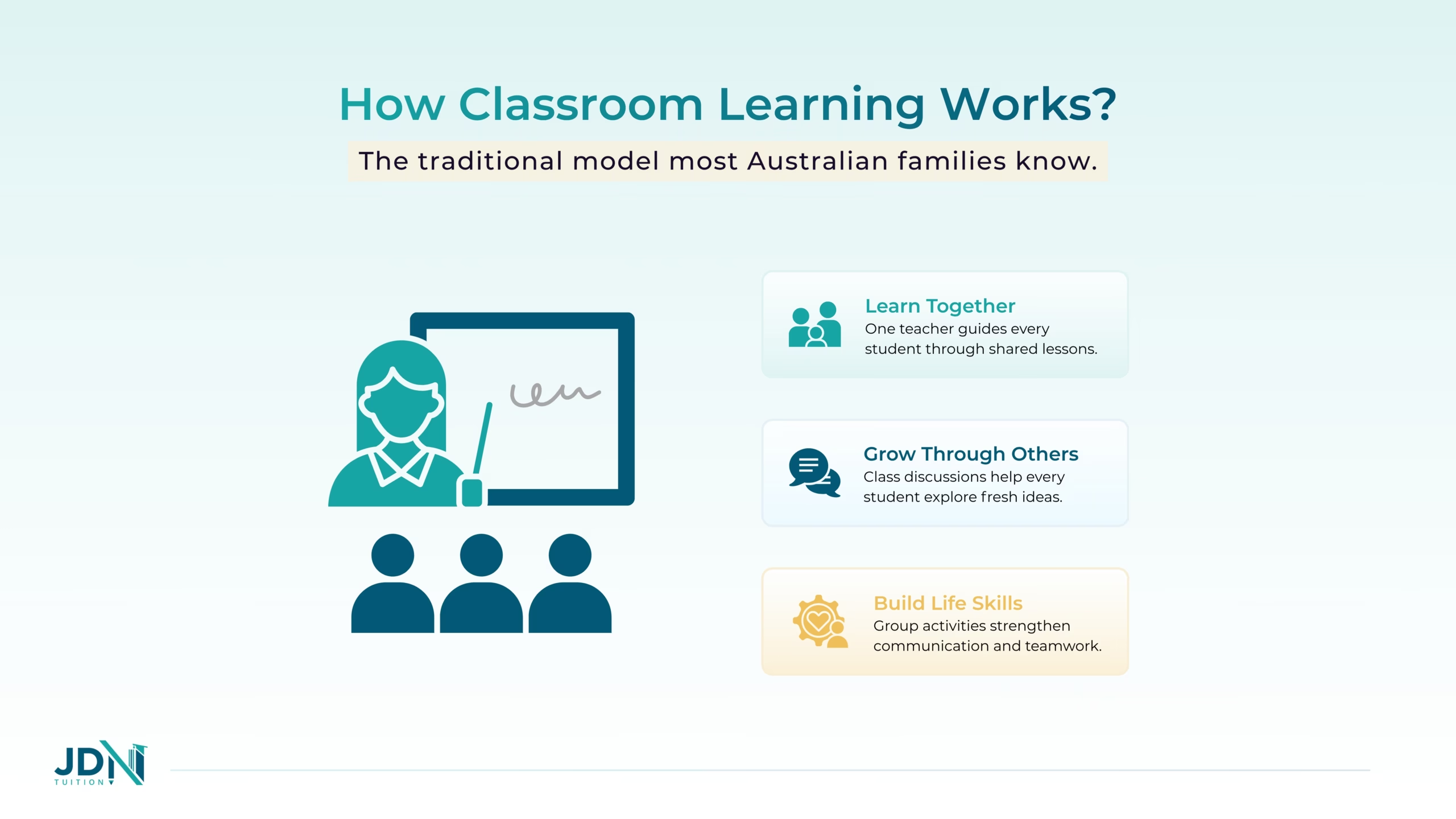
This model has real strengths. Face-to-face learning puts students in the same room as their peers and teacher. That proximity matters. Students absorb information not just from the teacher but from each other. A classmate’s question might spark a thought your child hadn’t considered. A group discussion can bring a concept to life in a way a textbook never could.
Additionally, social interaction is woven into every school day. Students learn to listen, take notes effectively, debate ideas, and work alongside people they don’t always agree with. Collaborative learning through group tasks builds communication skills that last well beyond the classroom.
How One-on-One Tutoring Works?
One on one tutors work very differently from classroom teachers. Instead of managing a group, a tutor focuses entirely on your child. Every session is built around that student’s specific needs, current understanding, and personal goals.

Furthermore, the format can vary. The format varies. In-person tutoring at a tutoring centre or at the kitchen table is common across Australia. Many families now also use online sessions via video call. Home tutoring is a particularly popular choice because it removes travel time and puts your child in a comfortable, familiar environment.
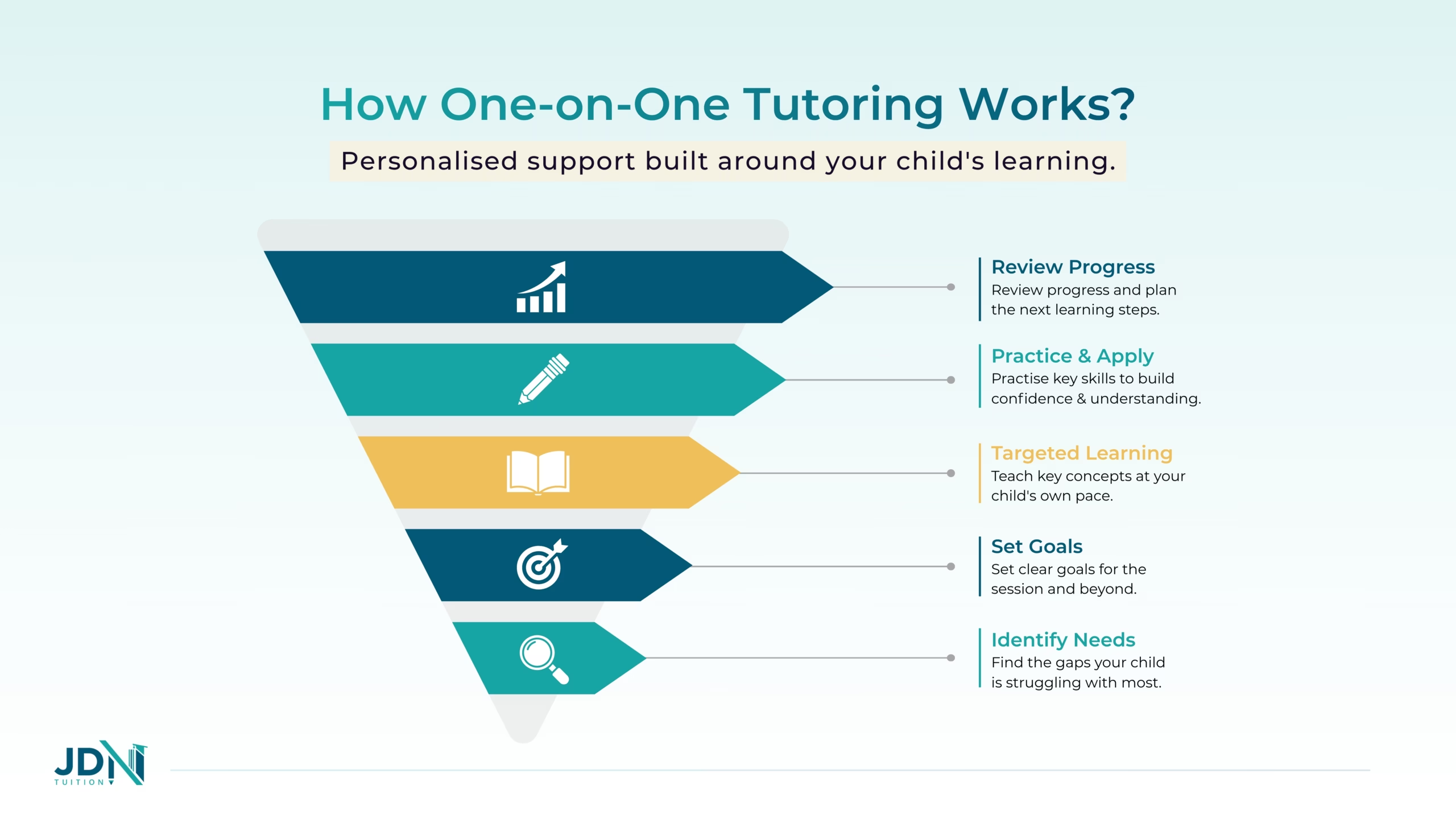
Sessions typically begin by identifying where your child is struggling. The tutor then works through those gaps at a pace that suits your child specifically. There’s no pressure to keep up with the class or hold back for others.
Private tutoring also means your child can ask the questions they might feel embarrassed raising in front of thirty peers. That psychological safety alone can unlock significant progress. Tutors work alongside the school curriculum rather than against it, reinforcing what teachers introduce during the day.
The Real Strengths of Classroom Learning
Classroom teaching unfortunately can’t suit everyone. But it does a great deal of things very well, and parents should understand that before drawing any conclusions.
Teachers use a wide range of teaching techniques to reach students. Storytelling, visual aids, hands-on experiments, Socratic questioning and peer discussion all feature across a typical school week. This variety exposes your child to different ways of thinking and processing information. It also keeps learning engaging across different subjects.
Small group tutoring, which teachers often run within the classroom during independent work time, gives students targeted support without pulling them away from their peers. Many schools build this into their everyday routine, and it can be surprisingly effective for students who just need a little extra guidance on a particular concept.
More than academics, the classroom is also where soft skills are built. Teamwork, active listening, respectful disagreement, and time management all develop naturally in a group setting. These are the skills that future employers, universities, and communities value enormously. A child who has learned to collaborate, advocate for themselves, and navigate social dynamics is far better prepared for adult life. The classroom, at its best, is a training ground for exactly that.
The Benefits of One-on-One Tutoring
The benefits of one-on-one tutoring become clear the moment you compare it to what a classroom can realistically offer. In a group of thirty, a teacher simply cannot stop to address every student’s confusion. A tutor can, and does, every single session.
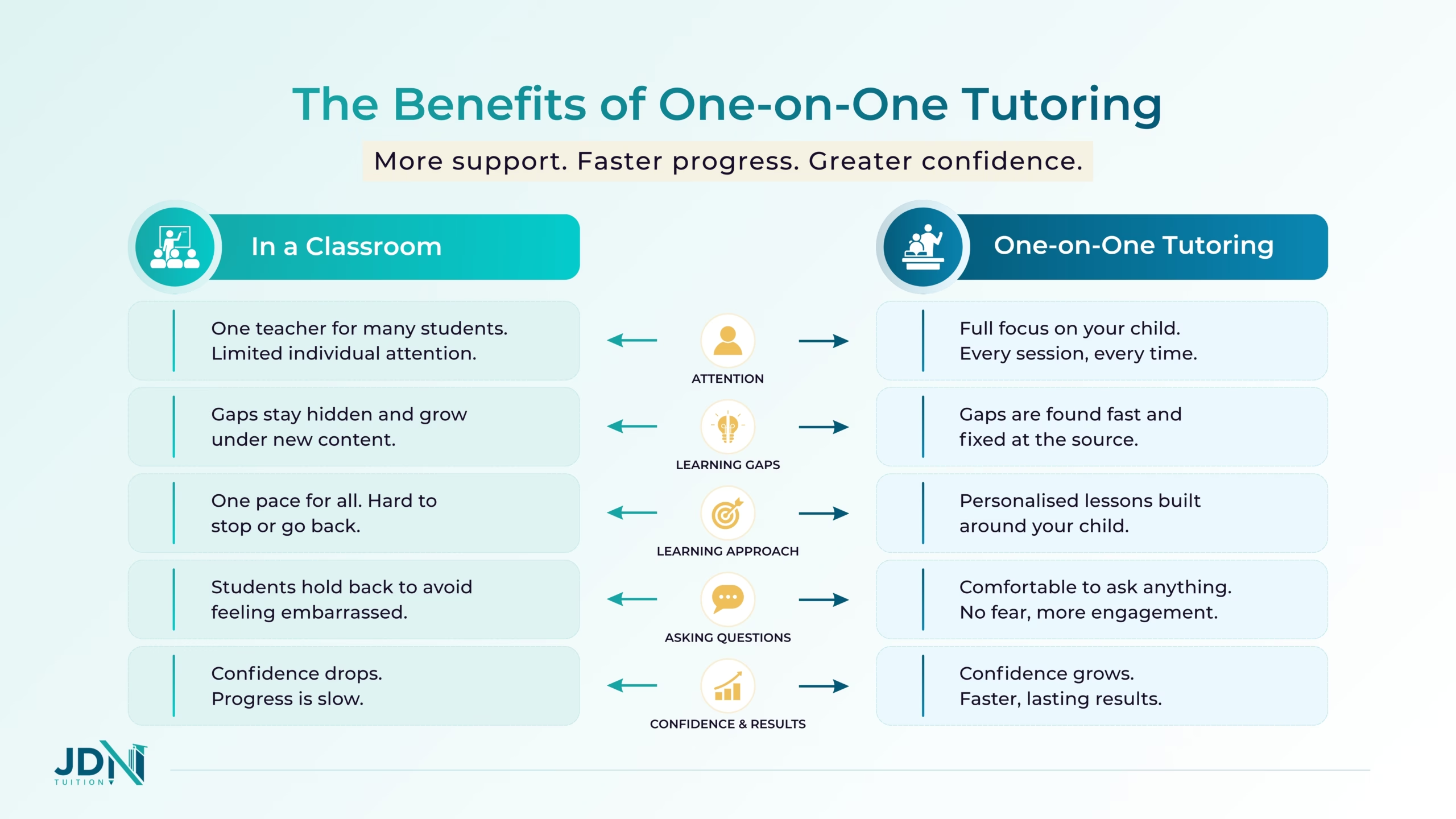
Consider a student, your child, who has quietly misunderstood fractions for two years. In a classroom, that gap gets buried under new content each week. With one-on-one tutoring, the tutor identifies that gap in the first session and works backward until the foundation is solid. Progress that might take months in a classroom can happen in a matter of weeks.
Personalised learning sits at the core of this. A tutor builds every session around your child’s specific curriculum, learning pace, and areas of weakness. There’s no syllabus pressure pushing them past a concept they haven’t truly grasped yet.
Private one on one tutoring also gives students the freedom to ask questions without social risk. In a classroom, many students stay silent rather than appear confused in front of their peers. With a tutor, that barrier disappears. Students ask more, engage more, and retain more as a result.
Over time, this builds genuine academic confidence. Students stop seeing themselves as “bad at maths” or “not a reader” and start realising they simply needed the right kind of support.
Whether your child needs to catch up, keep up, or get ahead, JDN Tuition offers expert HSC high school tutoring and primary school tutoring tailored to your child’s exact needs. Get in touch today to find the right tutor for your family.
Where Classroom Learning Has Its Limits
The classroom works well for many students, but it has structural limitations that no amount of good teaching can fully overcome. The most significant is pace. A class of thirty students spans a wide range of abilities, and the lesson must move at a speed that works for most of them. Students at either end of that range often miss out.
For students who learn differently, the problem runs deeper. Different learning styles are rarely accommodated in a standard classroom. A student who processes information visually might struggle with a heavily text-based lesson. A student who needs to talk through ideas might find silent individual work genuinely difficult.
Personal motivation is another casualty of the group model. When students fall behind, many quietly give up rather than speak up. They sit through lessons they don’t understand, hoping it will make sense eventually. Without targeted intervention, that disengagement compounds over time and becomes very difficult to reverse.
So How Does One-on-One Tutoring Step In?
Tutoring doesn’t replace school. It works alongside it, picking up exactly where the classroom leaves off. The gaps that group instruction creates are the same gaps that a good tutor is trained to find and fill.
The needs of a student vary significantly depending on their year level. High school tutors will focus on exam technique, subject-specific depth, and managing a demanding workload across multiple subjects. Primary school tutoring, on the other hand, tends to focus on foundational skills such as reading fluency, number sense, and building the study habits that will carry students through their entire academic life.
Additionally, finding quality local support is easier than ever. Searching for the perfect tutor near me brings up a range of options, but what you’re really looking for is a tutor who understands your child’s school curriculum, communicates with you as a parent, and adjusts their approach as your child grows.
Building Skills Beyond the Syllabus
Academic results matter, but they tell only part of the story. The most lasting impact a tutor has on a student often has nothing to do with the curriculum at all.
Good tutors teach students study methods that work beyond any single subject. Time-blocking, active recall, spaced repetition, and structured note-taking are all techniques that students can carry into every area of their schooling. Most students have never been explicitly taught how to study. They simply guess, repeat what hasn’t worked, and wonder why they’re falling behind.
Tutors also tackle one of the biggest obstacles students face: knowing how to stop procrastinating. Rather than lecturing a student about it, a good tutor builds structure into sessions that naturally reduces avoidance. Students learn to start tasks before they feel ready, which is a skill that serves them for life.
This all feeds into broader personal development. Students who work regularly with a tutor tend to grow in confidence, self-awareness, and resilience. They develop a stronger sense of ownership over their learning. That internal shift is often worth more than any grade improvement on a report card.
At JDN Tuition, the goal goes well beyond test scores. Our tutors work to build a confident, capable, and ready student prepared for whatever life throws at them. Read a few of our reviews and check out our Google Business Profile to see how we can do this for your child.
Technology, Blended Learning and the Modern Student
Digital technology has reshaped how students learn at every level. Classrooms now use interactive whiteboards, adaptive software and learning management platforms as standard. Tutoring has evolved alongside them.
The rise of AI in education sits at the centre of this shift. AI tools can identify knowledge gaps and adapt content to a student’s level in real time. Used well, they accelerate learning. Used poorly, they shortcut the thinking process students need to develop.
Many parents ask is online tutoring effective compared to face-to-face sessions. Research and practical experience both confirm that it absolutely can be. When comparing online tutoring vs classroom teaching, the format matters far less than the quality of the tutor and the engagement of the student.
For many students, the strongest results come from combining both worlds. A hybrid learning model pairs the social richness of school with the targeted precision of private tutoring. Blended classroom learning is also increasingly built into schools themselves, rotating students through direct instruction, small group work, and independent digital tasks within a single lesson. Classroom tutoring programs run within schools complement external tutoring well, with both approaches reinforcing each other rather than competing.
How to Choose the Right Option for Your Child?
Choosing between tutoring and relying solely on school comes down to knowing your child honestly. A few key questions can guide that decision.
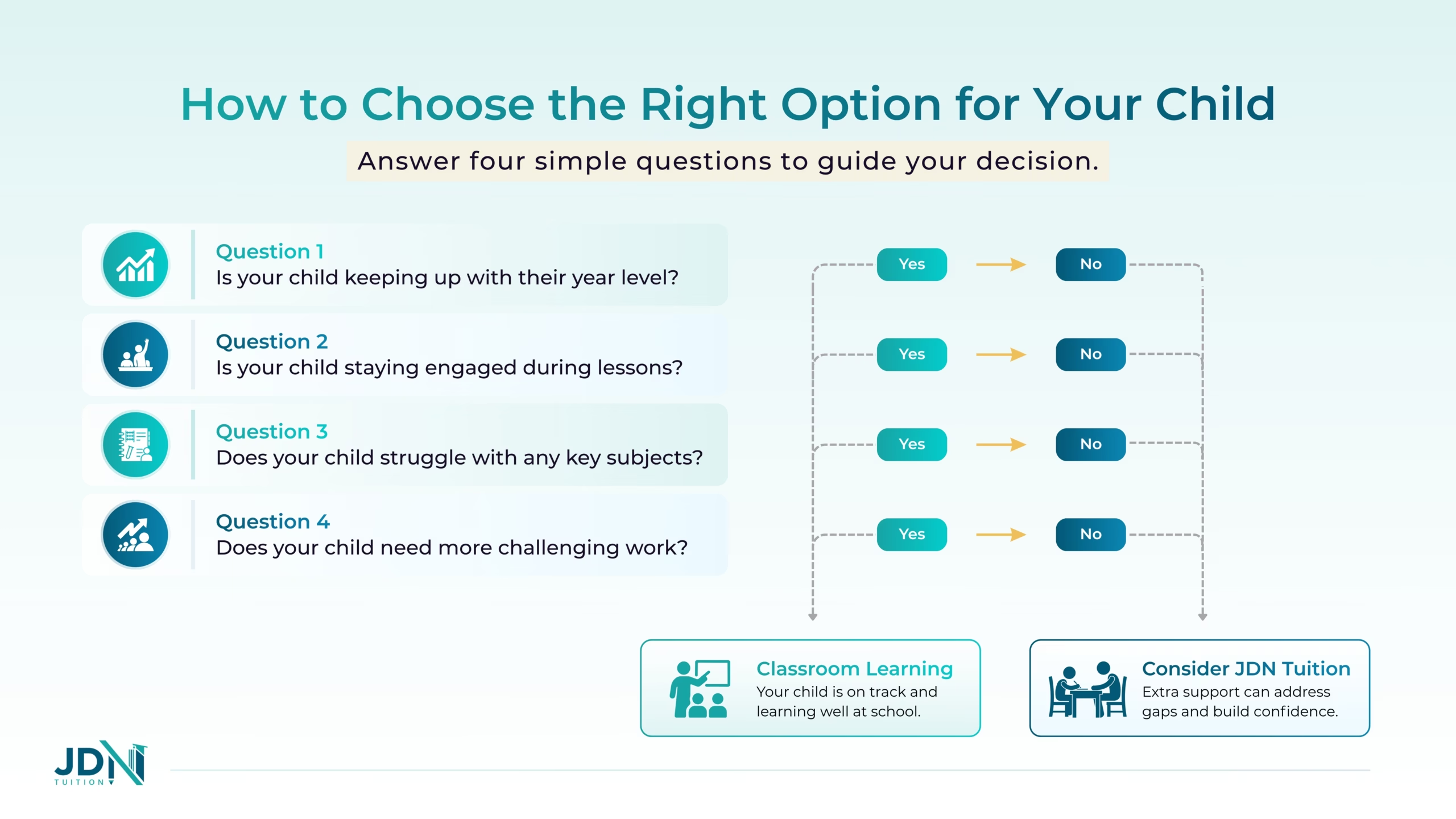
Is your child keeping up with their year level? Are they engaged during lessons or quietly switching off? Do they have major assessments or a subject they’ve always struggled with? Are they working well above their year level and in need of extension? Your answers will point you in the right direction fairly quickly.
Conclusion: Is One-on-One Tutoring the Best Fit?
There is no single winner in the debate between one-on-one tutoring and classroom learning. Both play a valuable role in a child’s education. The classroom builds social skills, shared experiences, and broad academic foundations. Tutoring fills the gaps the classroom can’t reach and accelerates growth in ways that group instruction rarely can. For most students, the two work best together.
The most important step is simply deciding to act by reaching out to JDN Tuition, Australia’s best tutoring service. Contact us today by phone or email to find the right tutor for your child who helps their classroom growth.
Start Improving Results Today
 Book a FREE Call: (02) 7202 1930
 Email us: contact@jdntuition.com.au
What are the advantages of classroom learning?
Classroom learning exposes students to diverse perspectives, group discussion, and collaborative problem-solving that build strong social and communication skills. It also follows a structured curriculum that ensures students cover all the foundational knowledge expected at their year level.
What are the benefits of one-on-one tutoring?
One-on-one tutoring gives students personalised attention that a classroom simply cannot offer, allowing a tutor to target specific gaps and move at a pace that suits the individual. Students tend to ask more questions, engage more deeply, and build academic confidence far more quickly than they do in a group setting.
Is one-on-one tutoring the best way to learn?
For many students, one-on-one tutoring produces outstanding results, but it works best when it complements classroom learning rather than replacing it entirely. The most effective approach combines the social and academic foundations built at school with the targeted, personalised support that a tutor provides.