


How Parents Can Support Effective NAPLAN Preparation
What is NAPLAN | NAPLAN Practice Tests | NAPLAN Test
Discover expert NAPLAN preparation tips to help your child navigate the online tests with confidence while aiding their wellbeing and academic focus.
It’s soon term one, and just as the dust settles on the back-to-school chaos, one familiar topic starts bubbling up in parent group chats and at the school gate. NAPLAN. Since the move from May to March, it feels like these NAPLAN, or the National Assessment Program Literacy and Numeracy arrive before students have even unpacked their lockers. For primary school parents, it’s one of the first tests you need to prepare your children for. When your child reaches Year 7, you’re navigating the double whammy of high school transition and national testing. By Year 9, the stakes suddenly feel higher as the senior years loom on the horizon.
But here is the truth: panic is the enemy of performance. While the media loves to hype up the pressure, your approach at home should be the exact opposite. Success in these tests is not about last-minute cramming or memorising the dictionary. It is about familiarity, routine, and ensuring your child walks into that exam room feeling capable rather than cornered. Want to read more blogs about how to conquer NAPLAN? Check out our JDN Tuition Blog Page for more.
What’s Changed? Understanding NAPLAN in 2026
First things first, let’s mark your calendar. The NAPLAN tests for 2026 are scheduled between Wednesday, 11 March and Monday, 23 March. If you have older children, you might remember the days when these assessments were held in May. The shift to Term 1 is designed to give teachers access to data earlier in the school year, allowing them to better support your child’s learning journey from the get-go.
In 2026, the most significant feature of the modern format is adaptive testing. Gone are the days of a static paper test where every student answers the exact same questions. Now, the test evolves in real-time. If your child answers a question correctly, the next one becomes slightly harder; if they struggle, it adjusts to be more accessible. This “tailored” approach allows for far more precise NAPLAN results, moving away from the old “bands” to clearer proficiency standards: Exceeding, Strong, Developing, and Needs Additional Support.
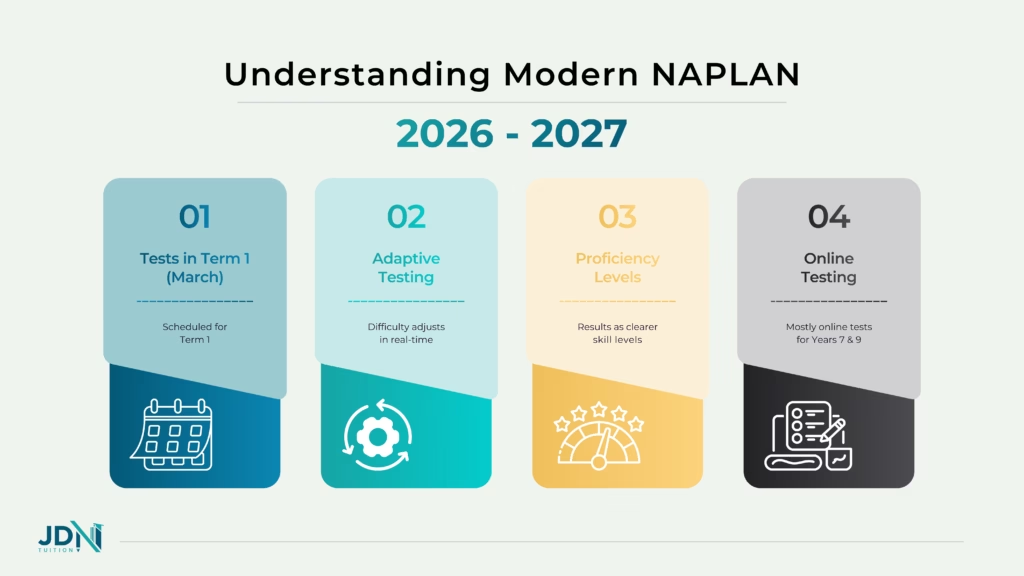
For Year 7 and 9 students, the tests are almost entirely online (except Year 3 writing). This means success isn’t just about knowing the answer; it’s about digital readiness. Preparing for NAPLAN now requires a dual focus. Yes, strong numeracy skills and writing skills are the foundation, but being able to navigate the browser, type quickly, and drag-and-drop answers is equally vital. This is why holistic NAPLAN tutoring often focuses on these test-taking mechanics just as much as the academic content itself.
The “Anti-Cramming” Approach: Strategic Preparation
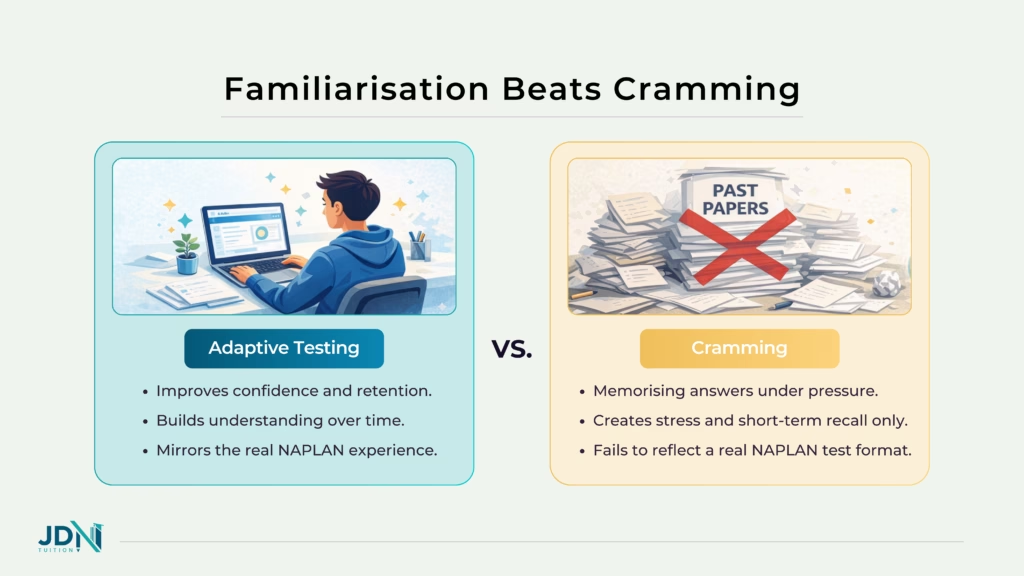
There is a big difference between “cramming” and “familiarisation.” You cannot cram for a skills-based assessment like NAPLAN any more than you can cram for a marathon. Your child cannot memorise an essay or predict the exact maths problems they will face. Instead, the most effective NAPLAN study material focuses on building core skills and ensuring students are comfortable with the test environment.
Familiarisation vs. Coaching
The best place to start is the ACARA public demonstration site. This free resource lets students practice using the online tools, like the on-screen ruler, calculator, and drag-and-drop functionality, without the pressure of scoring. We often see parents printing out stacks of old NAPLAN past papers. While these are useful for checking content knowledge, they don’t replicate the adaptive, digital nature of the 2026 test. It is far better to mix paper-based revision with digital practice to simulate the real experience.
Targeting Literacy: Structure is Key
For many students, the writing task is the most daunting. The prompts can be anything from “The best day ever” to “Do rules make life better?” Success here relies on structured writing exercises rather than flowery language.
Encourage your child to focus on sentence structure and paragraph organisation (using the TEEL method). Markers are looking for a clear narrative or argument, not just big words. Regular practice with writing techniques, like using metaphors or rhetorical questions, can help lift their writing from ‘standard’ to ‘engaging’. Furthermore, the separate reading and conventions tests require precision. Using specific NAPLAN grammar and punctuation practice tests can help students spot their own common errors, such as misplacing apostrophes or confusing homophones, which are critical for the conventions of the language domain.
Numeracy: Logic Over Rote Learning
NAPLAN numeracy questions often trip students up, not because the maths is too hard, but because the questions are “wordy.” They require logic and interpretation. The goal is to move beyond simple calculation and practice deconstructing word problems to understand what is actually being asked.
Does your child have the skills but lack the strategy? A structured NAPLAN preparation program shouldn’t just be about drilling answers; it should be about building a toolkit for problem-solving. At JDN Tuition, we focus on the underlying literacy and numeracy skills that serve your child well beyond the test dates. Check out our Google Business Profile to find out how our personalised NAPLAN tutoring Sydney and NAPLAN tutoring Melbourne can turn anxiety into achievement.
Managing the “Year 7 & 9” Specific Hurdles
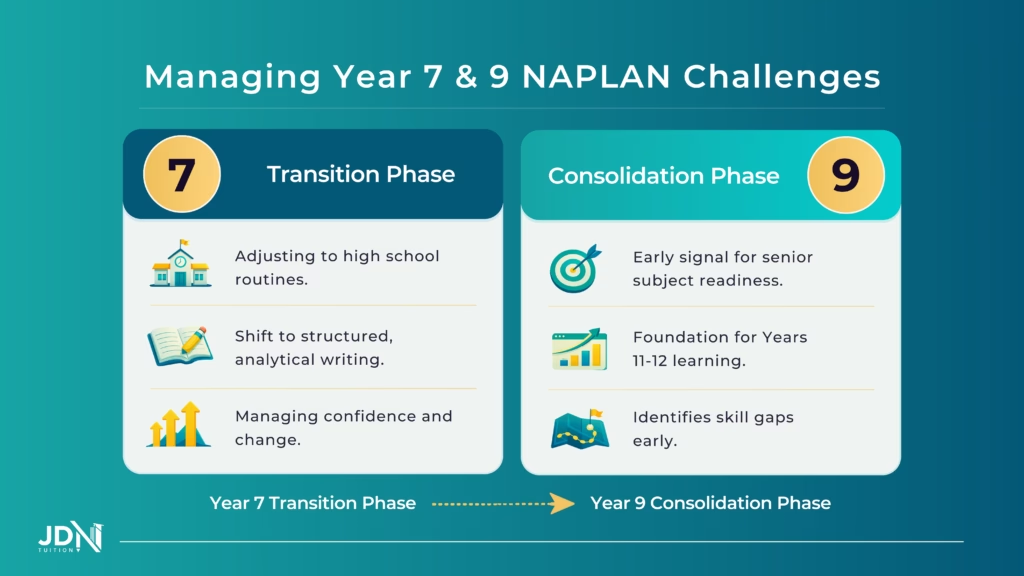
High school adds a layer of complexity to NAPLAN that doesn’t exist in primary school. Students aren’t just taking a test; they are navigating significant developmental milestones. Understanding these specific pressures is the first step in helping your child manage them.
Year 7: The “Small Fish” Transition
For Year 7 students, NAPLAN arrives right as they are adjusting to being the youngest in the school again. They are juggling new timetables, heavier lockers, and the social dynamics of high school. The academic leap is also significant. The high school English curriculum moves away from purely creative storytelling toward more analytical and structured responses. This is where many Year 7s stumble. Not because they lack imagination, but because they haven’t yet mastered the academic tone required.
Year 9: The Stakes Get Real
Year 9 is often associated with a “slump” in engagement, but it is actually a critical turning point. While they won’t determine university entry directly, Year 9 NAPLAN results are incredibly useful data points. They provide an early indication of suitability for demanding Year 11 and 12 courses, particularly in advanced English and Maths.
Bridging the Gap
To clear these hurdles, practical familiarity is key. Encouraging your child to try NAPLAN practice tests online can demystify the adaptive format and reduce fear of the unknown. Focus their revision on the basics: tightening up grammar and punctuation can often yield quick wins in the Conventions of Language test. Similarly, responding to diverse writing prompts, such as persuasive arguments or narrative starters, helps build the flexibility they need for the writing component.
Is your child feeling the pressure of the high school transition? Whether it’s a Year 7 student finding their feet or a Year 9 student aiming for early entry benchmarks, NAPLAN tutoring can provide the personalised support they need. At JDN Tuition, we help students translate their potential into performance. Take a look at our reviews and reach out to us to ensure your child is supported by an expert who understands the specific demands of the high school journey.
Wellbeing Strategies: The Parent’s Secret Weapon
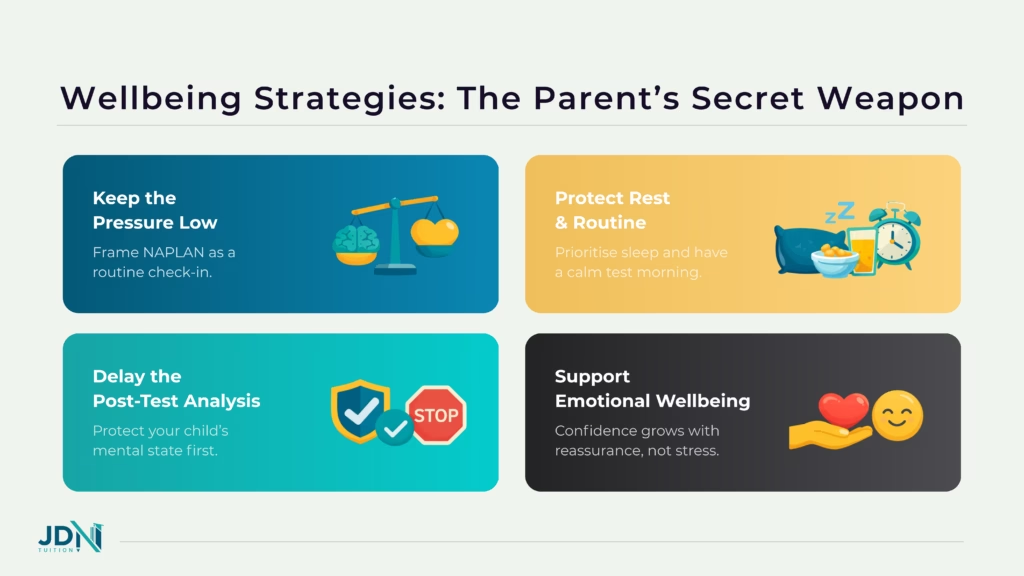
Your attitude at home is often the biggest predictor of your child’s mindset on test day. If you are stressed, they will be too. The goal is to frame NAPLAN preparation as a routine “check-in” rather than a high-stakes judgment.
Routine Over Revision
In the final days leading up to the test, prioritise sleep and nutrition over last-minute study. A tired brain is more likely to make simple calculation errors on NAPLAN numeracy questions or lose focus during the long texts in the NAPLAN reading test. Ensure the morning of the test is calm, rushed-free, and fuelled by a good breakfast.
The “No Post-Mortem” Rule
Anxiety often peaks after the test. Avoid dissecting every answer during the car ride home. Asking “Did you finish the NAPLAN writing task?” is fine, but asking “How many marks did you lose?” usually just adds worry. Remind your child that the new NAPLAN proficiency levels, Exceeding, Strong, and Developing, are designed to help teachers support them, not to label them. Success is walking out knowing they gave it their best shot.
When to Seek Extra Help
It can be difficult for parents to determine whether a child is simply experiencing normal test nerves or if there are deeper learning gaps that need addressing. The most effective way to decide is to look at the data objectively. If your child attempts NAPLAN test papers and consistently struggles with specific areas like algebra in numeracy or paragraphing in literacy, this indicates a skill gap rather than just “bad luck” on the day.
Identifying the Gaps
Don’t wait for the results to arrive in Term 3 to act. Use NAPLAN practice tests as a diagnostic tool now. Are they missing questions because they ran out of time, or because they didn’t understand the content? If it is a timing issue, they likely need help with revision techniques and practice writing activities. If it is content, they need academic support. This distinction is crucial when deciding how to make a study plan that is actually effective rather than just busy work. These techniques prevent a common issue. A child may read a page perfectly out loud but forget the events moments later. Without fluency, the rhythm of the text is lost. This makes it harder to grasp the intended tone or mood.
Conclusion: The JDN Tuition Difference
While general tutoring for NAPLAN preparation often focuses on drilling questions, our approach at JDN Tuition is different. We understand that High School requires a higher level of critical thinking. We don’t just correct mistakes; we teach the underlying logic.
For example, our English support goes beyond basic grammar to include targeted writing activities that teach students how to adapt their voice for different audiences, a key requirement for high bands. We drill down into the conventions of language, ensuring students understand why a semi-colon is used, not just where to put it. This depth of understanding ensures that the skills learned during NAPLAN tutoring transfer directly to their school assessments and future HSC performance.
Don’t leave your child’s confidence up to chance. If you have noticed your child avoiding homework or struggling to structure their thoughts, it might be time for a professional perspective. At JDN Tuition, we turn “I can’t do this” into “I have a plan.” We can help your child succeed, whether that be with primary school tutoring for NAPLAN beginnings or online tutoring for high school students for expert assistance. Contact us today to book a comprehensive academic assessment, or you can begin your journey by calling us now or reaching out to us via email to give your child the best NAPLAN preparation and effective results possible.
📞 Book a FREE Call: +61 2 7257 0299
📧 Email us: contact@jdntuition.com.au
What is the best preparation for NAPLAN?
The most effective preparation for NAPLAN is consistent engagement with the school curriculum, combined with familiarity with the test format. We recommend using the ACARA public demonstration site to ensure your child knows how to use the online tools (like the digital ruler or drag-and-drop functions) so the technology doesn't become a barrier to their performance.
How do I prepare my child for NAPLAN?
Focus on wellbeing and routine rather than academic cramming. Ensure they are getting plenty of sleep and eating well in the lead-up, and speak about the test as a helpful check-in rather than a high-stakes exam to keep their anxiety levels low. Simple daily routines and calm reassurance from you can make a powerful difference to how your child approaches the test.
Is NAPLAN compulsory?
While participation is expected for all students in Years 3, 5, 7, and 9, it is not legally mandatory. Parents can withdraw their child for religious or philosophical reasons by discussing this with the school principal and signing a formal withdrawal form prior to the testing window.