




How to Take Notes Like a Pro in High School
Good Notes | Note Taking | HSC Exams
Discover how to take notes effectively that actually help high school students learn and maximise their potential.
Have you ever sat in class, pen in hand, trying to keep up while your brain is still stuck on the last slide? You’re not alone. High school can feel like a firehose of facts, examples, and endless streams of information. It enters one ear and exits the other without actually leaving a mark. To prevent this, all good students need notes. But if done wrong, notes can leave students in a losing race against time.
Learning how to take good notes is a vital part of taking control of high school, and by extension, your HSC exams and VCE exams. Note-taking is an active study tool that helps students focus in class and process ideas in their own words. It also lets them build a study resource they can carry into their assessments.
In this blog, we explain how to take notes effectively, what it is, and why it’s important to learn how to take notes, whether that be self-taught or through private tutoring. Want to read more blogs on the mental challenges around exams? Check out our JDN Tuition Blog Page.
What is Note Taking?
Note-taking is the process of actively capturing, organising, and summarising information in a student’s own words so they can reuse it later. At its heart, note-taking means recording the essence of each teaching, reading, or class discussion in a way that makes sense to you. Then, you add your own cues or questions to turn raw content into a useful study resource.

For Australian high school students, especially in senior years like Year 11 and 12, this process becomes even more essential. With subjects like English, Maths, Chemistry or Modern History throwing out complex concepts fast, note-taking helps you highlight key points so that you can sort through the noise and lock in what actually matters. When done right, your key points become a reliable roadmap that guides you through your assessments, projects, and final exams.
Importantly, note-taking isn’t just writing down every word your teacher says. Students need to learn how to process information as they learn, so their brains start working with the content immediately.
Why Is Note Taking Important?
If you’ve ever sat down to revise and found your head empty, even if you’ve been dutifully attending class, you already know why note taking is important. The fact is, good notes help you understand what you’re learning beyond the syllabus dot points. By writing things in your own words, you force your brain to process the information instead of letting it wash over you. Translating what you hear or read into something meaningful triggers deeper learning. This makes it far more likely that the content will stick come exam time.
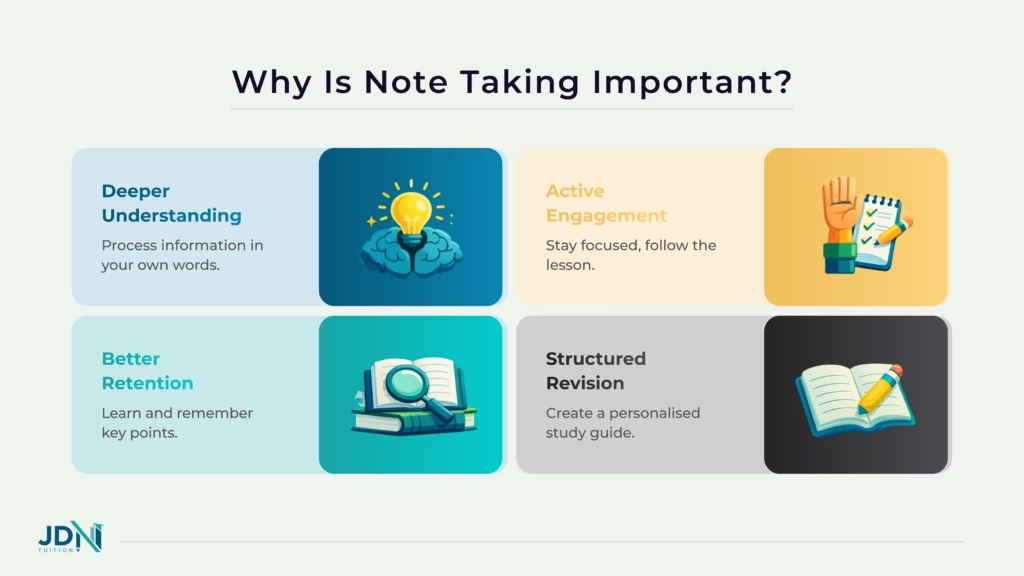
Furthermore, when you’re actively taking notes, you’re engaging with it. This keeps your brain switched on and helps you follow along with the teacher’s key points. Instead of zoning out or feeling overwhelmed by fast-paced content, you’re constantly asking yourself: What’s the main idea here? How does this connect to what I’ve already learned?
That kind of mental engagement and critical thinking ability is what helps new information actually stick. It’s also why students who take notes tend to retain more and perform better in tests, simply because they’ve already started the learning process in the moment, not just when they go back to revise.
Additionally, come exam time, students who take organised notes, whether handwritten or using one of the many digital note taking apps, are the most prepared. Good notes give you a structured, personalised study guide made by you, for you. That’s powerful. Instead of flipping through a textbook trying to find what matters, you’ve already filtered the important stuff.
Want personalised HSC notes without the pain of making them? JDN Tuition’s expert high school tutors can help your child turn complex problems into easy to understand notes they can bring right into their exams.
How to Take Notes Effectively
Taking notes may seem easy, but done wrong and it can waste hours of your time. Effective note taking techniques allow you to write in a way that allows you to absorb, organise and recall what you’ve learned from active listening in class, and is one of the most overlooked study tools in high school.
So what does “effective” really mean when it comes to note taking? For starters, it means writing in your own words and actually summarising ideas instead of just copying them. It also means using visual representation like colour coding with erasable pens or highlighters so that your definitions and formulas are easier to scan for later. Furthermore, taking notes effectively means breaking big ideas into smaller, digestible pieces before linking all of your concepts better. You might also use flashcards, sticky notes and note taking apps to help reinforce the material you learn. Ultimately, your goal is to make your notes simple and useful for future you, especially when it’s time to revise for assessments.
Below are three different styles of note taking you can use to begin summarising and reinforce what you’ve already put down on paper.
Mind Mapping and Concept Mapping
Mind Mapping, also known as concept mapping is a visual note taking technique that helps you see the relationships between ideas. You start with a central concept in the middle of a page. Then, branch out into subtopics, key terms, or related ideas, creating a map of connected thoughts.
The main purpose of the mind map note taking method is to organise information in a way that mirrors how your brain naturally thinks. It helps you visualise the structure of a topic. This is especially useful when studying subjects like Business Studies, Geography, or Modern History, where seeing cause-and-effect or big-picture themes matters.
As a note-taking method, it transforms passive note collection into an active thinking process. Drawing connections forces you to interpret and organise ideas, making your understanding deeper and more structured. This approach is especially valuable for visual learners, who benefit from creating memorable diagrams that clearly illuminate the path forward and make complex concepts easier to recall later.
The Cornell Note Taking Technique
The Cornell Note Taking Method is a structured and organised note-taking system designed to help you engage with your learning on a deeper level, even after class has ended. It works by dividing your note page into three sections. A large right-hand column is for main notes, a left-hand margin holds key terms and questions, and a small bottom space is for summaries.
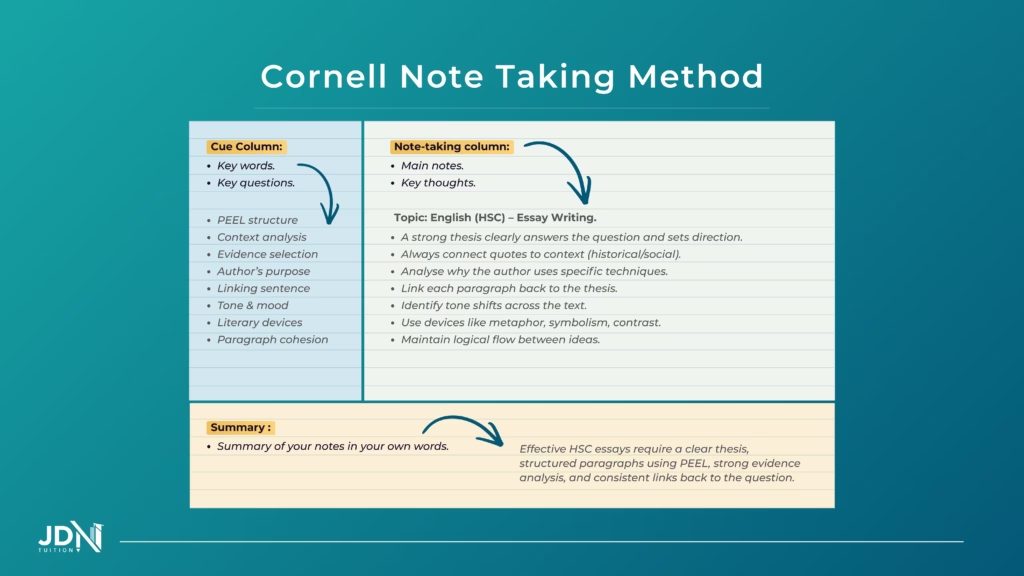
The Cornell method works by encouraging active engagement with your notes instead of passively writing them. It’s designed so that during class, you jot down key ideas in the right-hand column. At the same time, you create “prompts” in the form of key questions in the left-hand column. During revision, using the Cornell note-taking method allows you to quickly complete exam-style revision in a question-and-answer format.
This method works particularly well for subjects with lots of layered information, like Biology or Legal Studies. By making space to question and summarise, you interact with the material, which engages critical thinking skills and helps identify gaps in your understanding well before the exam crunch.
The Feynman Technique
The Feynman Technique, named after physicist Richard Feynman, is about using your painstakingly collected notes to take you to the next level. Alone, note taking only completes the “remember” stage of Bloom’s Taxonomy, but when combined with the Feynman Technique, instantly elevates your studying to the top of the pyramid.
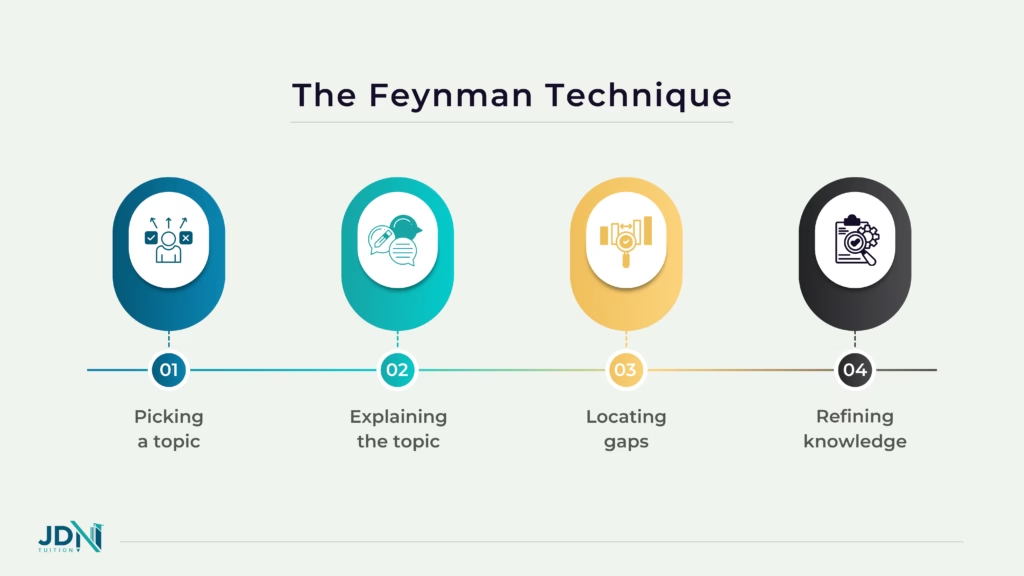
Instead of simply writing what you hear, the four steps of this method challenge you to explain what you’ve learned. You do this as if teaching someone else, using your own words so that even a person who’s never heard of your topic can understand. The logic behind this is simple. If you can’t explain a topic properly, you probably don’t understand it yet. This method pushes you to engage deeply with the content, applying your written notes so that you can identify weak spots.
How Private Tutoring Teaches Students How to Take Notes
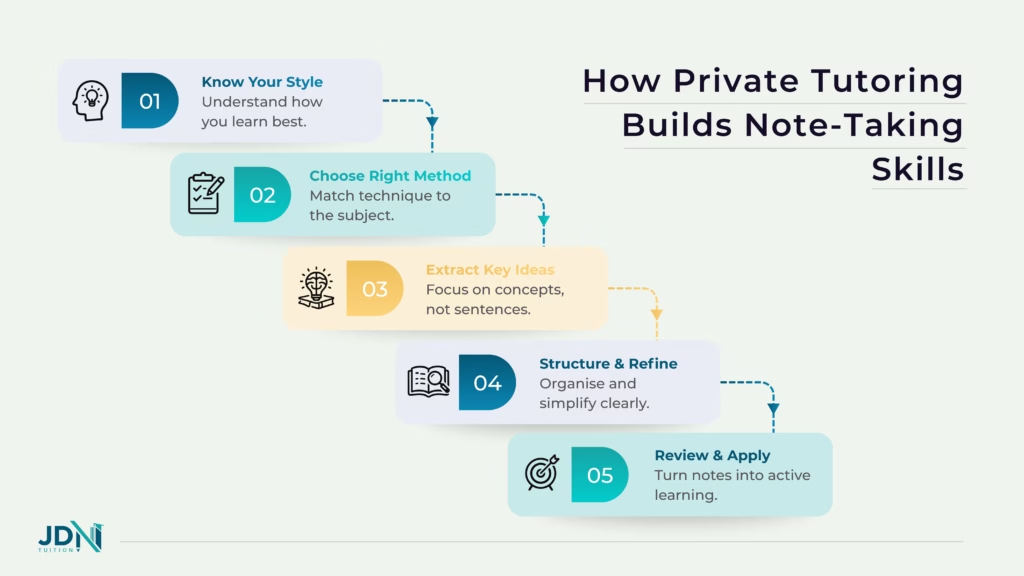
Private tutoring in Australia is one of the best ways to build the skills behind academic success. The knowledge required for effective note-taking is by far one of the most powerful. For many high school students in Australia, especially those juggling heavy subject loads in Year 11 and 12, knowing what to write down can feel overwhelming. Structuring it correctly often feels just as challenging. This is where private tutoring makes a real difference.
A good tutor teaches you how to take notes by focusing on your personal learning styles. Some students are visual, others are logical or verbal, each style benefiting from different note-taking methods like Cornell, mind mapping or the Feynman Technique. In a one-on-one tutoring session, your tutor has the time and focus to work through a topic with you step-by-step, showing you how to pick out key ideas, summarise in your own words, and structure your notes for clarity and easy revision.
Online tutoring also helps you refine your organising study notes. They can look at your study skills and show you what’s missing, what’s unnecessary, and how to rearrange ideas for easier understanding. Tutoring services help convert messy class notes into mind maps, use them to create practise questions, or set up a regular review system. This turns note-taking into a learning tool rather than just a task.
Don’t let your child miss the most important tool for their education. JDN Tuition’s trusted tutors teach students how to take notes effectively. This helps them build a strong foundation for academic and future success. Check out our reviews to see why Australia’s parents choose JDN Tuition when it comes to note-taking.
Conclusion: How to Take Notes
Learning how to take notes is one of the most important skills a student can have. Without it, you waste time, add stress, hurt your confidence, and leave yourself scrambling when it matters the most.
But it doesn’t have to be that way. When you master effective note-taking – using methods like Cornell, mind mapping, or the Feynman Technique – your important information becomes a powerful ally. They guide your learning, make revision easier, and stay useful well into adulthood. With good notes, studying becomes faster, smarter, and far less stressful.
Without note-taking, a student’s learning suffers. JDN Tuition prevents this. Our experienced tutors work with your child to build smarter note-taking habits tailored to their learning style. This helps them walk into every class and exam feeling prepared, focused, and in control. Ready to make your child’s notes work for them, not against them? Take a look at our Google Business Profile and contact us today to start learning the smarter way.
Let’s Improve Results. START TODAY.
📞 Book a FREE Call: +61 2 7257 0299
📧 Email us: contact@jdntuition.com.au
How to take good notes in high school?
Good notes start with active listening and end with clear organisation. Focus on understanding what your teacher is saying rather than copying everything word-for-word. Write key ideas in your own words, highlight or underline essential points, and leave space to add details later. Review your notes within 24 hours.
What’s the best method of note taking?
The best method depends on how you learn. The Cornell Method is great for structured learners who like clear organisation. Mind maps work well for visual thinkers who prefer seeing how ideas connect. The Feynman Technique helps analytical learners simplify and deeply understand complex topics. The key is to experiment until you find a method that helps you absorb and recall information easily.
How do people with ADHD take notes?
For students with ADHD, summarising lessons should focus on simplicity and engagement. Short bullet points, colour-coding, and visual aids like diagrams or mind maps can make information easier to follow. Most importantly, find a consistent routine and structure that builds focus and memory over time.