





The Most Effective HSC Timetable for Last-Minute Revision
HSC Exam Timetable | HSC Exams | HSC Subjects
Struggling to help your teen manage exam stress? Discover strategies to build a balanced routine. Learn how to create a hsc study timetable that maximises focus and prevents burnout during the critical final months.
Building the perfect weekly study schedule for the HSC isn’t just about colour-coded spreadsheets; for many families, it is the difference between a confident student and a complete meltdown.
We have all been there: staring at the closed bedroom door, knowing your child is inside “studying” until the early hours of the morning. Yet, despite the long hours, their anxiety levels remain sky-high, and their confidence seems to wobble. As a parent, it is incredibly difficult to watch. You want to support them, but you also know that simply telling them to “work harder” is not the answer. The reality is that during “crunch time,” those intense weeks leading up to Trials and the final exams, time is the most finite resource they have.
When preparing for the HSC, the biggest trap students fall into is confusing “busy work” with productive study. They might spend three hours highlighting a textbook, but retain almost nothing. This is why a strategic HSC study plan is non-negotiable. It acts as a guardrail against procrastination and panic, ensuring that energy is directed exactly where it is needed most.
In this post, we are going to look past the generic advice of “just get organised.” We will walk you through exactly how to create an HSC study timetable that is realistic, flexible, and effective. Want to learn more about how to best prepare for end of year exams? Check out our JDN Tuition Blog Page for more.
Why does a Strategic Study Routine Beat Cramming Every Time?
We often mistake exhaustion for effort. When you see your child buried under textbooks at 1:00 AM, it is natural to feel a mix of pride and worry. However, reliance on adrenaline-fuelled “cramming” sessions is rarely sustainable and often leads to severe HSC exam stress. The brain requires downtime to consolidate memory, meaning that sleepless nights can actually erase the hard work put in during the day. A strategic approach is not about working more hours; it is about ensuring those hours actually count towards the final result.
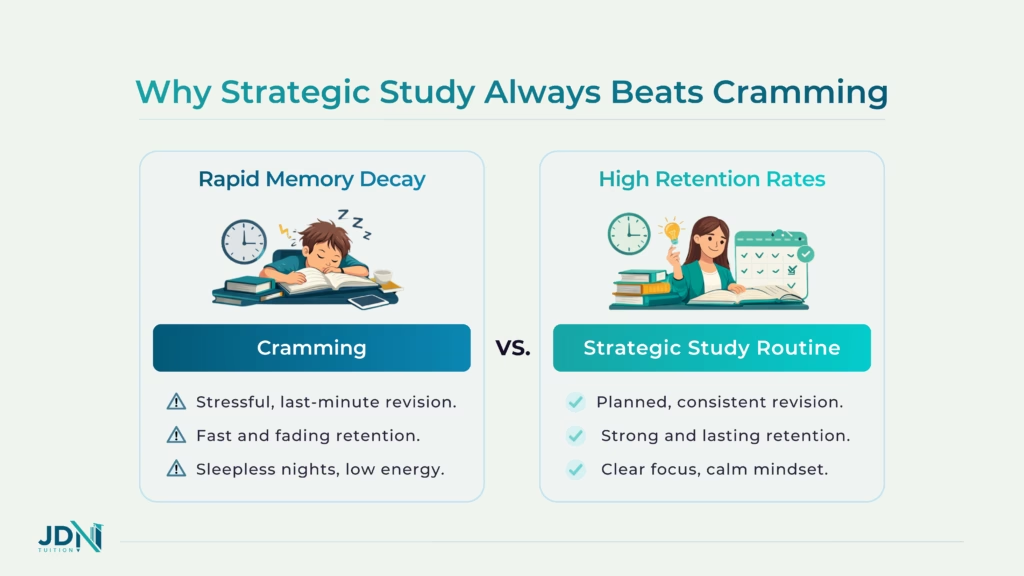
Consistency Over Intensity
The most successful students treat the HSC like a marathon, not a sprint. A rigid, panic-induced year 12 study timetable often crumbles under pressure, whereas flexible study plans provide a psychological safety net. When a student knows exactly what they need to achieve each day, the overwhelming mountain of work breaks down into climbable steps. This structure allows them to utilise active study methods like practice papers and teaching concepts aloud, rather than passively re-reading notes, which is often the default for tired students.
Implementing SMART goals (Specific, Measurable, Achievable, Relevant, Time-bound) is crucial here. Instead of a vague goal like “study Maths,” a SMART goal would be “complete 10 past paper questions on Calculus in 50 minutes.” This precision builds momentum and directly improves their potential ATAR score.
Developing these superior HSC study skills can be difficult to do alone. Take a look at our Google Business Profile to see how we can give your child the tools they need to structure their revision effectively. This is where professional High School Tutoring bridges the gap, turning chaotic effort into targeted performance.
Core Pillars of an Effective HSC Schedule Timetable
Creating a timetable that actually works can be difficult. Effective time management is about energy management, and if the schedule is too rigid, it breaks at the first sign of disruption; if it is too loose, procrastination takes over. To build a robust framework, we need to focus on prioritisation and sustainable focus, ensuring that the student is not just “busy” but productive. When figuring out how to create a study schedule, you must build it around the student’s natural rhythms and the specific demands of their subjects.
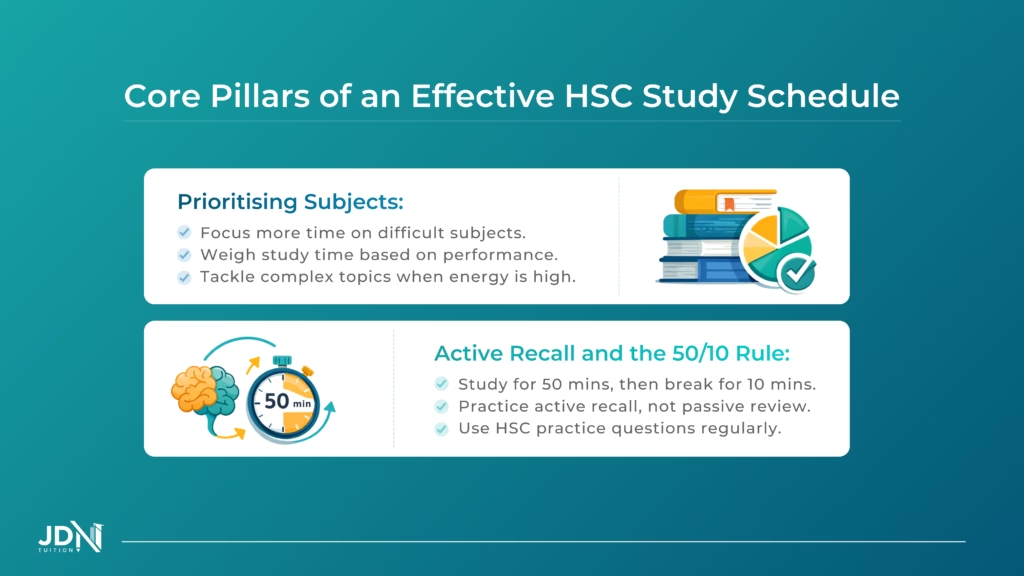
1. Prioritising Subjects
Not all subjects are created equal, and your child’s timetable for the high school certificate should reflect that. A common mistake is allocating equal time to all HSC courses regardless of difficulty or unit value. The dense HSC syllabus for subjects like Physics or Extension Mathematics often requires “deep work” blocks, whereas other subjects might be more manageable in shorter bursts.
Because of this, study sessions should be weighed based on current performance and subject complexity. If a student is confident in English but struggling with Chemistry, the study plan should heavily favour Chemistry during peak energy hours. This strategic weighting ensures that the most mental energy is expended where it yields the highest return on investment for their ATAR.
Is your child struggling to prioritise? At JDN Tuition, our expert High School tutoring goes beyond just content delivery. We help students design personalised schedules that balance academic rigour with wellbeing. Check out our reviews to see why Australia’s parents choose us for their online HSC tutoring needs.
2. Active Recall and the 50/10 Rule
Sitting at a desk for three hours straight often leads to diminishing returns and increased burnout. To protect mental health and maintain high cognitive function, students should consider using something like the 50/10 rule, also known as the Pomodoro Technique: 50 minutes of intense, distraction-free work followed by a 10-minute break. This structure helps students study uninterrupted, providing breaks for memory consolidation and a strong balance.
Furthermore, how they use those 50 minutes is critical for HSC exam preparation. Students should move away from passive highlighting and focus on active recall. This means closing the book and testing themselves, or prioritising HSC practice questions over re-reading notes. Active recall forces the brain to retrieve information, which strengthens neural pathways much faster than passive review.
Visualising the Plan: Sample Timetables for Different Learners
Unfortunately, there is no single “perfect” day because every student has a unique biological clock. A generic HSC study timetable generator found online might provide a basic framework, but it rarely accounts for whether your child is a “Night Owl” or an “Early Bird.” To be effective, a study timetable template must be customised to their peak energy levels. If a student who hates mornings tries to wake up at 5:00 AM for Calculus, they are setting themselves up for failure.
Scenario A: The “Night Owl”
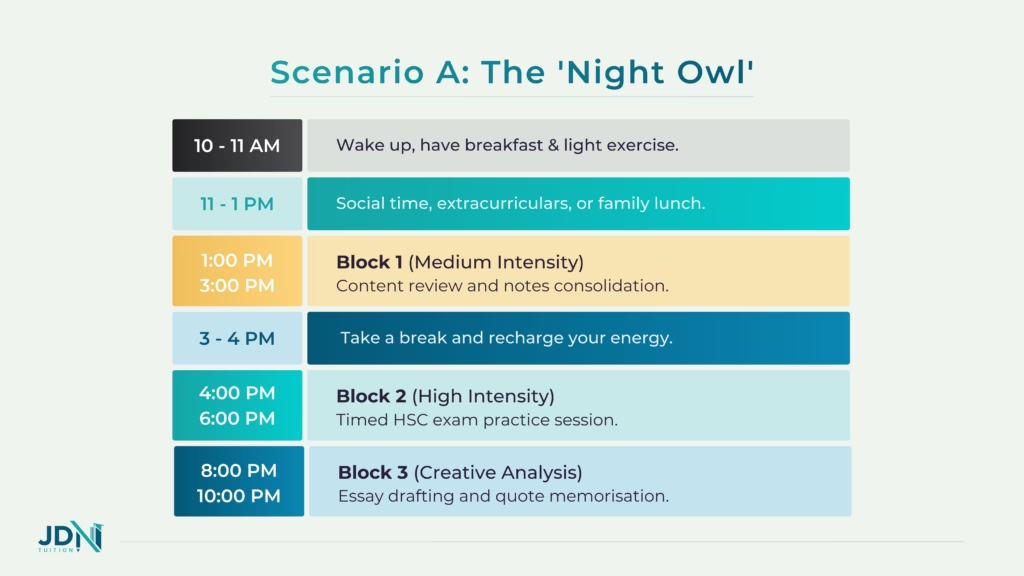
This student struggles to function before 9:00 AM but finds their “flow state” late at night. Forcing them into an early routine often results in hours of staring blankly at a page.
- 10:00 AM – 11:00 AM: Wake up, have a healthy breakfast, and do light exercise.
- 11:00 AM – 1:00 PM: Extracurricular activities or social time (Sport, Music, or family lunch).
- 1:00 PM – 3:00 PM: Block 1 (Medium Intensity): Content review or notes consolidation.
- 3:00 PM – 4:00 PM: Break.
- 4:00 PM – 6:00 PM: Block 2 (High Intensity): Completing HSC past papers under timed conditions. This mimics the exam pressure when the brain is fully awake.
- 8:00 PM – 10:00 PM: Block 3 (Creative/Analysis): This is often a great time for subjects that require deep thought but less rigid logic, such as figuring out how to study for the HSC English (essay drafting or quote memorisation).
Scenario B: The “Early Bird”
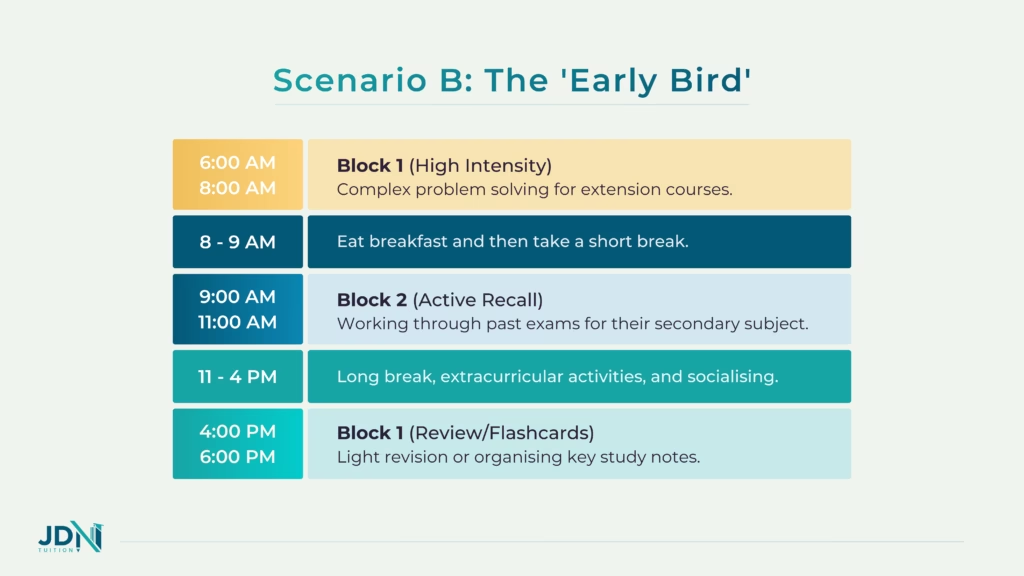
This student wakes up naturally at sunrise and feels most alert before noon. Their daily schedule planner needs to front-load the most difficult tasks.
- 6:00 AM – 8:00 AM: Block 1 (High Intensity): Complex problem solving (e.g., Extension Maths or Chemistry). The house is quiet, and distractions are minimal.
- 8:00 AM – 9:00 AM: Breakfast and break.
- 9:00 AM – 11:00 AM: Block 2 (Active Recall): Working through past HSC exam papers for their second strongest subject.
- 11:00 AM – 4:00 PM: Long break, extracurricular activities, and socialising.
- 4:00 PM – 6:00 PM: Block 3 (Review): Light revision or creating flashcards. By evening, this student is often too tired for heavy cognitive lifting.
General HSC Study Strategy
Regardless of their sleep chronotype, weekends during “crunch time” must be structured to avoid the all-day study trap where nothing gets done. After all, hours worth of study doesn’t mean anything if it isn’t efficient. Integrating professional HSC tutors into these blocks ensures that the time spent is efficient. For example, a student might struggle with a concept for two hours alone, whereas a tutor could clarify it in 20 minutes, freeing up the rest of the block for practice.
How Parents Can Support Without “Helicoptering”
It is a delicate balance. You want to ensure your child is working, but constantly asking “Have you studied enough?” can backfire, increasing cortisol levels and causing them to shut down. The most effective parental support is often silent and logistical rather than instructional. Your goal is to be the “support crew” rather than the “drill sergeant,” facilitating their environment so they can focus entirely on the task at hand.

Creating the Right Environment
Physical environment plays a massive role in cognitive endurance. Help your child establish a study sanctuary: a dedicated space that is quiet, well-lit, and free from household chaos. This might mean agreeing on “quiet hours” for the rest of the family or simply ensuring the Wi-Fi is stable. When the environment is optimised, the quality of their HSC study sessions improves dramatically without you needing to say a word.
Fueling the Engine
During crunch time, nutrition and sleep often fall by the wayside. You can intervene here by making sure your child is taking proper breaks and eating properly. Additionally, encourage a strict “screens off” policy before bed. This protects their sleep quality. Quality sleep is when memory consolidation happens.
Common Pitfalls to Avoid in the Final Weeks
Even the most dedicated students can trip up right at the finish line. When panic sets in during the final weeks, logic often flies out the window, leading to reactive habits that hinder performance rather than help it. Identifying these traps early is the key to staying on track and maintaining a clear head.
Here are the three most common mistakes students make:
- Overscheduling: Packing every waking hour with study is a recipe for disaster. Without scheduled downtime, the brain cannot retain information effectively.
- Ignoring Weak Subjects: It is tempting to study what we are good at because it feels safe. However, the biggest improvements to an ATAR come from lifting the lowest marks, not just polishing the highest ones.
- Social Media Distractions: A “quick check” of notifications often turns into an hour of doom-scrolling. This fragments concentration and breaks the deep “flow state” required for complex subjects.
Conclusion: The HSC Timetable
Ultimately, the perfect HSC timetable is the one your child actually uses. It transforms an overwhelming mountain of work into manageable steps, building confidence with every ticked box. However, even the best plans need the right support to succeed. If you find yourself frantically searching for tutors near me because the pressure is mounting, you do not have to do this alone. JDN Tuition‘s specialised HSC tuition provides the structure and expertise your child needs to turn their daily routine into tangible results.
Ready to Secure Your Child’s Success? Don’t let the final exams become a source of panic. Contact us today to discuss how our expert HSC private tutoring can help your child achieve their best ATAR.
Improve Results. Start Today.
📞 Book a FREE Call: (02) 7257 0299
📧 Email us: contact@jdntuition.com.au
What is the Best Timetable for Studying?
The most effective timetable for study balances consistency with your natural biological clock, catering to whether you are a night owl or an early bird. Plan your schedule around when you have peak energy and maximising study time while still taking breaks.
How to Make a Study Timetable for the HSC?
Start by mapping out your priority subjects that require the most effort and schedule them during your peak energy times. Be sure to mix active recall methods, like past papers, with content review to ensure you are actively testing your knowledge rather than just passively reading.
How Many Hours Should You Study a Day for the HSC?
While every student is different, aiming for 3 to 4 hours of high-quality, distraction-free study on weekdays is generally sufficient during term time. During crunch periods, this may increase, but always prioritise sleep and mental health to avoid diminishing returns.