





Tips for New Parents to Boost Your Child’s Learning Skills
Benefits of Eustress | 80/20 Rule | Online Tutor
If you have just stepped into the wild, heart-warming, and slightly chaotic world of parenting, welcome to the parents’ club. There is no instruction manual, but there are powerful strategies that help your child thrive both emotionally and academically. Whether your little one is taking their first steps into school or already navigating early primary years, it’s normal to feel a mix of excitement and uncertainty. This blog shares practical, impactful, and research-backed tips for new parents to help set their child up for long-term success.
Parenting is part science, part ‘gut feeling’, part ‘Googling things at 2 in the morning’. However, helping your child succeed in school is a mix of child development, supportive relationships, nurturing habits, and everyday actions that foster a lifelong love for learning in children.
Let’s just dig into it.
Start with a Strong Home learning Environment
A child’s first classroom is not school; it’s his home. Years of research on child development clearly demonstrate that children who grow up in language-rich and emotionally supportive home environments perform significantly better academically.
The simplest yet the most impactful tool you have? It’s conversation and communication. Parents are recommended to talk to their kids about everything– why the sky is blue, why flowers bloom in spring, and why the cat looks sad. These small and jolly interactions improve vocabulary, induce curiosity, and build confidence in children. Reading in front of children helps them with learning. Reading aloud, even just for 15 minutes a day, helps strengthen student engagement, develops imagination, and strengthens comprehension way before the journey of formal learning begins.
What can you do as a parent to create a learning environment at home? You can create a mini learning corner. A comfortable, cozy, and distraction-free space with fancy yet basic stationery, colourful books, and digital tools like a tablet that has educational apps, encourages kids to explore independently. This cute space does not need to be fancy and luxurious; it just needs to be welcoming.
When children see learning as something that ‘belongs’ to their daily routine, they engage with it naturally.
Develop a Consistent Routine
Guess what? Kids love routine, not because it is boring, but because it helps reduce stress and bring predictability. A predictable or familiar rhythm allows the brain to adjust to tasks more easily. To make this change in routine easier, begin adjusting your child’s routine a week or two before you send them off to school. Parents can also help them prepare by establishing a consistent bedtime routine.
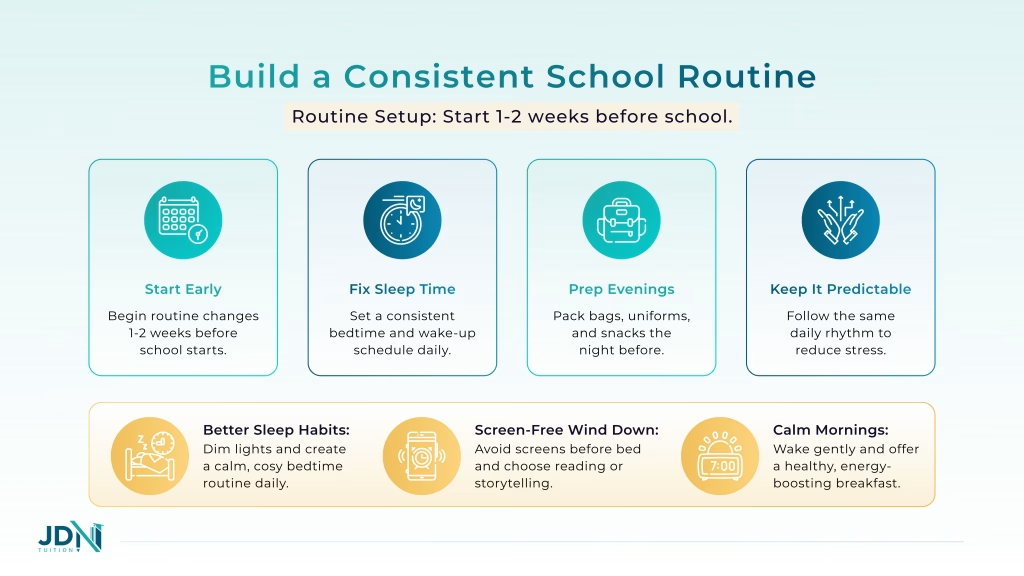 Want to know what the most underrated school success tool is? It’s good sleep habits. According to research, kids who get adequate and quality night sleep demonstrate better focus, memory retention, emotional control, and behavior.
Parents can establish a cozy and calming pre-bedtime routine for their child to ensure good-quality sleep. This might include;
- Dim lights
- Comfortable place
- Quiet storytelling or reading
- Avoiding screens at least 60 minutes before sleep
This approach looks really simple, but it can positively impact your kid’s quality of school performance.
In addition to the sleep schedule, their wake-up times should also be very calm and consistent. A rushed morning can follow a child to the classroom. Instead, you’d better prep bags, uniforms, and snacks the night before. Wake your kid up with gentle cues, not hurried commands. Furthermore, offer them nutrient-dense breakfast options (like eggs, oats, and fruits).
These small moments define their ability to concentrate for the rest of the day.
Support their Emotional Well-Being
Do you know what that one tip is that I’d give to every parent, both mom and dad? It is COMMUNICATION. Communication is the main key to supporting your child emotionally as he starts school. Communication is also very important for the social and emotional well-being of children. Children cannot perform well academically if their emotional tank is empty. Their tiny brains experience more intensely than we realise. Therefore, let them know that you are there, no matter how the school phase unfolds. Before you send them to school, take time to reassure them of their strengths and speak words of encouragement. To enhance communication, you can encourage open conversations. Ask them questions that invite expressions, like ‘What made you happy today?’, ‘What was the most difficult part of the day today?’ or ‘Do you need my help or just a hug?’
Children who feel emotionally safe tend to communicate better with teachers, stay engaged, and build stronger relationships.
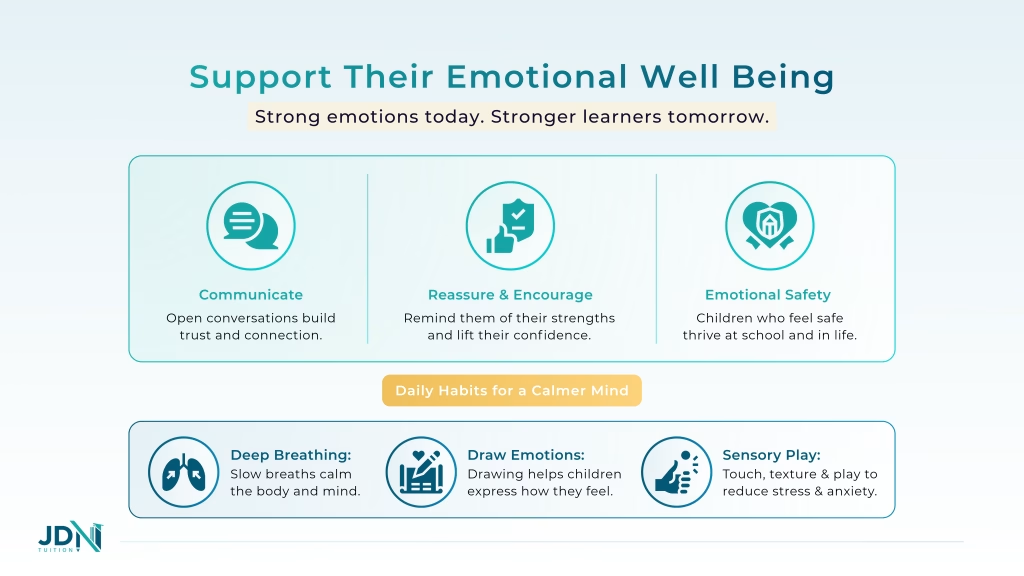 As a parent, it is also your responsibility to introduce them to mental health activities that help strengthen their inner calm. For instance, these simple age-appropriate activities might include deep breathing exercises, drawing emotions, and sensory play. These activities help children regulate their emotions, ease school-related anxiety, and build confidence.
Teach Them Confidence-Building Skills
School success is not just about reading and solving math problems; it’s about building life skills, like resilience, independence, and decision-making skills. New parents should encourage their children to practice such small skills at home. These life skills mirror the tasks they are going to face in school and beyond.
Small responsibilities have a big impact.
Simple tasks like organizing their toys, helping in the kitchen, watering the plants, etc., teach them time management, responsibility, and self-efficacy. Life skills combined with the right study techniques lead to a successful future for your children.
In addition to this, parents must also know that leadership is not about being loud; it is about listening, problem-solving, and collaborating with others. With opportunities like offering them to choose between two study plans, encouraging them to help their younger siblings with their homework, and letting them express their opinions, you can boost their leadership skills really well. Such activities will give them the best of both worlds– they’ll perform better in school and beyond school.
Enforce Healthy Habits
How are healthy habits responsible for your kid’s school success? Decades of research have shown that poor academic performance is linked to factors like lack of sleep, poor nutrition, and a lack of parental support.
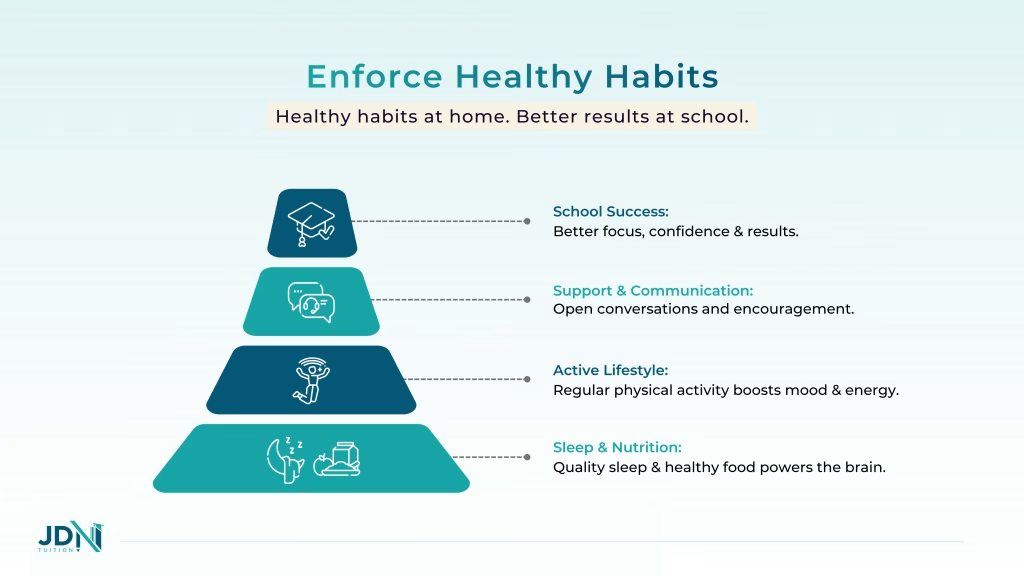
The good news is that the same studies have also shown higher grades for students who live in homes where healthy habits, regular routines, and healthy communication exist.
You can’t perform well when you don’t feel good.
In order to have your child the best chance to perform well in school, make sure you follow healthy habits at home. Some common healthy habits to be enforced include;
- Choosing a bedtime that gives your child plenty of good quality sleep.
- Providing your kids with a healthy breakfast every morning.
- Helping them indulge in some sort of physical activity or exercise on a regular basis.
- Trying to limit screen time for kids and adults at home.
There is no surprise that success or failure at school starts at home.
Reading is one of the most impactful habits that you can inculcate in your kids from an early age. It is said that children spend the first few years learning to read, and the rest of their lives reading to learn. The more you read to your child, the better chance he has of becoming a proficient reader. In turn, this leads to kids’ academic success in school.
Turn Everyday Moments into Learning
Kids learn best when they do, not when they are made to sit and memorize. Active Learning makes information stick, keeps curiosity alive, and builds critical thinking.
The best learning is hands-on.
For example, a child who helps make a meal can learn about math fractions, telling time, and multi-step problem-solving really quickly. Cooking becomes a math lesson for them, park walks become science explorations, and shopping and grocery trips become reading and budgeting practice. When kids see learning everywhere, their school experience tends to be natural and exciting.
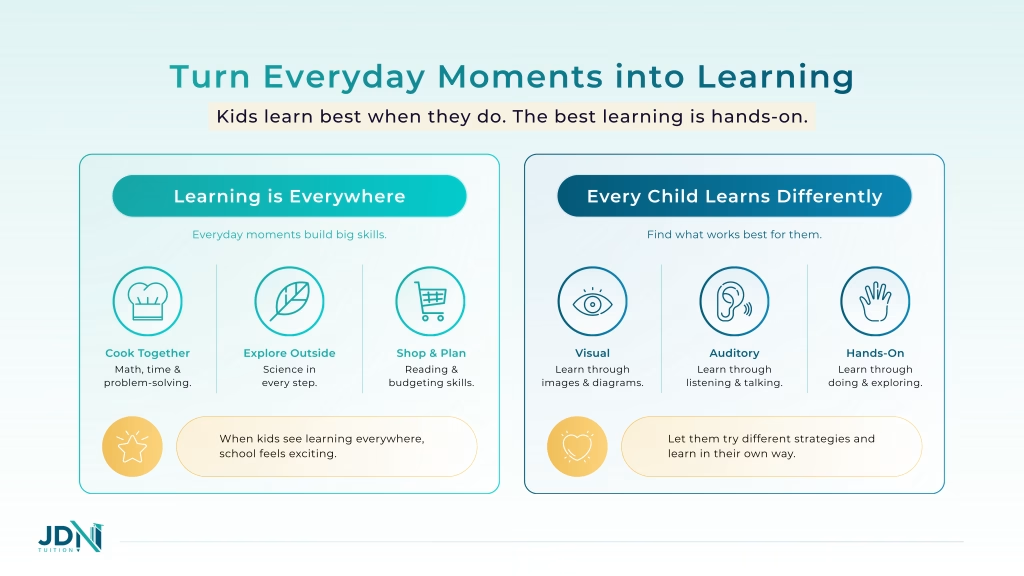 However, every child learns differently. Some prefer hands-on tasks; others are visual; some are delighted by storytelling. Therefore, let them experiment with different learning strategies and find what works for them. Parents are recommended to help their children explore different study techniques like mind maps, flashcards, drawing, or doodling to learn concepts, or child-friendly digital tools. When a study strategy matches their natural style and unique pace, it significantly helps enhance their personal learning experience. Hence, learning becomes enjoyable, not exhausting.
Use Digital Tools Wisely
AI in education has transformed this sector big time. However, it has its own pros and cons. But technology can be really powerful if used wisely. There are a great number of digital tools that help kids organize their learning goals, make personalised study schedules, and help them polish their study skills. Parents are advised to choose digital learning tools that add value to their kids’ academic performance. Choose tools that help enhance reading comprehension, creative expressions, coding for children, and audio storytelling.
Remember, children retain information better when it is fun, colourful, and exciting.
Furthermore, one of the most important tips for new parents is to ‘take the lead’. Kids often do what they see, not what they are told. Let your children catch you reading, learning a new skill, or even taking up a course, and talk about that experience with them. When you model a strong work ethic and a love for learning, your child is more likely to reflect these positive habits in their own life.
A tip for new parents is that always remember, kids learn by example.
BE A LEARNING ENTHUSIAST. IT CAN BE CONTAGIOUS FOR YOUR KIDS.
No Room for Excuses
Sometimes, children just love to make excuses. So, avoid every reason for which your child makes excuses. Even when you think your child will feel comforted if you do so, never say such disheartening words as “some people just don’t have a head for chemistry”. This will make your child think that you think he is incompetent to complete a task. A successful school will need your child to do their best. Therefore, you cannot help them by encouraging them to make excuses whenever it is convenient for them.

And Last but not least, be a cheerleader for your kids. Some children perform poorly in school because they feel unworthy of success. For a child or student to feel good about learning, it’s important for him to feel good about himself. Motivate your child by praising him for his efforts and study skills. Encourage him to take part in extracurricular activities and show your interest in his school work.
A pro tip for parents is to show up for their children. Showing up matters.
JDN Tuition: A Brand Parents Can Trust With Their Kids
At JDN Tuition, we understand that every parent wants to see their child succeed with confidence. That’s why we go beyond traditional tutoring. As one of the leading online tutoring providers in Australia, our experienced tutors focus on building strong foundations, improving study skills, and creating personalised learning plans tailored to each student.
We also keep parents actively involved through regular progress updates, detailed feedback, and customised strategies that match each child’s learning style. This ensures consistent growth and measurable improvement over time.
You can explore authentic student or parent reviews on our Google Business Profile or visit our blog for insights on topics like eustress, AI in education, and the VCE exam timetable. Stay connected with us on Facebook, Instagram, and LinkedIn for tips and success stories.
If you’re looking for extra support to help your child succeed in school, JDN Tuition is here to guide you every step of the way. Explore our programs and online tutors to see how we can make a difference in your child’s educational journey.
Closing Remarks on How Parents Can Help Their Child Succeed
Helping your child succeed in school is not about perfection, expensive tutors, or rigid rules. Instead, these tips for new parents focus on creating a nurturing environment where your child’s development, curiosity, unique learning style, life skills, and emotional well-being can grow together.
Your child does not need you to be an expert; they need you to support them, praise them, be present, and walk alongside them.
By nurturing child development, supporting active learning, encouraging life skills, promoting social and emotional well-being, establishing routines, using smart digital tools, and helping your child develop learning strategies and leadership skills, a parent creates a strong foundation for a healthy, confident, and curious future learner.
One more life-changing tip is that comparison is the thief of joy– for parents and children.
Improve Results. Start Today.
 Book a FREE Call: (02) 7202 1930
 Email us: contact@jdntuition.com.au
What are the 5 Rs of parenting?
The 5 Rs of parenting are Relationships, Reflection, Regulation, Rules, and Repair. By working on these 5 core principles, parents can raise intelligent, kind, and resilient kids.
What is Tiger Parenting?
Tiger parenting is a strict, high-pressure parenting style that demands exceptional academic and personal achievement from children. It emphasizes discipline, hard work, and obedience, often leaving little room for independence or emotional expression.
What is the healthiest parenting style?
The healthiest parenting style is authoritative parenting, which balances warmth and support with clear rules and expectations. It is often recommended in tips for new parents because it promotes confidence, independence, and emotional well-being in children.