





How a Study Timetable Improves Exam Performance in Students?
80/20 Rule | Benefits of Eustress | Study Schedule
Exams, the word alone can make many anxious and panicked. In this fast world of learning, having a study timetable is essential for handling academics, balancing schoolwork, personal goals, and extracurricular activities all at once. The late-night cramming, the endless cups of coffee, and the constant tension of forgetting everything at the last minute. But how does it feel to have a proven way to make exam preparation less stressful, more productive, and even enjoyable?
Here comes the study timetable. A study timetable is a learner’s secret weapon to ensure success in academic performance because a study timetable is more than just a study schedule. A study timetable is a simple yet powerful tool that helps turn chaos into clarity and helps students perform better in exams.
Let’s dig deeper into why a study timetable is far more than personalized learning plans: it’s a psychological, emotional, and academic game changer.
An Introduction: What is The Study Timetable?
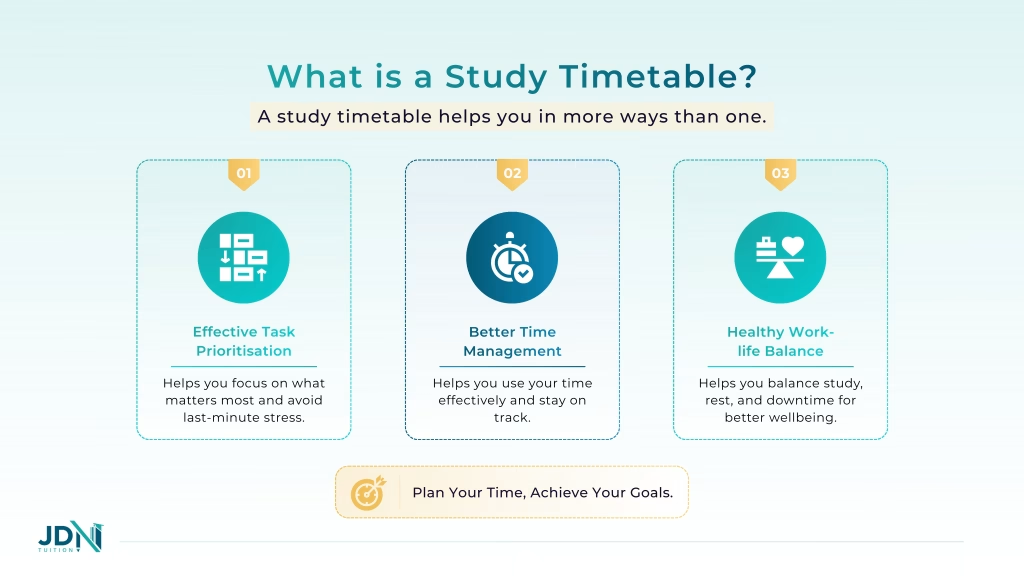
A study timetable refers to a structured schedule that helps allocate specific time slots for different subjects or tasks to optimize learning and productivity. It helps guide students towards utilising their time effectively, prioritizing different tasks, and maintaining a healthy balance between studying, rest, and downtime.
 Before we get into the ‘how’, let’s talk about ‘why’.
According to research by the Association for Psychological Science, students who plan their study sessions in advance tend to retain information longer and perform better in exams. This is
backed by a simple logic: our brain loves structure.
When you are creating a study timetable, you are not just blocking time; you are helping your brain develop habits, prioritize tasks, and minimize cognitive overload. As per cognitive psychology, time management helps reduce decision fatigue. It translates into your brain having more energy for actual learning instead of constantly worrying about what you should study next.
Long story short! A study timetable helps you study smarter, not harder.
How Does a Study Timetable Help Learners Score Better?
A study timetable helps learners enhance their productivity, reduce anxiety, and promote effective time management skills. Here is the detailed information on how a good study timetable helps learners perform better in exams.
Study Timetable: The Calm in the Chaos
One of the most significant hidden benefits of a study timetable is how it helps students reduce their exam anxiety. When students have a structured map of what to study and when, their stress and cortisol levels drop significantly.
Now, picture two students:
- Student A: A student who is constantly hopping from one subject to another, one topic to another, thus studying without a plan.
- Student B: A student has a timetable; every subject, every topic, and every rest session is already mapped out with the right study techniques.
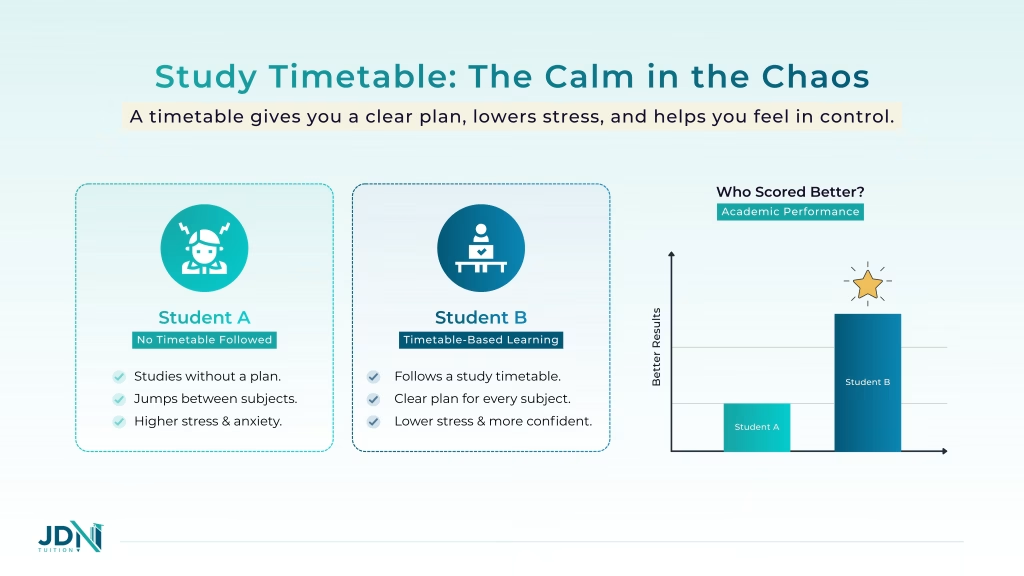 Who’s more stable and calm on the exam day? Obviously, Student B.
Psychologists call this ‘perceived control’– the sense that your workload and time are in your control. According to a study published in Frontiers in Psychology in 2022, students who have more control over their studies tend to show higher motivation and reduced stress levels.
So, many feel that a study timetable is just about discipline; it’s also about mental peace.
Study Timetable: Turning Time into Achievements
Time management is not just a buzzword; it leads to academic achievement.
Without the right timetable, hours slip away unnoticed. It is very likely for students to spend hours on a topic while neglecting others. A study timetable helps students allocate specific time slots for each subject based on its difficulty and importance.
Learners can make use of different techniques, like the right note-taking methods, the Pomodoro technique, spaced repetition, and a study calendar.
For example,
- Maths might need 60 minutes daily because it needs critical problem-solving skills.
- English might need just 45 minutes for reading and analysis.
- And when it comes to science, it can be divided into two sessions: theory and practical.
This visual mapping of your time will ensure every subject gets enough attention. This approach helps promote balanced learning and avoid the common mistake of over-studying one topic while under-preparing another. This helps students who are preparing for the HSC exam.
Promotes Self-Discipline and Consistency
Let’s be honest, motivation comes and goes. However, consistency? That’s what actually brings results.
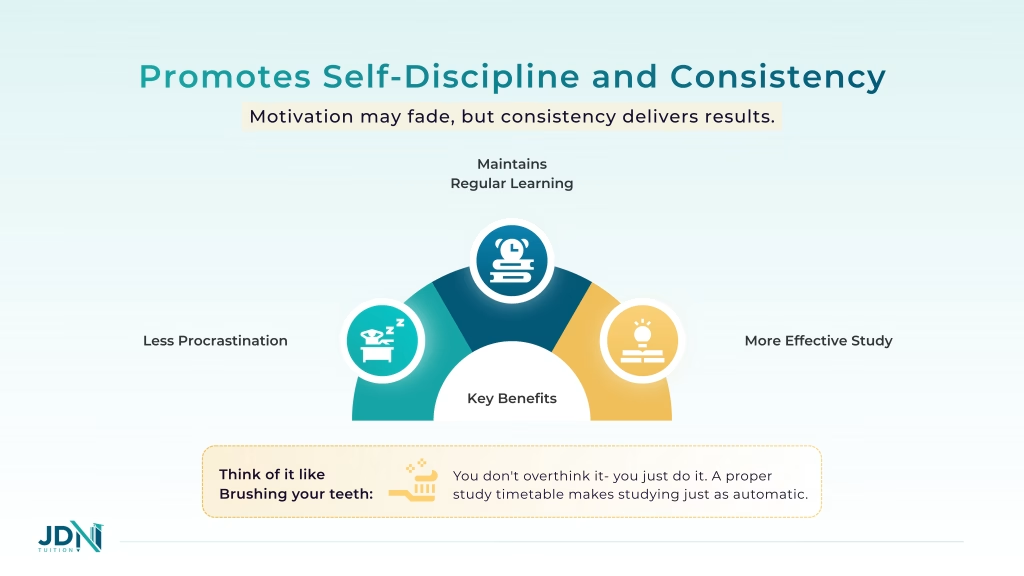 Having a proper study timetable format helps promote self-discipline and consistency in students. Basically, a timetable builds a routine, and it transforms studying from a random activity to a daily habit. According to Neuroscientists, habits form when you automatically start performing repeated actions through the brain’s basal ganglia. It means the more you follow your study timetable, the easier it becomes for you to sit down to study without any resistance.
Once you train your brain to get used to studying at a certain time each day, procrastination naturally stays at bay. Also, you no longer fight yourself to start studying; you just do it naturally.
Therefore, establishing a consistent study timetable helps students develop healthy study habits and maintain a regular pace of learning, which is important for long-term retention and understanding.
Think of it like brushing your teeth. You don’t fight yourself over whether you should do it; you just do it. A proper study timetable makes studying just as automatic.
Encourages Active Learning and Reflection
A good timetable doesn’t just tell you when to study, but it also helps you plan and prioritize your study tasks. Planning study sessions based on the complexity and nature of the subject allows learners to engage in effective learning strategies, such as active recall, spaced repetition, and interleaved practice.
Including review sessions, mock tests, and study breaks enhances memory retention in students. For instance,
- In week 1, you might concentrate on understanding concepts.
- In week 2, you can work on problem-solving and applications.
- In week 3, you should review mistakes and improve your weak areas.
This multi-layered approach ensures that information moves from cramming (short-term memory) to deep understanding (long-term memory).
Furthermore, adding reflection slots like short 5 to 10-minute sessions about what you learned helps boost self-awareness. This self-reflection technique also helps you adjust your study strategies if needed.
At JDN Tuition, our tutors engage their students in active learning techniques. Along with helping students learn and engage with studies, our trained coaches help them build a solid study timetable to allocate their time for study, rest, and downtime. Our mission is to foster lifelong love for learning in students.
Book us today.
Prevents Procrastination and Last Minute Panic
The truth is, procrastination is every student’s worst enemy. But here is the trick: procrastination thrives in uncertainty. When you don’t plan the task, your brain resists starting because the task feels overwhelming. Having a structured study schedule helps reduce the chances of procrastination as learners have a clear format and timeline to follow. This builds a sense of accountability and encourages students to stay on track.

A timetable helps break that big, scary mountain of ‘exam preparation’ into small, climbable hills. When you know you have to complete ‘Chapter 4- Evolution’ from 5 to 6 pm, the task feels manageable and easy to execute. In behavioral psychology, this technique is known as ‘task chunking’, which makes large goals feel achievable by splitting them into smaller, time-bound chunks.
Remember, when procrastination drops, productivity rises.
How to study for exams? If you are a student looking to ace your HSC or VCE subjects, we have amazingly effective Time management tips for you. Have a look at our blog and see how you can implement these tips to schedule your daily study sessions.
Balanced Lifestyle: Highlighting the Power of Break
In contrast to the popular belief, studying nonstop is not the key to academic success. It, in fact, is counterproductive. According to cognitive research, the human brain can only maintain deep focus for 45 to 90 minutes (Ultradian cycle) at a time. After this cycle or time period, the concentration drops automatically due to the diminished levels of acetylcholine and dopamine.
A smart study timetable format includes planned breaks. Small breaks help your brain recharge. Techniques that include breaks, such as the Pomodoro technique– 25 minutes of focused work followed by 5 minutes of break- have been proven to increase efficiency and memory retention.
Additionally, planning downtime, like exercise, hobbies, and social activities, also helps prevent burnout and improve overall well-being.
Therefore, a well-structured study timetable helps promote a balanced lifestyle by ensuring that students allocate their fair attention time to studies, relaxation, and other activities.
Remember, a tired brain cannot perform well, no matter how much it tries to study or cram.
Personalised Learning: One Size Doesn’t Fit All
No two learners study the same way– and that is exactly the beauty of a personalised timetable. Some students are morning learners, others are night owls. Some people prefer short, intense sessions, while others need longer, more relaxed ones. A structured timetable allows learners to tailor their study hours to match their natural pace and learning styles.
For example, auditory learners can take some time to listen to lectures and podcasts. Visual learners can include time for diagram practice, and kinesthetic learners can plan interactive sessions and experiments.
When your timetable aligns with your rhythm and learning preferences, studying feels less like a chore and more like a flow, and you are better prepared for your exams.
Remember, what works for John might not work for George. Therefore, format your study timetable tailored to your unique needs and time.
Builds Confidence and Exam Readiness
Confidence does not come from luck; it comes from preparation. When you have followed the structured timetable, you enter the exam hall knowing that you are prepared enough to ace this exam. This inner calm makes all the difference. This is exactly how a structured study plan helps you perform better in exams.
Students who plan their study sessions are more likely to stay composed under pressure, handle unexpected questions with clarity, and recall information quickly. This preparation translates into better performance in exams.
Practical Tips for Creating an Effective Timetable
Now that we have explored how a study timetable helps students perform better in exams, here are some of the practical tips to create an effective timetable.
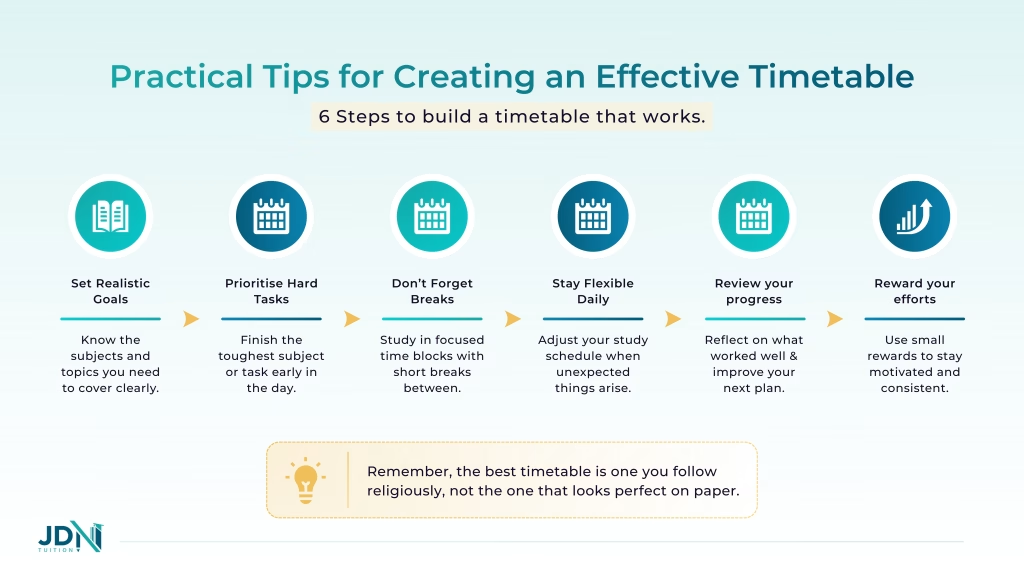
- Set Realistic Goals: You must have a clear idea of which subjects or topics you need to cover.
- Prioritise Difficult Tasks: Use the “eat that frog” technique- meaning that getting done with your most daunting and important task is the first thing you do.
- Don’t Forget Breaks: Use time blocks, meaning studying in focused chunks with short breaks in between.
- Flexibility Is Essential: Adjust your schedule if something unforeseen comes up.
- Review Weekly Progress: At the end of every week, reflect on what worked and what didn’t. Therefore, adjust the plan accordingly.
- Reward Yourself: Small treats like using your phone for 5 minutes after 25 minutes of a focused study session help maintain motivation.
Remember, the best timetable is one you follow religiously, not the one that looks perfect on paper.
Bottom Line on How a Study Timetable Helps Exam Performance?
A study timetable isn’t rigid or robotic; it’s about generating a structure that supports balance, focus, and confidence. A solid study timetable gives your preparation rhythm and direction. It turns exam season from a time of anxiety and panic into a period of success and progress.
Therefore, the next time your exams are around the corner, don’t just open your notes; open your planner first. Because success is rarely a coincidence, it’s the result of consistent planning and smarter execution.
Study Smart with JDN Tuition
At JDN Tuition, we believe structure leads to success. Through our holistic education approach, we go beyond learning, helping students develop time management skills, discipline, and a lifelong love for learning. Our trained tutors guide learners in creating personalised timetables that help build focus, balance, and confidence before exams. As one of the finest online tutoring brands in Australia, we, with the support of digital technology, make studying structured, smarter, and engaging for learners. Whether it’s setting achievable goals, staying consistent, or tracking progress, JDN Tuition empowers every student to perform their best when it matters most.
Have a look at authentic reviews from students on our website and contact us today. You can also visit our blog page to have detailed insights into various interesting topics, like eustress, AI in education, and the VCE exam timetable. Stay connected with JDN Tuition—follow us on Facebook, Instagram, our Google Business Profile, and LinkedIn for tips, updates, and student success stories.
Let’s Improve Results. START TODAY.
 Book a FREE Call: +61 2 7202 1930
 Email us: contact@jdntuition.com.au
How to make a study timetable?
To make a study timetable, first look at how much time you need to study for each subject. Then, use a tool like Google Calendar to organise what times and for how long you'll be studying?
What is the purpose of a timetable for study?
Creating a study timetable allows students to organise their times for study and create a routine that lasts.
How do I keep my routine for my study timetable?
Set goals and rewards that align with your timetable. For example, if you complete every session across the course of the week, reward yourself with a nice meal or some game time.