





5 Teaching Styles That Help Students Learn Faster
Active Recall | Learning Styles | Online Tutor
Today’s students don’t simply want information; they want active learning, support, clarity, interaction, and educators who understand their learning style.
Modern classrooms, whether in bustling schools, comforting homes, or Zoom windows, are powered by teaching methods that combine psychology, creativity, communication, and technology.
So, let’s dive into the 5 most effective teaching styles, backed by research, real-world examples, new age tools, and a pinch of fun. By the end, you’ll not only appreciate or praise great teachers, but you might also get inspired to become one. Want more blogs? Check out the JDN Tuition Blog Page and our Google Business Profile.
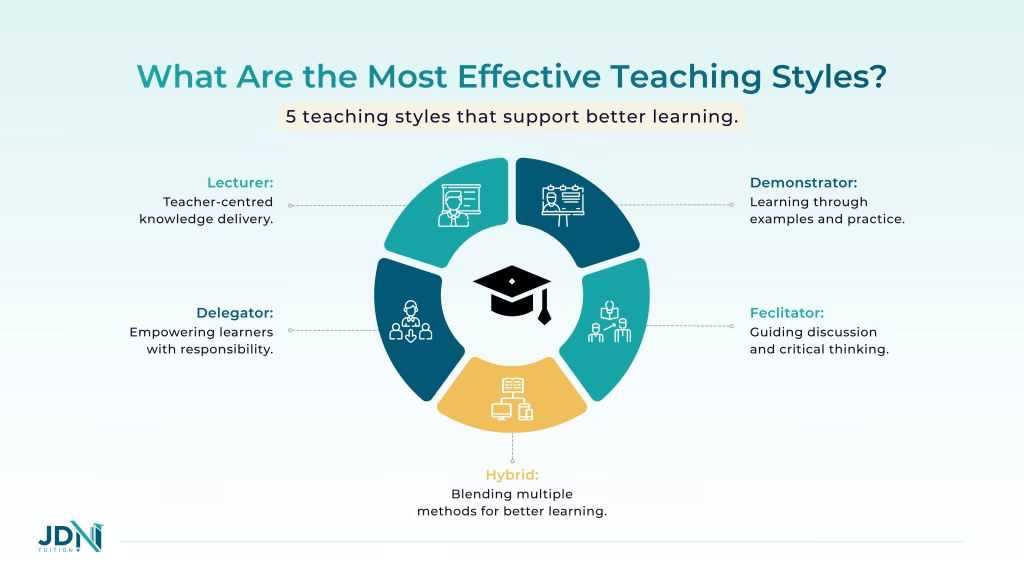
What Are the Most Effective Teaching Styles?
The best and most effective teaching style depends heavily on the topic and content you are teaching. Other factors like class, cohort size, and learners’ unique needs and pace also have a great impact on the adopted teaching style. However, 5 major teaching methods are considered to be the most effective in our opinion.
- Lecturer
- Demonstrator
- Hybrid
- Facilitator
- Delegator
1. The Lecturer
Let’s be honest–lecturers have always been badly reputed. People imagine a professor or lecturer reading from yellowed notes while students struggle to take notes without dozing off in class. But here is the plot twist: when delivered well, the lecturer’s style remains one of the most effective teaching strategies in both traditional and online education.
The lecturer’s style, sometimes referred to as the formal authority style, will be known to anyone who has attended long lectures in large college or university classrooms or auditoriums. In this teaching method, the teacher or the presenter takes the central role and tends to deliver the information to a large group of people in an organised and structured manner. For this teaching style, the subject matter is mostly singular or predetermined. However, there tends to be a huge number of students or learners in each group, so there’s not enough room or time for personalised interactions between the educator and the learners. However, the students are still encouraged to take notes and ask questions at the end of each lecture. The majority of the time, there are no other activities planned other than delivering the information.
A competent lecturer uses strong communication skills to turn boring explanations into interesting stories, facts into discoveries, and complex concepts into something students really want to learn. According to research, a structured verbal delivery helps build foundational knowledge in learners, especially for beginners. That’s why law schools, medical universities, and even many online courses still depend heavily on high-quality and strong lecturers.
Furthermore, in modern times, lecturers don’t just explain or talk; they incorporate visual aids, short quizzes, and storytelling techniques to enhance student engagement. Even in online maths tutoring or a virtual economics class, a good lecturer can break down complex topics into a step-by-step explanation.
Example of Lecturer Style
An example of the lecturer’s teaching style is when a guest speaker or public speaker is invited to a school or corporate setting to give a presentation. After the presentation, learners are encouraged to ask questions for clarification. However, due to limited student participation, this style often results in lower knowledge retention. Students may also struggle to interact or engage with the content being taught.
In short, don’t underestimate a great lecture; it’s still a cornerstone of modern education.
2. The Demonstrator
If the lecturer explains, the demonstrator shows. This style of teaching combines verbal instructions with hands-on activities, making it ideal for learners who need to see the process before they can replicate it. Under the demonstrator style, the educator still retains a lot of authority; however, he is more open to trying a student-centered approach to teaching.
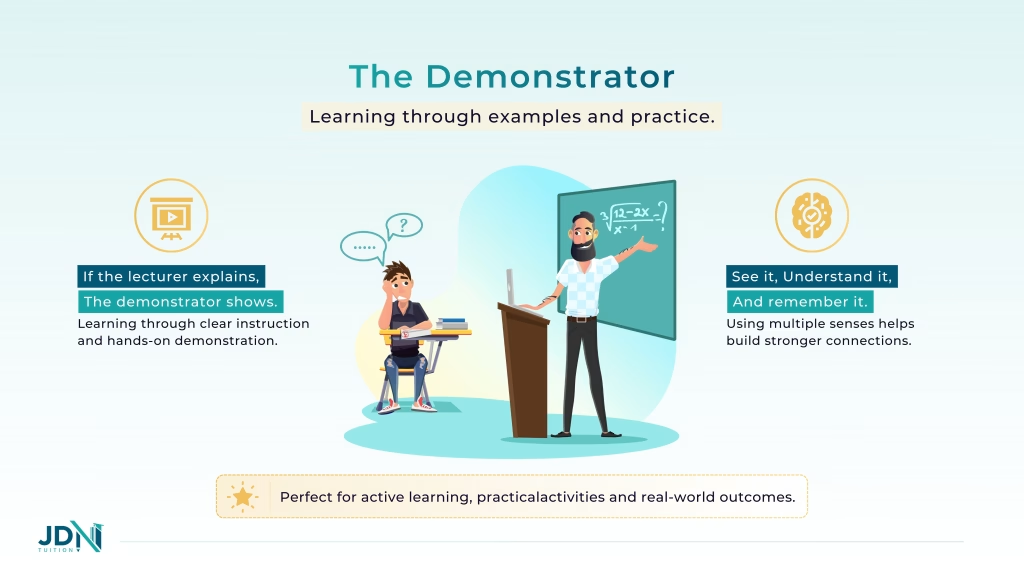
Think of science instructors lighting up Bunsen burners, art teachers showing brush strokes, gym trainers modeling postures, and even online English tutors demonstrating pronunciations using digital tools. When students watch the demonstration or step-by-step process, they tend to build stronger neural connections– because humans learn better when there are multiple senses involved.
You can often see demonstrators encouraging students to come up with problem-solving skills, ask questions, and simulate what they have just learned. In Addition, the demonstrator style of teaching works in environments where active learning, practical activities, and performance-based activities and outcomes are involved.
An example of demonstrator style teaching in action is when a teacher conducts a science experiment or an art workshop in a classroom. Students may huddle around the instructor to observe and participate in the experiment. After the instructor gets done with the experiment, he encourages students to replicate the process they have observed and conduct their own experiment to bring the same or similar results. As the students work through the experiment, the teacher is there to provide them with the visual aids and multimedia to enforce key concepts and answer any queries they may have regarding the activity.
Furthermore, in online spaces, demonstrations make use of screen sharing, simulations, animations, whiteboards, virtual labs, and demonstrations using AI tools. This makes this method just as impactful for online tutoring as in-person or physical classrooms.
3. The Hybrid
The hybrid teaching style- also known as blended teaching– strives to maintain a balance between both teacher and student-centered approaches. Imagine merging the best of every world– lectures, demonstrations, group activities, technology, and peer-to-peer learning. This blended style of teaching has become a go-to approach in schools, universities, and even online study courses. This teaching style combines both traditional and modern teaching methods, making it ideal for adapting to the diverse needs of learners. For example, some absorb information visually; others learn better with hands-on activities, while some learn through discussions. Therefore, instead of picking one specific method, the hybrid style integrates varied teaching techniques to address multiple learners’ needs at once.
Educators who follow a hybrid teaching style often bring their own knowledge and expertise into the class. They usually follow a structured plan for every lesson, but they can adjust their method and flow and come up with a range of activities to keep the learners engaged.
A blended teaching style integrates a wide range of teaching tools into one session, including;
- Group activities
- Demonstrations
- Lectures
- Collaborative tasks
- Online quizzes
- Technology
- Digital simulations
Example of Hybrid Style
For example, a teacher who follows a hybrid teaching style may assign online readings or video lessons for learners to review before class. There can also be an online discussion forum where students can share ideas, insights, and questions. In class, the students can build upon the online discussion along with hands-on activities, group activities, or problem-solving tasks related to the content they studied. This will also help open up new areas for exploration.
The best part? Hybrid teaching helps encourage transferable skills like decision-making skills, collaboration, adaptability, digital fluency, and creativity– skills that matter beyond the classroom.
However, although the hybrid teaching style is effective across a variety of settings, it can get challenging to cover information-heavy courses due to its slower pace. Furthermore, it asks for a lot of energy from the teacher.
4. The Facilitator
If the lecturer leads from the front and the demonstrator shows the way, the facilitator empowers students to take charge of their own learning.
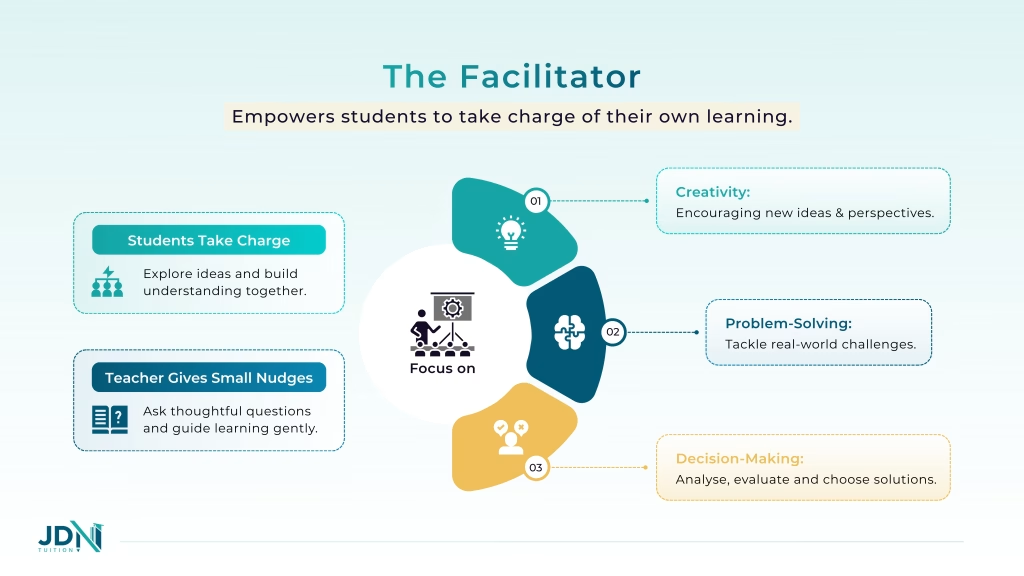
Instead of one-directional lessons, a facilitator encourages students to learn through critical thinking. They ask questions and discuss real-world case studies. This approach supports active learning, inquiry, creativity, and decision-making in students. These activities help improve problem-solving skills. They also enhance understanding of the subject through practical exercises and examples.
One of the best examples of the facilitator teaching style is a Socratic seminar. It is based on Socrates’ belief that asking questions, staying inquisitive, and engaging in constructive debates are the best ways to learn.
In a Socratic seminar, learners strive to gain a deeper understanding of complex or ambiguous concepts through thoughtful dialogue and divergent thinking. Here is a simple breakdown of this teaching style. The facilitator provides the students with a specific topic or text to read through and think about before the class. In the class, the educator poses open-ended questions to stimulate critical thinking in students. Learners also share ideas, opinions, and build on each other’s responses to get in-depth insights into the topics.
This approach is also heavily utilised in communicative language teaching, where students practice with the guidance of the teacher rather than passively listening. Instead of delivering information straightforwardly, the facilitator style of teaching creates an environment that encourages curiosity.
The facilitator’s teaching style is effective for encouraging communication and cooperation among learners. It allows students to explore a topic and develop their own ideas and answers. However, this style of teaching may not be suitable for teaching highly technical and theory-heavy topics and concepts.
The facilitator style creates thinkers, not memorisers.
5. The Delegator
Some educators prefer to lead. Others choose to demonstrate or instruct. A few take on the role of mentors and guides. But delegators? They hand the reins to the students. The most student-centric teaching style of all is the delegator style– also known as the group style. In this teaching style, the instructor is merely present as an observer, and it’s the group of learners who are doing the task.
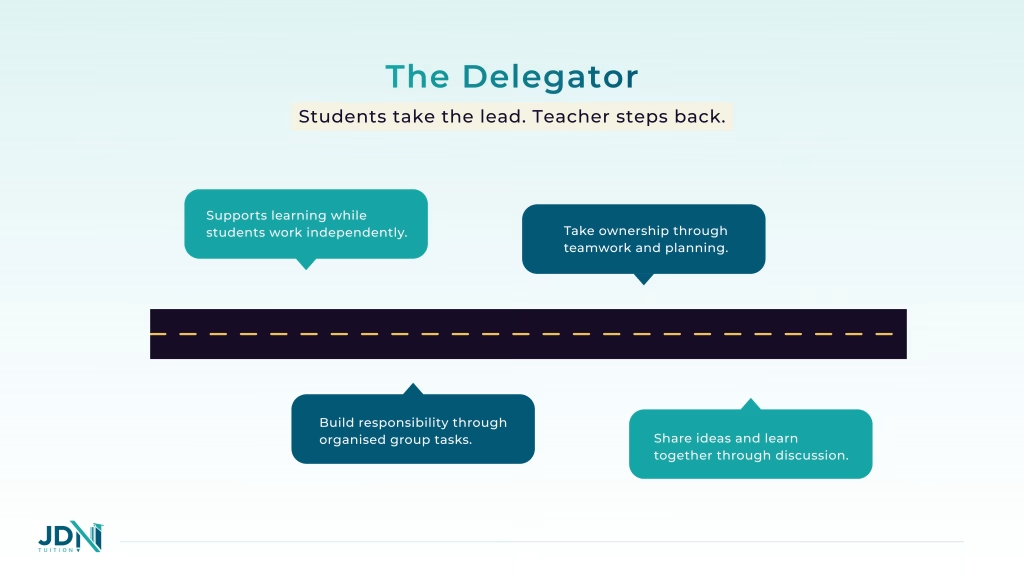
Most learning in the delegator teaching style happens between students on a peer-to-peer level. It involves frequent discussions, communication, and collaboration. The educator becomes a mentor while students run projects, self-manage tasks, and even teach each other on different topics. It’s like the educational equivalent of “I trust you, go ahead.” The teacher is practically removed from the position of authority, and he only helps facilitate the discussions. Moreover, the delegator teaching style encourages leadership, independent research, and decision-making skills. In addition, students learn to set deadlines, collaborate, resolve conflicts, and organise their tasks priority-wise.
Furthermore, the delegator-style classes often include independent research tasks, portfolio building, project-based assignments, self-assessment, and student-led presentations. Additionally, this style works best for lab-based experiments, creative writing, group tutoring classes, debates, and other peer-to-peer activities.
With the help of AI in education, this teaching style also fits perfectly with modern education.
The delegator teaches students not what to think, but how to think– a skill that lasts a lifetime.
The Most Effective Teaching Styles: Concluding Remarks
Every teacher has strengths. Some are natural storytellers, others incredible mentors, others gifted demonstrators. However, the best teacher knows how to switch roles. They act as a lecturer on Monday, a demonstrator on Tuesday, a facilitator during group projects, a delegator for assignments, and a hybrid across the semester.
The key is understanding what the students need at that moment.
In online learning, especially online tutoring, flexibility matters even more. A student struggling with algebra problems may need a Demonstrator approach for clear, step-by-step guidance. Another student working on essay writing may benefit from a Facilitator approach or a Delegator approach. Both encourage independence and critical thinking.
Modern teaching is about personalisation, and these five styles make that possible.
Looking For the Best Teacher for Your Kid?
Great teaching is not about one method; it is mostly about understanding how each student learns. That’s exactly what you get at JDN Tuition. Whether your child learns through clear explanations, step-by-step demonstrations, guided support, or independent learning, our tutors adapt their teaching style to match the learner, not the other way around. From one-on-one sessions to online classes, we focus on real understanding, not rote memorisation. Take a look at our reviews and contact us today to see how our primary school tutoring and high school tutoring services can help your child.
Boost Confidence. Improve Results. Start Today.
 Book a FREE Call: +61 2 7202 1930
 Email us: contact@jdntuition.com.au
What are the five teaching styles?
The five most effective teaching styles are Lecturer, Demonstrator, Hybrid, Facilitator, and Delegator.
What is the most common teaching style?
Most teachers use the lecturer style of teaching. In this approach, they talk directly to a group of students and deliver content using a clear, direct method.
What teaching style am I?
There are many teaching styles suited to different learners. Finding the right one may take time and experimentation. Over time, you may even develop a unique teaching style of your own.