




How to Improve Your Creative Writing Techniques for HSC English Paper 1?
HSC English | Writing Styles | Creative Writing Prompts
Your child has spent months preparing for HSC English. They’ve read the texts, practised essay responses, and stayed up late reviewing their notes. However, mastering the right creative writing techniques can be just as important as knowing the course content. It’s something many families don’t realise.
Content knowledge alone won’t earn top marks in the HSC English exam. The students who score highest understand how to write with precision, creativity, and purpose. This is especially true in English Advanced Exam Paper 1.
The creative writing response can make or break a final result. HSC English Advanced rewards students who have developed their craft beyond content recall alone. A student can know the syllabus perfectly and still lose marks by failing to engage the reader. The good news is that these techniques are learnable.
This blog walks through the creative writing strategies your child needs to know. We cover everything from literary devices and story structure to narrative voice and descriptive language. For more content like this, take a look at the JDN Tuition Blog Page.
What is Creative Writing in HSC English Paper 1?
HSC English creative writing is a structured response using imaginative language and deliberate technique. In Paper 1, your child must engage purposefully with a given stimulus.
Paper 1 tests different aspects of English ability across several sections. The creative writing component asks students to produce an original piece. This might be a short story, a personal reflection or narrative prose. The stimulus can be a quote, an image or a short phrase. Students must respond to it with creativity and control. There are no marks for simply retelling a familiar story. Markers want to see original thought paired with deliberate craft.
Many parents wonder what are creative writing techniques exactly. They are the deliberate choices a writer makes to shape how a reader feels. These choices span word selection, structure and the devices applied throughout the piece. The technique is not separate from the story. It is what makes the story work.
It helps to understand how creative writing differs from other forms. Academic writing is formal and argument-driven. Persuasive writing aims to change the reader’s opinion. Creative writing uses storytelling and language craft to create a meaningful experience for the reader.
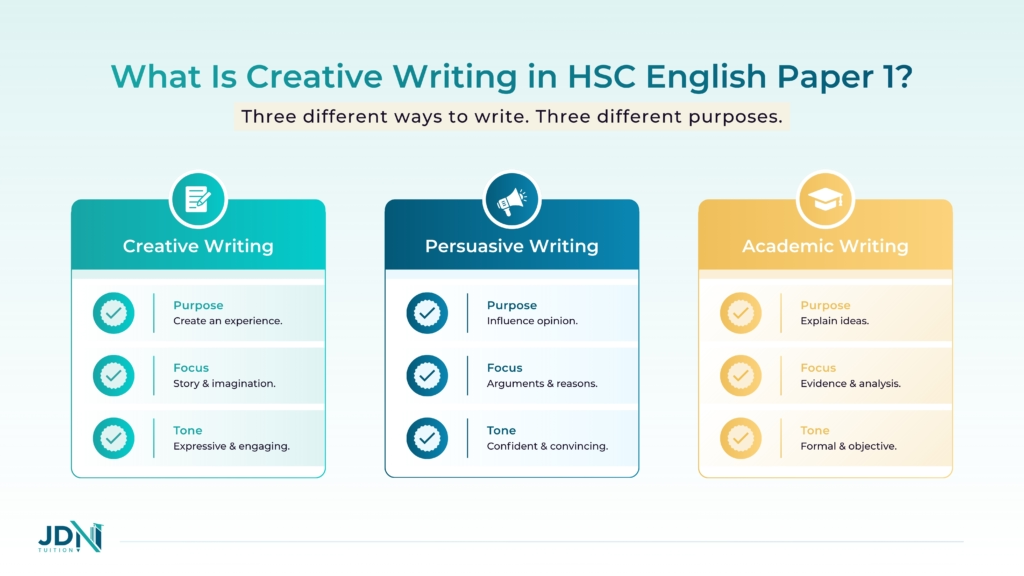
Students can draw on a wide range of writing styles in their response, including first-person narrative, lyrical prose or a fragmented structure. However, the most important factor is that the chosen style supports both the story and the exam stimulus. Ultimately, HSC English Paper 1 markers reward students who write with purpose, creativity and skill from the very first line.
Which Literary Techniques Should Your Child Know?
Students should have a strong command of figurative language, emotive language and contrast in writing. These are the techniques markers notice and reward most.
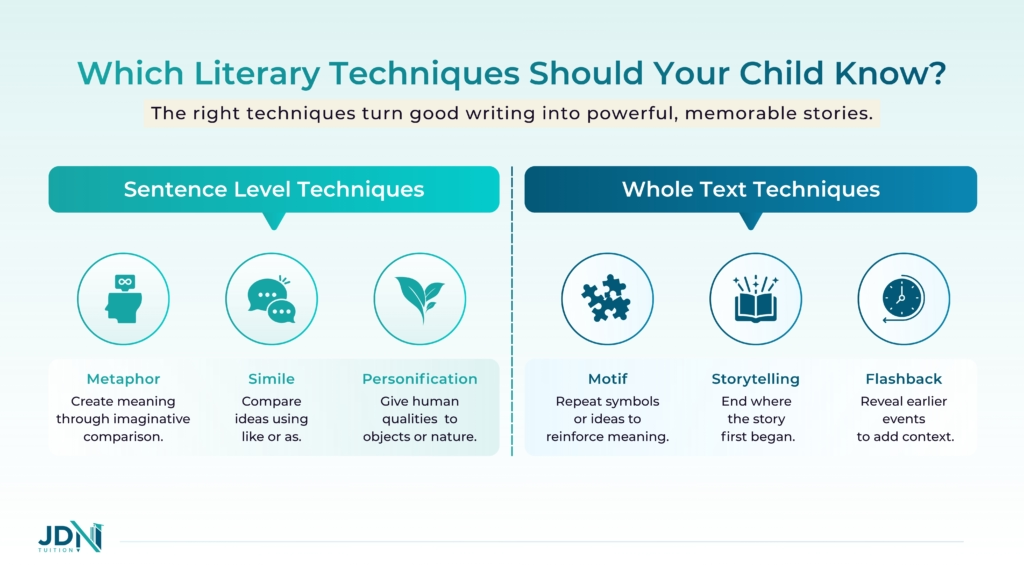
English literary techniques are the tools a writer uses to shape meaning. They control the effect a piece of writing has on the reader. Every word choice, image and sentence structure is a technique applied with purpose. In the HSC context, students who apply these deliberately consistently outperform those who rely on content alone.
Master Figurative Language for Stronger Creative Writing
Figurative language is one of the most versatile tools available to a writer. It describes something in non-literal terms to create a stronger image in the reader’s mind. Understanding how to use metaphors effectively is a great starting point. A metaphor places two unlike things side by side to create meaning. Describing grief as a fog, for example, gives the reader something to feel, not just understand.
Knowing how to use personification in writing allows students to bring scenes to life. Giving human qualities to objects or nature creates atmosphere and emotional depth. Another powerful technique is using an analogy in a sentence. By doing so, students can help readers understand complex ideas through familiar comparisons. As a result, this approach works particularly well when describing abstract emotions or difficult situations.
Use Emotive Language to Connect with the Reader
Emotive language draws on words that trigger an emotional response. As a result, it connects the reader to the characters and situation on a personal level. When used effectively, it can make a piece of writing feel urgent, tender, or powerful.
Furthermore, the literary techniques repetition, when used deliberately, builds rhythm and reinforces key ideas. However, it should always be intentional rather than accidental. Likewise, contrast in writing places opposing ideas or images beside each other, creating tension and highlighting meaning without stating it directly. Together, these creative writing techniques transform a competent piece of writing into an exceptional one.
How Should Your Child Structure a Creative Writing Response?
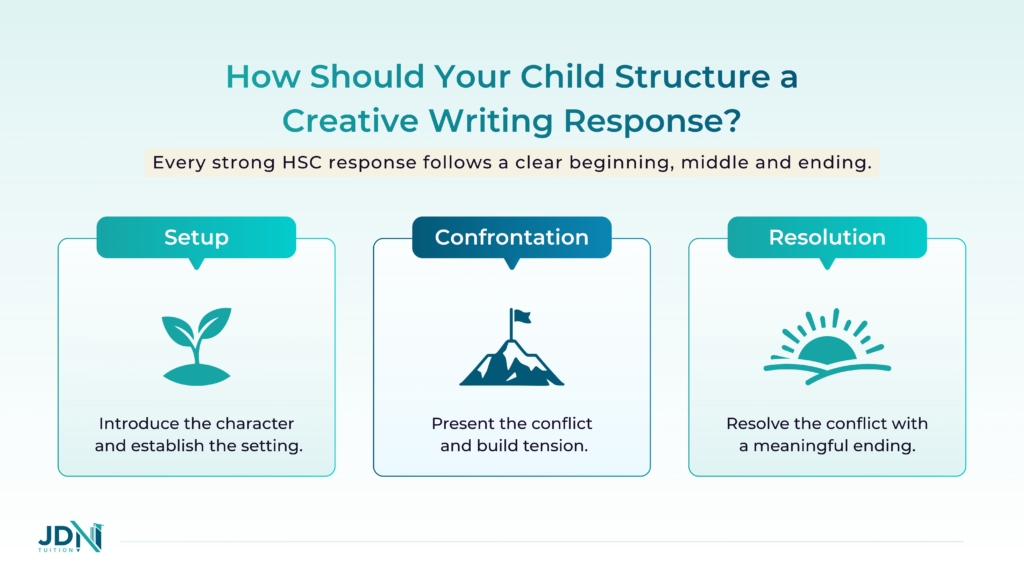
The three act structure forms the foundation of any strong creative response. It calls for a clear beginning, a developed middle and a purposeful ending.
Structure matters just as much as language technique. Without it, even the most skilled response can feel directionless. The three act structure divides a story into setup, confrontation and resolution. Your child does not need to write a saga. They just need a clear journey that the reader can follow to a satisfying end.
Narrative writing demands a particular kind of discipline in an exam setting. Students have a limited word count and a strict time limit. Knowing how to write a short story within those constraints is a skill that requires practice. The story must feel complete, not rushed.
The rule of 3 in writing is a simple but powerful tool. Grouping ideas in threes creates natural rhythm and weight. Students can apply this across description, imagery and sentence structure. When they do, it adds a quiet sophistication to the entire response.
Furthermore, strong storytelling techniques go beyond plot. Character-building is one of the most effective ways to engage a marker. A character with a clear motivation, flaw or desire gives the reader something to invest in. Even a single, well-drawn character can anchor an entire short story. Encouraging your child to sketch their character before writing can make a real difference.
Finally, narrative voice is another key differentiator. A consistent, confident voice tells the marker that your child is in control of the piece. This is what separates a memorable response from a forgettable one. Voice is often what makes markers remember a piece long after they have finished marking it.
Get Expert HSC Creative Writing Support
Is your child struggling with creative writing? JDN Tuition’s expert High School Tutoring helps Year 12 students master exactly these skills. Our High School Tutors tailor every session to the demands of the HSC exam.
What Writing Skills Do HSC Markers Look For?
HSC markers reward students who demonstrate confident control of descriptive language, accurate punctuation and varied sentence structure throughout their response.
Writing skills at the HSC level go beyond simply telling a story well. Markers assess how deliberately a student uses language at every level, from word choice down to punctuation. These choices signal whether a student understands the craft or is simply writing instinctively.
Use Descriptive Language to Create Vivid Scenes
So, what is descriptive language? It is the use of specific, sensory words that place the reader inside a scene. Rather than writing “the room was dark,” a skilled student writes with texture, smell and sound. This kind of precision is what separates a band 4 response from a band 6.
Master Grammar and Punctuation
From there, punctuation becomes equally important. The types of punctuation a student uses should feel deliberate, not accidental. Semicolons, em dashes and ellipses all create specific effects. Markers notice when students use them to control pace and build tension. Strong grammar and punctuation signals that your child has genuine control of their writing rather than writing by instinct alone.
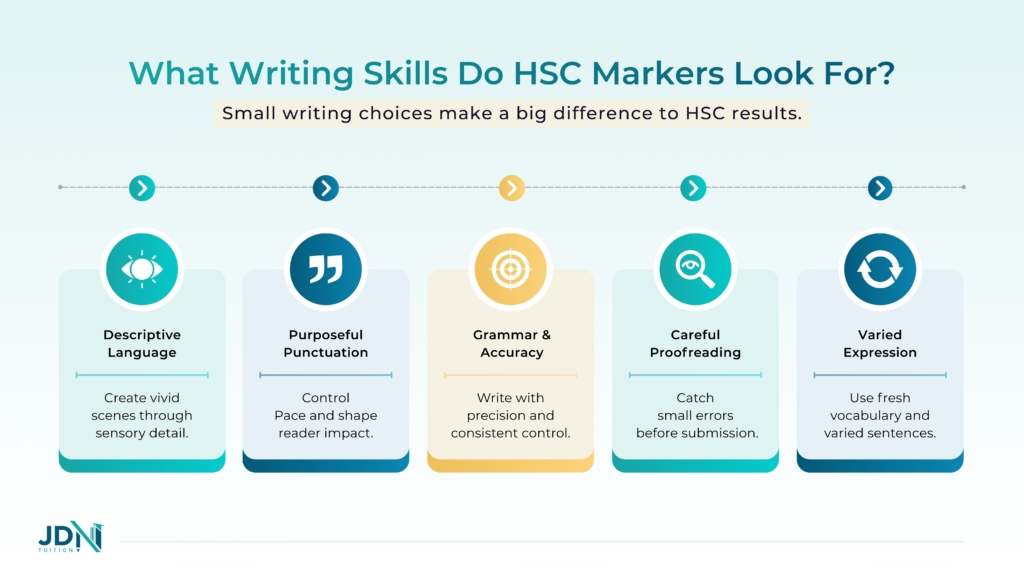
Spelling and punctuation errors, even minor ones, chip away at the overall impression of a response. They signal a lack of care and can cost marks in the accuracy criteria. Encouraging your child to proofread methodically is one of the simplest writing tips available. It takes only a few minutes but can protect marks that took hours to earn.
Avoid Repetition for Stronger Creative Writing
Finally, creative writing techniques such as avoiding repetition help keep a response engaging from start to finish. When the same words or phrases appear too often, the writing loses energy. However, varied vocabulary and deliberate sentence rhythm hold the reader’s attention right through to the final line.
Want your child to get advice straight from the experts? Families across Australia trust JDN Tuition. Our Primary School Tutoring builds the foundational writing skills that set students up for long-term success. Visit our Google Business Profile and read the reviews from parents who have seen real results.
How Can Students Practise Their Creative Writing Before the Exam?
The most effective approach is regular practice using HSC English Past Papers, creative writing prompts and timed exercises that replicate real exam conditions.
Practice is where technique becomes instinct. A student might understand every literary device discussed in this blog but still struggle under exam pressure without consistent rehearsal. The gap between knowing and doing closes only through repetition.
Past papers are the most valuable practice tool available. They show your child exactly what the exam looks like and what kinds of stimuli to expect. Rather than simply reading past papers, students should attempt them under timed conditions. Therefore, this builds the mental stamina and decision-making speed that the real exam demands.
Alongside past papers, creative writing prompts offer a lower-pressure way to build creative flexibility. A prompt gives the imagination a starting point without the stakes of a formal assessment. Encouraging your child to respond to a new prompt each week builds both confidence and range. Over time, they develop a repertoire of ideas, structures and techniques to draw on.
Creative writing exercises that target specific techniques are equally valuable. A student might spend one session focusing solely on figurative language, and the next on building a character from scratch. This kind of focused practice accelerates improvement far faster than general revision alone. It is the best way to improve writing skills because it makes each session purposeful. Before submitting any practice response, your child should work through a creative writing checklist. This includes reviewing paragraph structure, checking for repetition and confirming that their techniques are serving the story. It takes only minutes but builds the self-editing habit that markers reward. Consistent, structured practice is ultimately what turns potential into performance.
How Does an HSC English Tutor Help Students Score Higher?
An HSC English tutor provides the personalised feedback, targeted technique-building and structured exam preparation that classroom teaching rarely delivers on its own.
In a classroom of 25 to 30 students, individual feedback on creative writing is limited. A teacher might mark a draft and leave a few comments but rarely has the time to work through a response line by line. This is where a dedicated tutor makes a genuine difference. A tutor focuses entirely on your child’s writing and works to identify exactly where marks are being lost.
Every student has different weaknesses. One might struggle with structure while another overuses adjectives or lacks a consistent narrative voice. A tutor diagnoses these gaps quickly and builds a plan to address them directly. This targeted approach produces faster improvement than general study guides or classroom revision ever can.
Online tutoring Australia-wide has made expert HSC support more accessible than ever before. Your child can work with a specialist tutor from home, fitting sessions around school commitments, sport and family life. There are no commutes and no rigid timetables. Just focused, high-quality instruction delivered consistently.
Beyond technique, a tutor also provides accountability. As a result, regular sessions create a rhythm that keeps students engaged and progressing throughout the year, rather than cramming in the final weeks. Moreover, knowing that someone is invested in their improvement gives many students the confidence to take creative risks in the exam room. Ultimately, that confidence, paired with strong technique, is what produces the responses that markers remember.
Conclusion: What are the Best Creative Writing Techniques for HSC English Paper 1?
Ultimately, the best creative writing techniques will differ from person to person. However, creative writing is not simply a natural gift. Instead, it is a learnable skill that improves with the right guidance and consistent practice. With every device, structure, and language choice your child masters, they move closer to achieving the marks they deserve. As a result, the HSC rewards students who write with purpose and confidence. With expert support and regular practice, your child can walk into the exam room feeling prepared and confident.
If you want your child to get ahead before the HSC arrives, JDN Tuition is here to help. Contact us today to find out how our experienced team can support your child’s HSC journey. Call us or email us to get started on their English success today.
Boost Confidence. Improve Results. Start Today.
 Book a FREE Call: +61 2 7202 1930
 Email us: contact@jdntuition.com.au
How to get full marks in English Paper 1?
To achieve full marks, students need a response that combines strong technique, a clear structure, and a consistent narrative voice throughout. Additionally, those who practise regularly under timed conditions and refine their work through constructive feedback are more likely to perform at their best.
What are the common mistakes in Paper 1?
However, the most common mistakes include neglecting structure, overusing adjectives, and failing to connect the response meaningfully to the stimulus. Additionally, many students lose marks due to inconsistent punctuation and repetitive word choices.
How long is HSC English Paper 1?
HSC English Paper 1 runs for two hours with an additional five minutes of reading time. As a result, students must complete multiple sections within the allocated time, so both effective pacing and thorough preparation are essential.