





How to Select the Right University Degree Courses?
Software Engineering | Degree Courses | Online University Courses
Picture this: It’s a Sunday evening, your child is hunched over the kitchen table surrounded by university brochures, and neither of you really knows where to start. Sound familiar? Choosing between university degree courses is one of the most exciting, and let’s be honest, overwhelming decisions a family can face together.
The good news is that Australia offers some of the world’s most flexible and rewarding university degrees. There is genuinely something for every kind of student. Whether your child has a clear passion or no idea yet, understanding the available degree programs is the first step. It can help them make a confident and well-informed choice. In this guide, we walk you through exactly that.
Looking for more resources like this? Visit the JDN Tuition Blog Page for more expert advice on supporting your child through their education journey.
Why the Right University Degree Choice Matters More Than Ever
The world your child is entering looks very difficult to the one you started your career in. The rise of artificial intelligence is reshaping industries at a pace we have never seen before, and certain roles that existed a decade ago are already disappearing. At the same time, entirely new careers are emerging, and many of them require specialised qualifications through university degree courses to get a foot in the door.
Then there is the financial burden of a degree. University is a significant investment, and even with HECS-HELP taking the pressure off upfront costs, your child could be carrying that debt for years after graduating. Understanding the difference between graduate vs. undergraduate study early on helps families plan smarter, particularly if your child has ambitions that might eventually lead to a postgraduate degree.
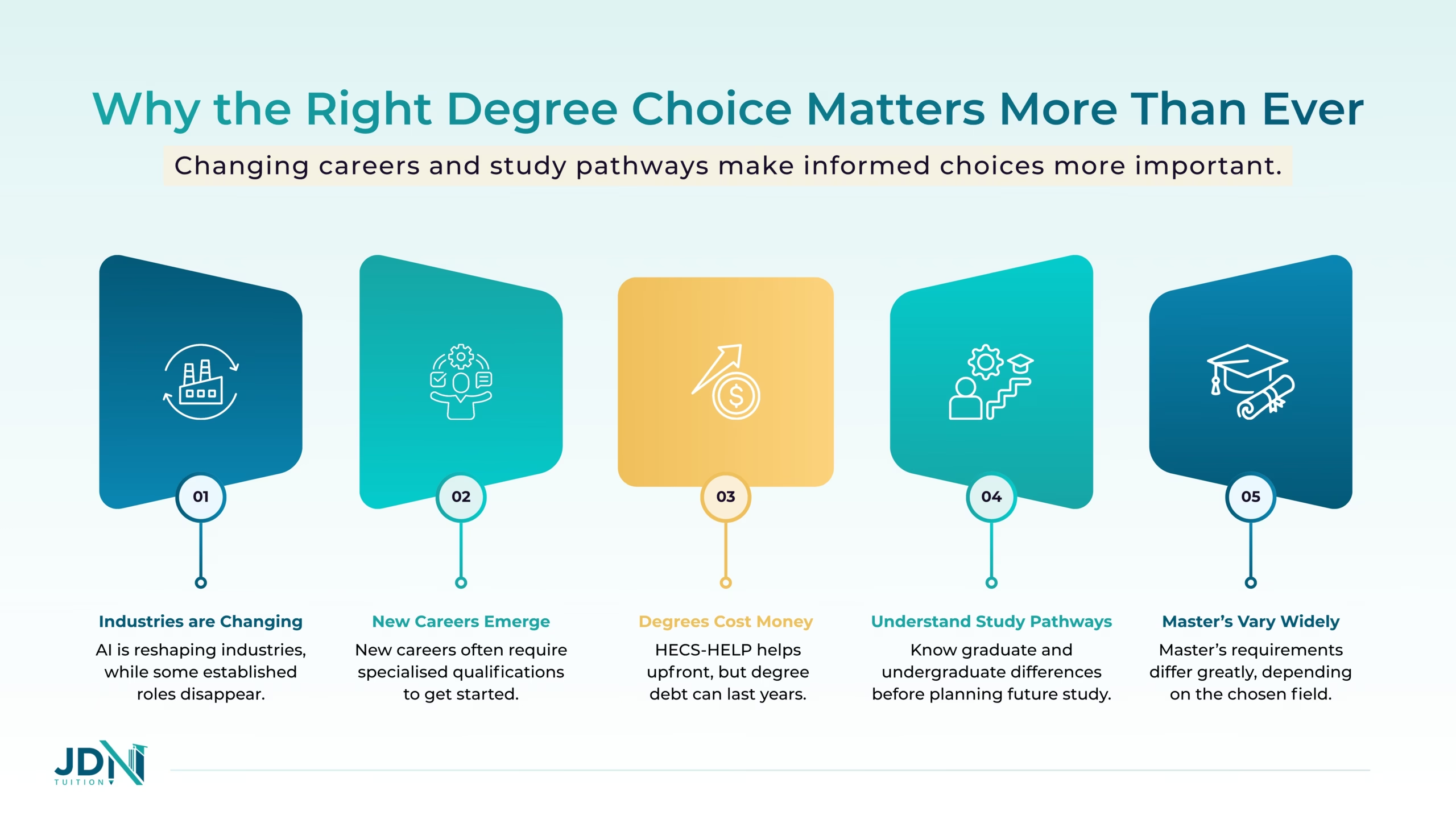
It’s also worth knowing that a master’s degree in Australia can look very different depending on the field, with some careers practically requiring one while others rarely do. Getting across these distinctions now means fewer surprises down the track.
Start With Your Child’s Strengths and Interests
It sounds obvious, but this step is often skipped when families chase prestige or high salaries. Before comparing university rankings or worrying about ATARs, take a breath. Start by considering what your child is good at and genuinely enjoys.
Think about the subjects they look forward to, the problems they gravitate towards solving, and the kinds of activities that make time fly. A student who loses themselves in drawing and spatial problem-solving will probably find architecture courses to be the right fit that actually aligns with their strengths.
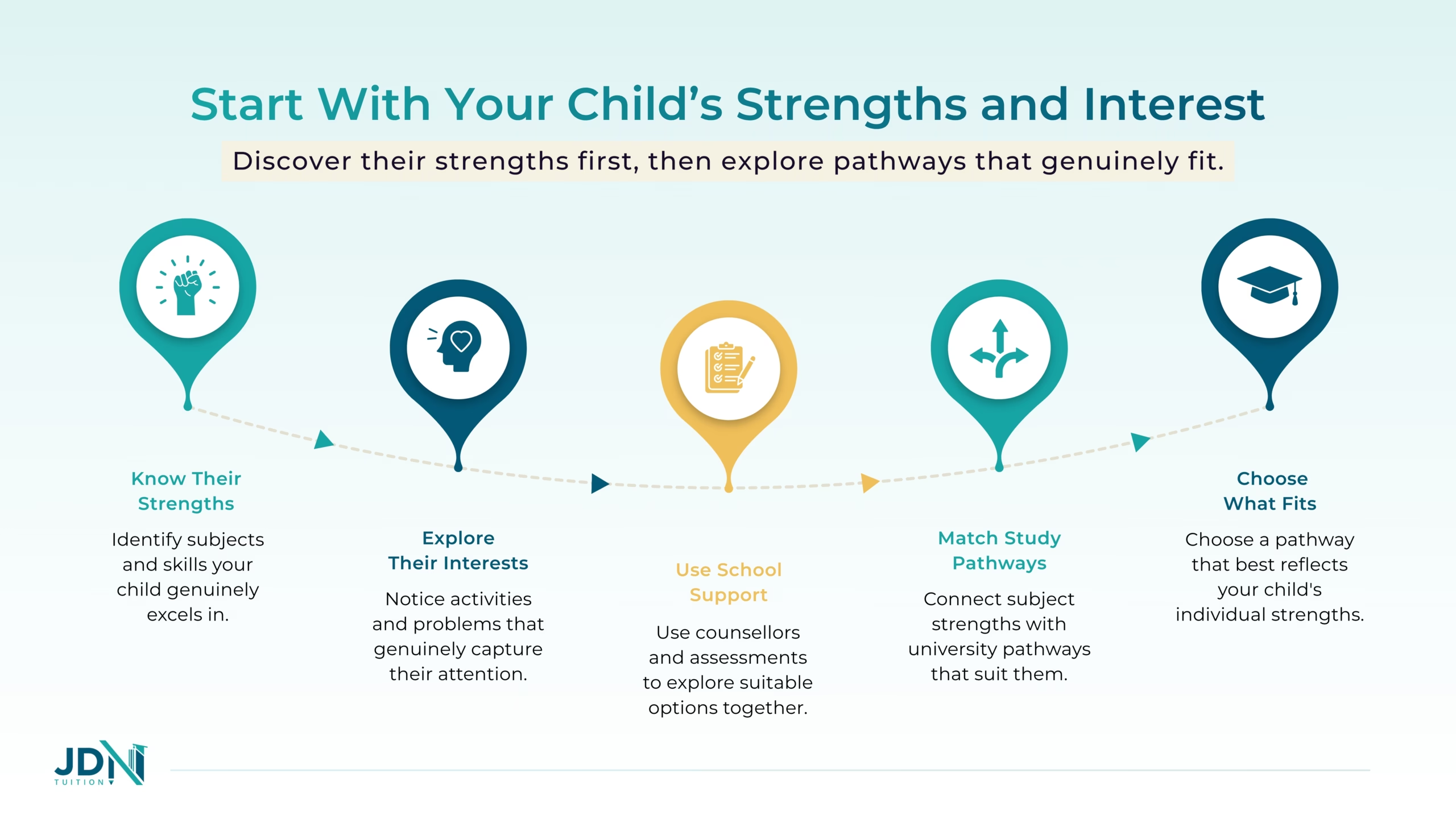
The education system in Australia actually provides some great built-in tools here. School careers counsellors and aptitude assessments can help students identify their interests. Subject selection processes in Years 9 and 11 also help connect these interests to potential pathways. Encourage your child to take these seriously rather than treating them as box-ticking exercises.
When it comes to choosing a university course, strengths in particular school subjects are often the clearest signpost available. Strong performance in sciences might point towards health-oriented, engineering, or similar university degrees. Good marks in the humanities can open doors in law, communications or social work. Starting with your child’s strengths and weaknesses keeps the process grounded in who they are. It also helps avoid choosing a path based on what others think they should do.
Research Career Outcomes
There’s a trap that many families fall into. It’s rather simple. Your child decides they love writing, so therefore they must get a journalism degree. Don’t think about what the first five years of a journalism graduate looks like; just focus on the writing aspect! Or, they enjoy working with kids, so teaching courses go straight to the top of the list without anyone checking graduate employment rates or the realities of the profession.
Often, the name of a degree can feel like a destination when really it is just a starting point.
This is why researching career outcomes is just as important as researching the course itself. Using tools like the Australian government’s Jobs and Skills Atlas is a genuinely useful free resource that breaks down employment prospects, average salaries, and projected industry growth for hundreds of occupations. University graduate outcome reports are another goldmine, as they show exactly where students from a particular course end up working and what they earn in their first year out on the job.
It is also worth factoring in the cost of a uni degree in Australia relative to the earning potential of your child’s chosen field. Some degrees open doors to high-paying careers quickly, while others may require further postgraduate study before salaries reflect the investment. Understanding that equation early puts your child in a position to actually weigh the options.
Understanding ATAR Requirements for University Degree Courses
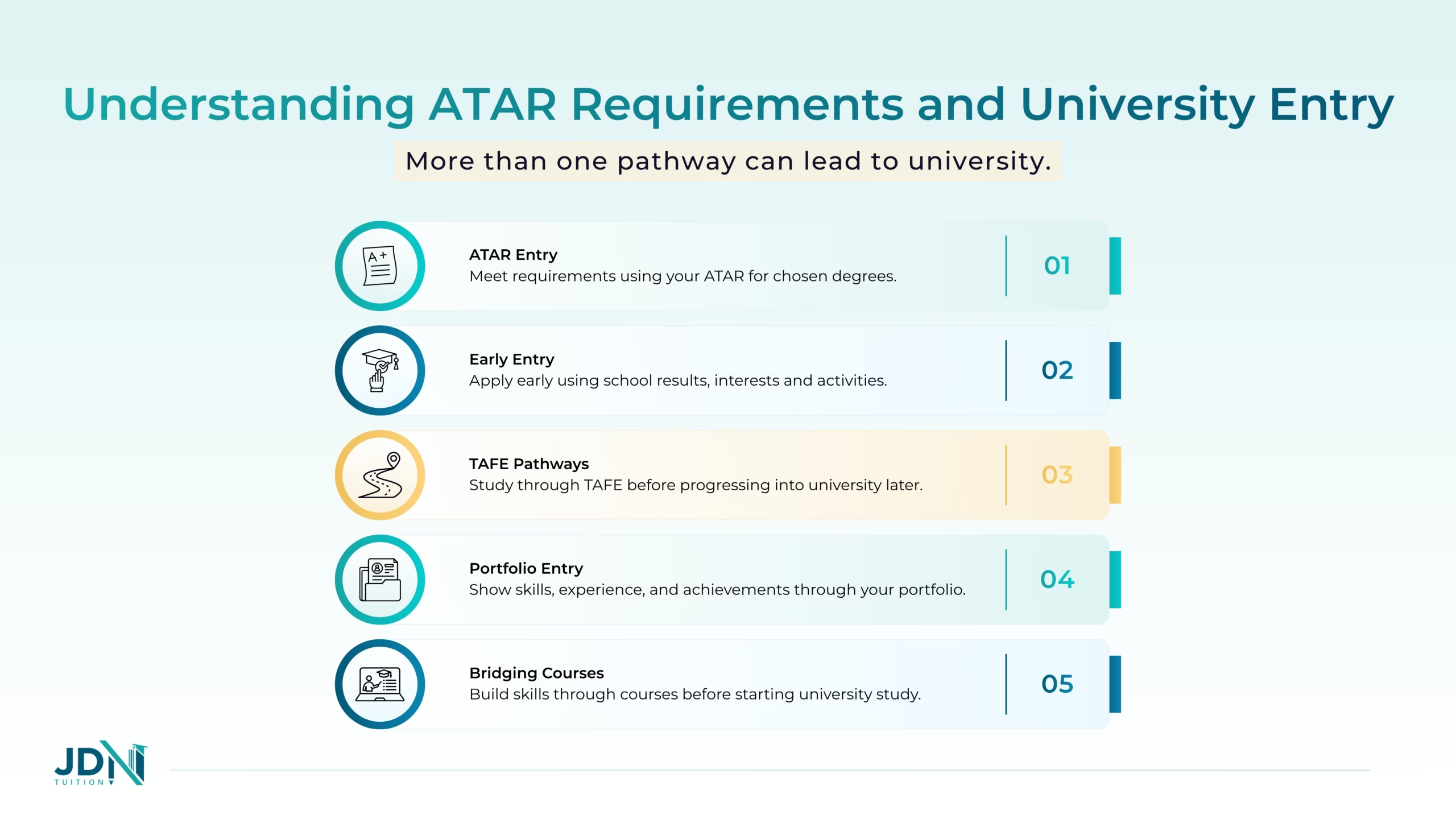
The ATAR is probably the number that keeps most families up at night, but it is worth keeping it in perspective. Yes, competitive degrees at well-regarded universities have high cut-offs, but an ATAR is just one entry pathway among many, many other options.
Alternative entry options are far more accessible than most parents realise. Foundation programs, TAFE-to-university pathways, portfolio-based entry, or even bridging courses can provide different routes into university degree courses for students who may not meet the standard ATAR requirements. These access schemes all exist precisely because universities understand that a single score does not capture everything a student has to offer. Qualities like soft skills, resilience and real-world experience carry genuine weight in many of these alternative assessments.
Knowing how to choose the right course also means being realistic about where your child is academically right now while understanding there is still time to improve. A strong final two years of high school can shift outcomes significantly, and that is where targeted academic support makes a real difference.
If your child is working towards a competitive ATAR or simply needs more confidence in their studies, JDN Tuition offers personalised high school tutoring designed to help students reach their potential. Check out our Google Business Profile or read our reviews to see how we’ve helped countless families who have been exactly where you are now.
Consider University Options
Once your child has a shortlist of degrees, it is time to zoom out and look at the bigger picture. Two universities might offer the same qualification on paper. However, the experience and opportunities can differ significantly in practice.
Start by looking at how each institution approaches learning. The teaching methods used across faculties vary more than most families expect, with some universities leaning heavily into hands-on industry placements and project-based learning while others take a more traditional lecture-driven approach. Neither is inherently better, but one might suit your child’s learning style far more than the other.
Beyond the classroom, extracurricular activities, student clubs and industry networking events all contribute to a graduate’s employability in ways that rarely show up in a brochure. It is also worth comparing the course syllabus across institutions. Subjects covered within the same degree can differ considerably. Course duration is another practical factor to consider. This is especially important for degrees with accelerated or part-time options.

Additionally, consider what life looks like outside of University. How long is the commute? Do I need to find student accommodation? What does the local community look like?
Finally, university open days are genuinely worth attending as a family. Walking around campus and attending information sessions can give your child a better feel for university life. Asking questions in person can also help them decide if they can picture themselves there. This is something many parents overlook.
The Value of Double Degrees and Flexible Study Options
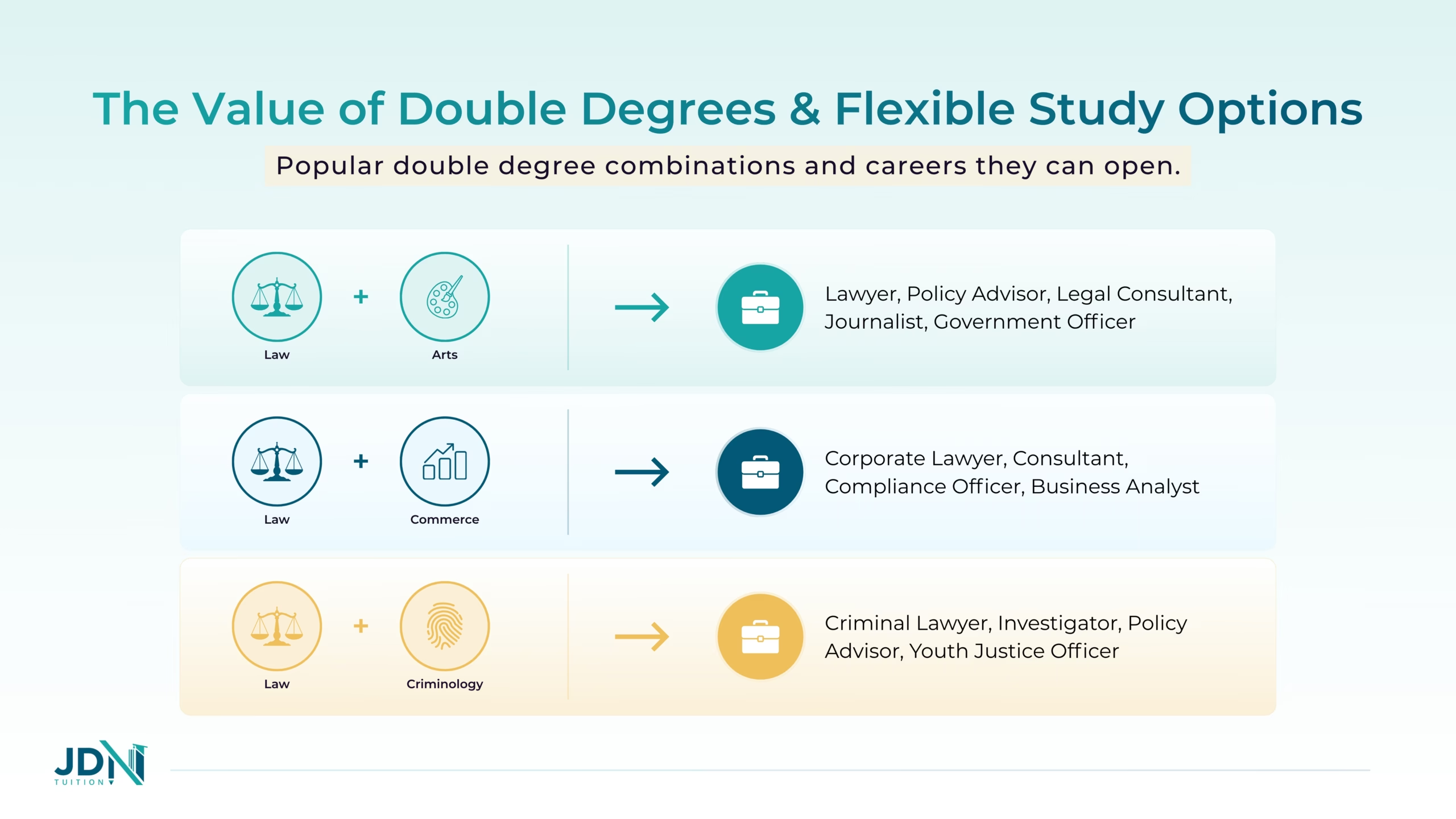
For students who struggle to narrow things down, a double degree can be a genuinely smart solution rather than a sign of indecision. Law courses in Australia, for example, are among the most popular choices for double degree combinations, frequently paired with arts, commerce, or criminology to give graduates a broader range of career options straight out of university.
A business management course combined with a science or technology degree is another pairing that employers increasingly value, particularly as industries look for graduates who can bridge technical expertise with commercial thinking.
Beyond double degrees, Australian universities now offer more flexible study options. Online, on-campus and hybrid courses make university more accessible to a wider range of students. Encourage your child to look closely at the course curriculum and course structure so they can make the ultimate decision if a double degree is right for them, or if the workload is simply too much.
When Your Child Does Not Know What They Want Yet?
Honestly? Most teenagers do not have what they want to do figured out, and that is completely okay. The pressure to have a life plan can be overwhelming. Your child may not even be a legal adult yet. This is an unreasonable expectation that many Australian families place on their kids. The first step is to take that pressure off.
A gap year spent working, volunteering or travelling can give a young person more clarity about what they actually want than any amount of brochure browsing. Many students return from a year in the real world with a far sharper sense of direction and a stronger personal study plan to back it up.
For students who would rather enrol and explore, many Australian universities allow students to defer their major until the end of first year, making a broad degree a perfectly sensible starting point. Opportunities for professional development through university electives, internships and student associations also help undecided students discover their direction organically. The most important thing parents can do is stay curious alongside their child rather than steering them toward a predetermined destination.
Practical Steps to Take Right Now
The best thing about this process is that you do not have to tackle it all at once. Start by booking an appointment with your child’s school careers counsellor. Most Australian high schools offer this service for free. However, many families underuse this valuable resource.
From there, registering for university open days is a natural next step. Most institutions hold them between July and September, so be sure to double-check the dates. Attending as a family gives your child a real sense of campus life. It offers an experience that no website can fully replicate. While researching, it is also worth exploring growing fields with strong graduate outcomes. Future-ready degrees like cybersecurity courses are becoming more popular, along with mental health courses and business analytics degrees.
Finally, look into your state’s tertiary admissions centre, such as QTAC, UAC or VTAC. Each centre offers online tools and guides to help families through the application process step by step.
Conclusion: What are the Right University Degree Courses for You?
Choosing a university degree is rarely a straight line, and that is okay. What matters most is that your child approaches the decision with curiosity and good information. They should also feel confident knowing they have people in their corner.
If your child needs academic support to reach their potential before university, or needs help achieving their desired ATAR, JDN Tuition is here to help. Reach out to our team today through our Contact Us page, drop us an email, or call us to find out how we can support your child’s university journey.
Choose the Right Degree Today
 Book a FREE Call: (02) 7202 1930
 Email us: contact@jdntuition.com.au
How do I know which degree is best for me?
The best starting point is to consider your child's natural strengths and genuine interests. You should also look at the career outcomes a degree can offer. If your child is unsure, speaking with a school careers counsellor, tutor, or trusted adult can help. Someone who has gone through the same process may also bring clarity to the decision.
What are the best university degree courses to get in Australia?
There is no single answer. The best degree is one that aligns with your child's goals. It should also open doors to a field with strong employment prospects. Degrees in nursing, engineering, teaching, technology and business consistently produce solid graduate outcomes across Australia.
What is the most popular degree to get?
Business and management degrees are among the most popular choices at Australian universities. Their broad applicability makes them relevant across many industries.