





How to Choose the Best HSC Subjects for Higher ATAR Scaling?
How to Choose Right HSC Subjects | ATAR 2026 | HSC Scaling
Subject selection night arrives before most families feel ready, especially when ATAR scaling is part of the decision. Your child walks in with a list of options and walks out needing answers. The pressure is real, and the stakes are genuinely high.
HSC subject selection is one of the most significant decisions your child will make in high school. The subjects they choose directly shape their ATAR score and their university pathway. For NSW HSC students, getting this right matters far more than many parents realise.
HSC and the ATAR are deeply connected. Not every subject is weighted equally, and some choices scale far better than others. Understanding what an ATAR is and how the system works puts your family in a much stronger position from the start.
This guide breaks it all down in plain language. By the end, you will know how to help your child make subject choices that give their ATAR every advantage. For more information on the HSC, visit the JDN Tuition Blog Page.
What Is ATAR and How Is It Calculated?
Many parents hear the word ATAR constantly but never get a clear explanation of what it means. The ATAR is a percentile rank, not a score out of 100. It tells universities where your child sits relative to their peers across the country.
How is ATAR score calculated starts with your child’s HSC marks. Those marks are converted into a scaled aggregate. The aggregate then determines your child’s national percentile ranking.
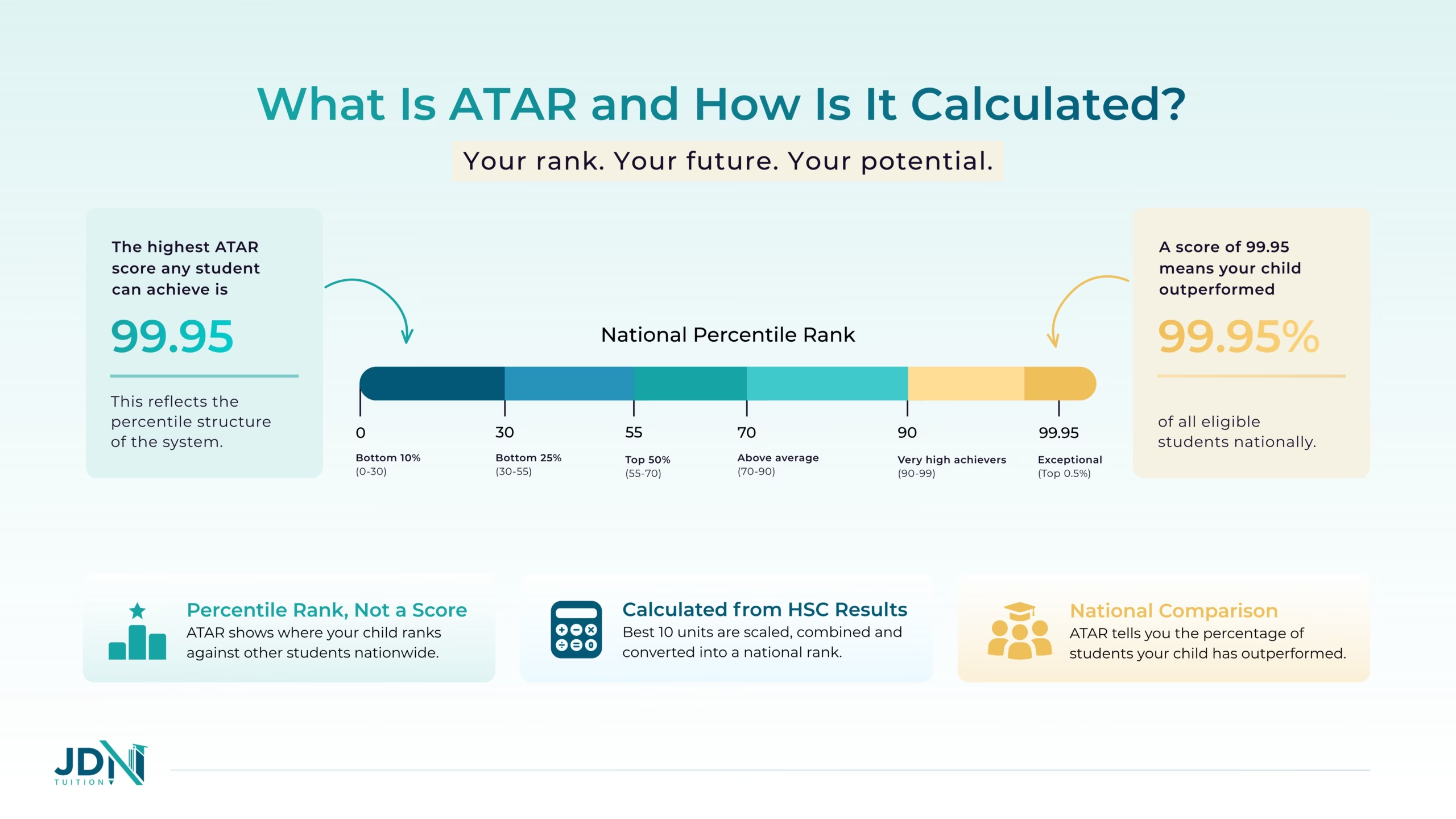
The highest ATAR score any student can achieve is 99.95. This reflects the percentile structure of the system. A score of 99.95 means your child outperformed 99.95% of all eligible students nationally.
So what is the average ATAR score in Australia? It sits at around 70. This gives families a useful benchmark when setting realistic expectations. Every student’s target will look different depending on their university goals.
It is also worth knowing that the ATAR is calculated from your child’s best 10 units of HSC study. Not every subject your child takes will automatically contribute. Understanding how ATAR scaling works alongside the best 10 units can help your family plan subject choices more strategically.
Understanding HSC ATAR Scaling
Here is where many families get caught off guard. Not all HSC subjects carry the same weight in the ATAR calculation. This is where ATAR scaling becomes critical to understand.
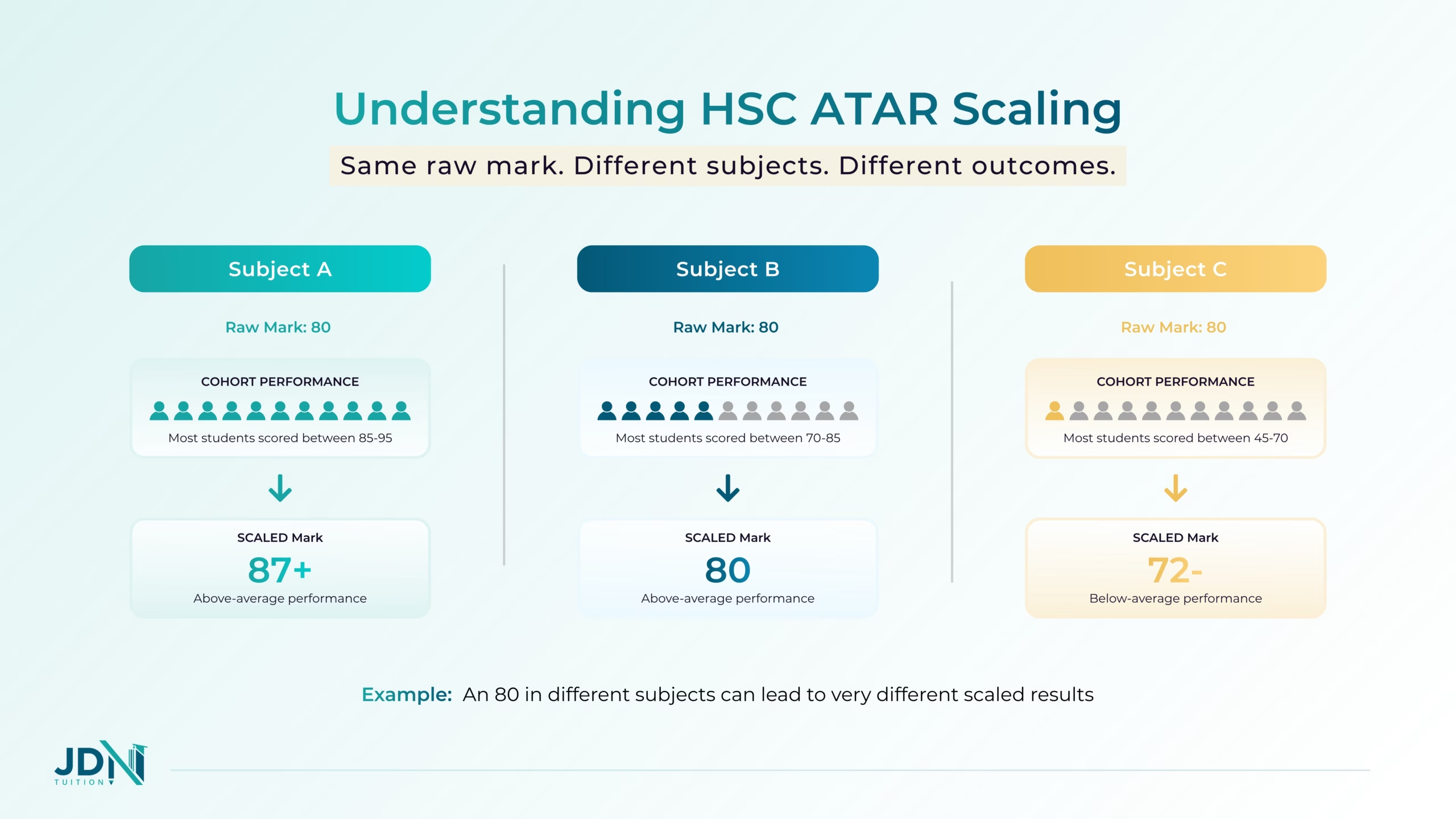
HSC scaling is the process that adjusts your child’s raw marks. It accounts for subject difficulty and the competitive strength of the student cohort sitting that subject. A raw mark of 80 in one subject may be worth significantly more than an 80 in another. The system is designed to ensure fairness across a wide range of subject choices.
Here is a simple way to think about it. Imagine your child scores 80 in a subject where most students scored between 85 and 95. That result reflects genuinely competitive performance. The scaling process recognises this and adjusts the mark upward accordingly.
HSC scaling does not inflate marks for easy subjects. It rewards students who perform well within competitive, academically rigorous cohorts. Subjects with highly capable student groups tend to scale more generously.
This is a common misconception worth clearing up. Choosing a subject simply because it seems easier will not automatically produce a better ATAR. In many cases, it can actually work against your child.
The takeaway for parents is straightforward. Ultimately, encourage your child to choose subjects where they can genuinely compete and perform at their best. As a result, strong marks in any well-chosen subject will always serve them well.
What Makes a Good HSC Subject Choice?
Choosing the right HSC subjects is about more than picking what sounds interesting. It requires a clear look at your child’s strengths, their university goals, and the ATAR system.
HSC courses are structured around a unit system. Most subjects are worth 2 units, but some are available as 1-unit courses. HSC subjects and units work together to build your child’s total study load. This load must meet a minimum requirement for ATAR eligibility.
Year 12 subjects carry the most weight, but the groundwork begins in Year 11. Although your child’s Year 11 results do not count toward the ATAR directly, they do determine readiness and confidence heading into the final year.
It is also important to review high school subject prerequisites early. Some university degrees require specific subjects at the HSC level. Missing a prerequisite can close off an entire career pathway before your child even finishes school.
The best subject combinations balance genuine ability with strategic thinking. Therefore, a student who enjoys and understands their subjects will almost always outperform one who chooses subjects purely for ATAR scaling.
How to Choose Your HSC Subjects: A Practical Guide
There is no single perfect formula for choosing subjects for Year 11 and 12. But there is a clear process that helps families make confident, informed decisions. Below are four tips.
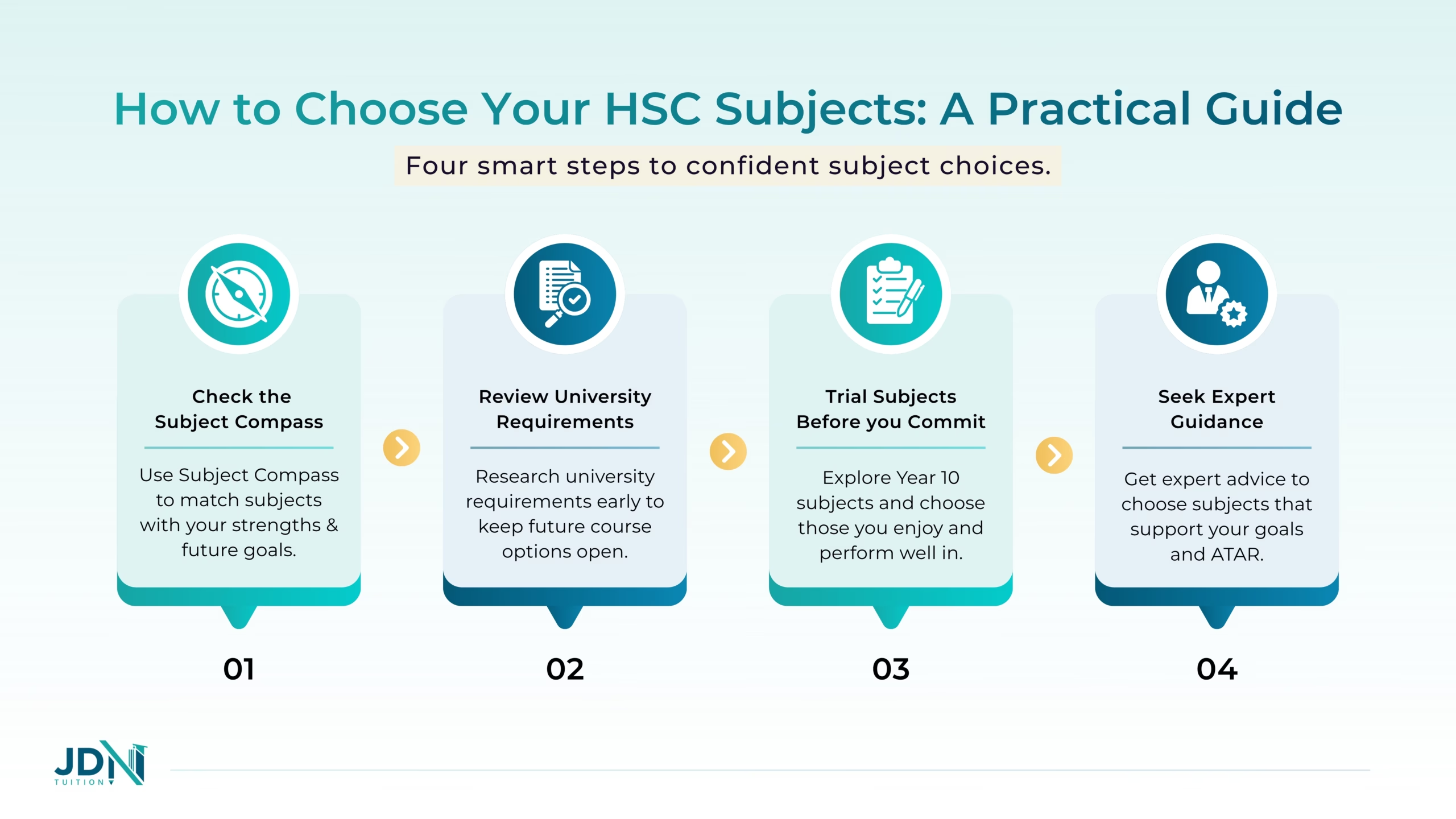
Check the Subject Selection Compass
The NSW Education Standards Authority (NESA), through the Universities Admissions Centre (UAC), offers something called the Subject Compass tool online. It helps students filter HSC courses based on interests, strengths and future pathways. This is a practical first step before any formal selection conversations happen at school.
Look at University Entry Requirements Early
Many families leave this step too late. Different degrees carry different subject requirements. Researching these early ensures your child never accidentally closes a door. Do this now so that once your child receives their ATAR, they’re not panicking on an HSC ATAR calculator.
Trial Subjects Before You Commit
Year 10 is the ideal time to explore your options and understand how ATAR scaling may affect your subject choices. Most schools offer taster programs or elective previews. Encourage your child to reflect honestly on what they enjoy and where they genuinely perform well. Passion and ability together can produce far better results than choosing subjects based on scaling alone.
Seek Expert Guidance
Teachers, career advisors and school counsellors are valuable when planning for your child’s future. Unfortunately, they’re only one person for sometimes up to 350 students. This is where working with JDN Tuition makes a real difference. Our experienced high school tutoring team helps students and families map out subject selections that align with ATAR targets and long-term goals. We understand the NSW curriculum inside and out.
High-Scaling HSC Subjects Worth Considering
Scaling can make a meaningful difference to your child’s final ATAR. Certain subject choices consistently reward strong students with better-scaled outcomes.

Mathematics and Science
STEM subjects dominate the upper end of the scaling table and for good reason. These cohorts are typically among the most academically competitive in the state.
HSC Mathematics Advanced is one of the most commonly recommended subjects for students chasing a strong ATAR. It scales well and underpins many university degrees. For students with genuine mathematical ability, Mathematics Extension 1 scales even higher. It is a demanding course, but the ATAR reward for strong performance is significant.
HSC Physics and HSC Chemistry are similarly positioned. Both attract high-performing cohorts and scale generously for students who invest in them.
English
HSC English Advanced is compulsory for most students and scales better than Standard English. Therefore, it is a strong choice for students who are competent writers and analytical thinkers. As a result, scoring well here adds genuine weight to your child’s ATAR aggregate.
Humanities and HSIE
Not every student is a STEM learner, and the scaling table still has room for humanities subjects. HSC Business Studies and HSC Modern History are two of the more accessible options that scale reasonably well. Both reward consistent study and well-structured responses.
HSC science subjects more broadly remain a reliable pathway for students confident in analytical thinking and laboratory work. Additionally, HSC Science courses as a category attract motivated, capable cohorts.
The most important thing to remember is that scaling rewards performance within a cohort. Choosing a subject your child will genuinely excel in will always outperform a poorly executed attempt at a high-scaling course.
ATAR Targets and Career Pathways
Strategic HSC subject selection does not happen in a vacuum. Your child’s subject choices should connect directly to their career aspirations and university entry targets.
ATAR requirements for aspiring lawyers in Australia typically sit between 95 and 99, depending on the institution. Medicine, engineering and teaching all carry their own competitive cut-offs. Knowing your child’s target degree early shapes every subject decision that follows.
For Sydney-based families, HSC tutoring Sydney provides targeted, curriculum-aligned support that helps students reach these competitive benchmarks. Furthermore, ATAR tutoring with the right team means your child is never preparing alone.
High school tutors who understand the NSW system can make a significant difference to both marks and confidence. Quality HSC tuition goes beyond content delivery. It builds the exam technique and subject-specific strategies students need to perform strongly and make the most of their ATAR scaling potential.
HSC preparation courses give students a structured runway before the intensity of Year 12 hits. For families outside Sydney, online tutoring Australia-wide means expert support is never out of reach. Private tuition Melbourne families can also access JDN Tuition’s full suite of services remotely.
At JDN Tuition, we support students across every stage of their schooling journey. From HSC high school tutoring to Primary School Tutoring, our tutors are here to help. Read our Reviews on our Google Business Profile to hear from the families we have already helped.
Study Tips and Time Management for HSC Success
The right subject choices mean little without the habits to back them up. Strong study techniques are what separate good intentions from great results.
Knowing how to create a study plan from the start of Year 11 gives your child a genuine head start. A well-structured plan breaks the HSC workload into manageable weekly targets. It removes the guesswork and reduces last-minute panic significantly.
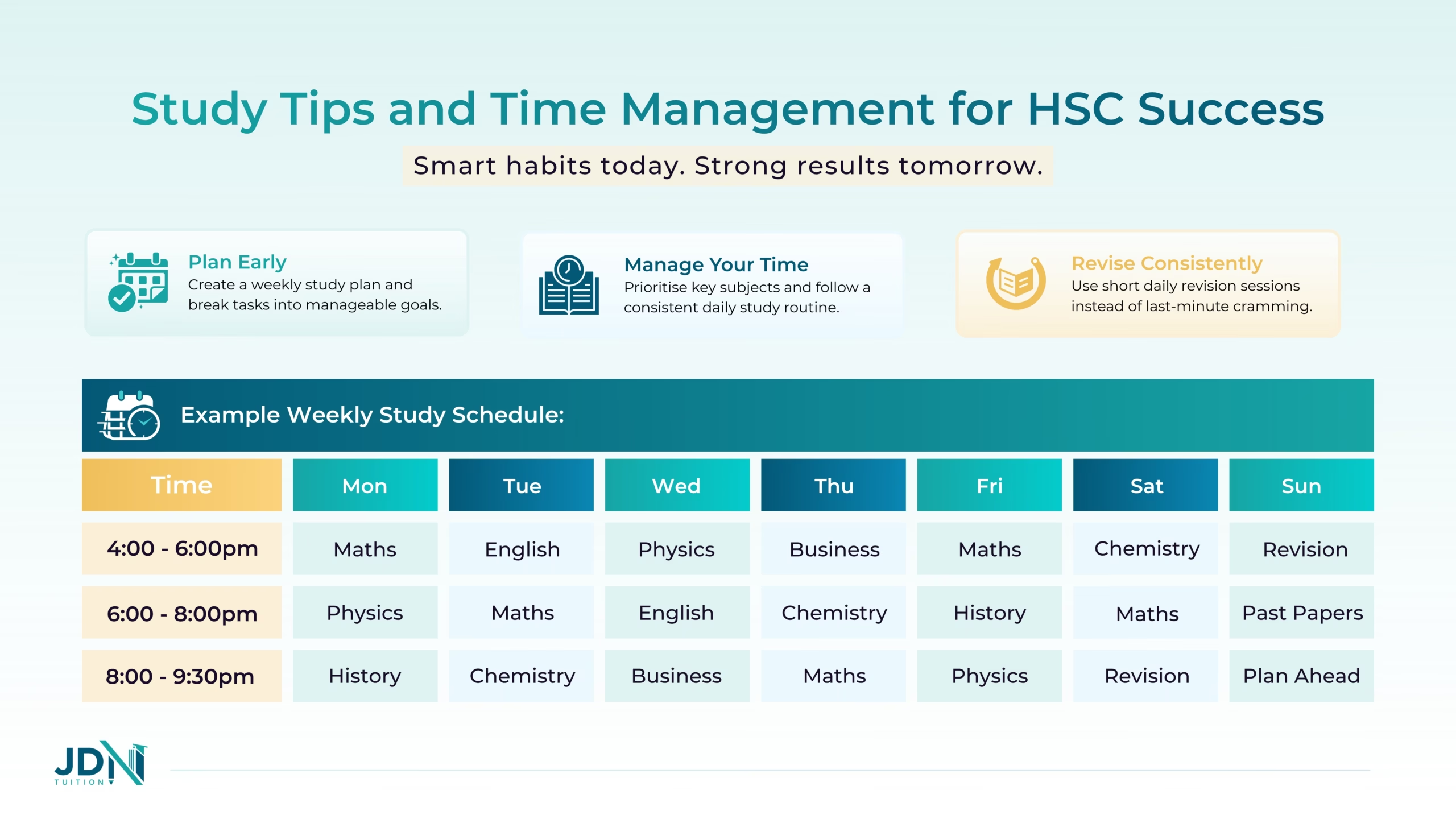
Time management tips matter most when your child is juggling multiple demanding subjects simultaneously. Encourage them to prioritise subjects that need the most attention rather than defaulting to what they already do well. Consistent daily revision beats intensive cramming every time.
Most importantly, however, don’t stress your child out about subject selection too much. Worst comes to worse they can always drop a subject they don’t like or change it midway through their course.
Conclusion: ATAR Scaling & HSC Subjects
Choosing the right HSC subjects is one of the most powerful decisions your child will make before university. It shapes their ATAR, their options and their confidence heading into adult life.
The good news is that none of this needs to feel overwhelming. With a clear understanding of HSC scaling, realistic ATAR targets, and a subject list that plays to your child’s strengths, the path forward, therefore, becomes far clearer.
Strong marks come from smart choices and consistent effort. Moreover, families who plan early and seek expert guidance give their children a measurable advantage. Over time, that advantage compounds across every term of Year 11 and 12.
At JDN Tuition, our tutors are ready to help your child make the most of their HSC journey. Whether you are just beginning subject selection or already deep into Year 12, we are here to help. Contact us today to get started.
To get started, call us or email us to begin building your child’s success together, starting with subject selection for the HSC.
Improve Results. Start Today.
 Book a FREE Call: (02) 7202 1930
 Email us: contact@jdntuition.com.au
Is It Better to Do 10 or 12 Units for the HSC and ATAR Scaling?
Most students benefit from starting Year 11 with 12 units as a buffer in case they need to drop a subject. This gives your child flexibility without risking their minimum unit requirement for ATAR eligibility.
What is the hardest subject in the HSC?
Mathematics Extension 2 and HSC Chemistry are widely considered among the most demanding subjects in the HSC. Both attract highly competitive cohorts, which affects scaling but also raises the bar for achieving strong marks.
Does scaling really matter for the HSC?
Scaling matters, but it is not the only factor to consider. For example, a student who performs exceptionally well in a lower-scaling subject will almost always outscore a student who struggles in a high-scaling one.