





AI Tools for Students: Ethical Use and Best Practices
AI Study Tools | AI Research Tools | AI Writing Tools
It’s the night before an assignment is due. Your child has a tab open, their cursor is blinking, and within seconds, AI tools have handed them three paragraphs to copy and paste. Sound familiar?
Generative artificial intelligence has arrived in Australian classrooms, whether schools were ready for it or not. Students across every year level now use AI tools when they get stuck, run out of time, or look for an easier way to tackle a tricky task. Most of them are doing it without a clear sense of what their school actually allows.
No matter your opinion on AI, however, AI in education is definitely not leaving anytime soon. The real question is whether your child is using it in ways that genuinely support their learning or are secretly undermining it. For more articles like this, visit the JDN Tuition Blog Page.
What are AI Tools and How are Students Already Using Them?
The term “AI tool” covers a surprisingly wide range of products. At the simpler end, there are spell-checkers and grammar assistants that have been around for years. At the more powerful end, some chatbots can write essays, solve equations, and create study plans from a single prompt. Between these extremes is a wide range of AI study tools. They include vocabulary practice apps and AI-powered research assistants.
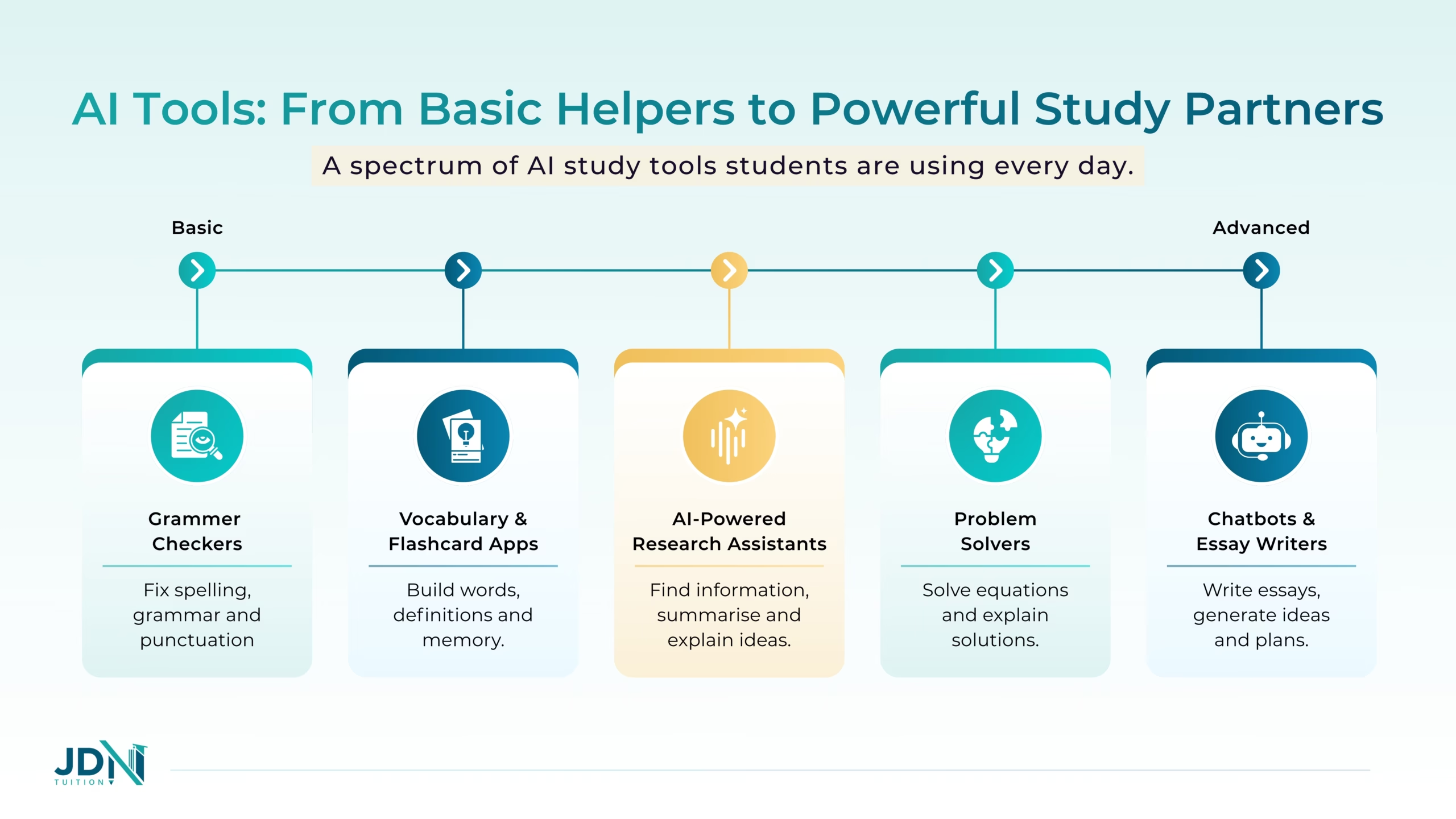
What makes the current moment different is how quickly these tools have entered everyday student life. Digital learning and technology that would have seemed extraordinary a few years ago are now sitting in your child’s pocket. Many students are using smart AI tools daily, often without their parents or teachers knowing which ones or how.
It is also worth noting that this is not limited to high schoolers. Technology in early education is increasingly common, meaning even primary school students are encountering AI-assisted platforms as part of their regular schoolwork. Understanding which AI tools used in education your child’s school has introduced (including NSWEduChat), and which ones your child has found independently, is a worthwhile starting point for any parent.
What are Australian Schools Saying About AI?
If you have recently tried to look up your child’s school policy on AI, you may have found the answer frustratingly vague. That is not necessarily the school’s fault. AI regulation Australia-wide is still catching up with how quickly these tools have evolved. Guidance from state and federal education bodies has also varied considerably across jurisdictions.
At the school level, your child may find new information about using AI. This may appear in updated documents, such as the school’s assessment policy and assessment notifications.
What is clear is that the conversation is happening at every level. AI in schools across the country is now a formal policy matter. It is no longer something left to individual teachers to manage. Most schools have introduced or updated their AI policies in the past two years. Many now require students to declare when they use AI in an assessment task.
At the national level, Australia’s AI ethics principles provide a broader AI framework that shapes how institutions are expected to approach the technology responsibly. These principles emphasise accountability, transparency and fairness, values that translate directly into how schools expect students to engage with AI.
The picture of AI in Australia is one of rapid development with guardrails still being built in real time. For parents, the practical takeaway is straightforward. Find out what your child’s school specifically allows, read the policy carefully, and make sure your child has read it too. Schools rarely accept ignorance of the rules as an excuse when they investigate academic misconduct.
What Does Ethical Use of AI Actually Look Like?
The phrase ethical use of AI gets used a lot in education circles, but it can feel abstract without concrete examples. For students, it essentially comes down to one question: is the work I am submitting genuinely mine?
In states like NSW, schools require Year 10 students to complete a program titled “All My Own Work” before becoming eligible for the HSC. However, AI is still evolving in education. Programs like this can struggle to keep up. As a result, it can be difficult to know what genuinely reflects your child’s own work.
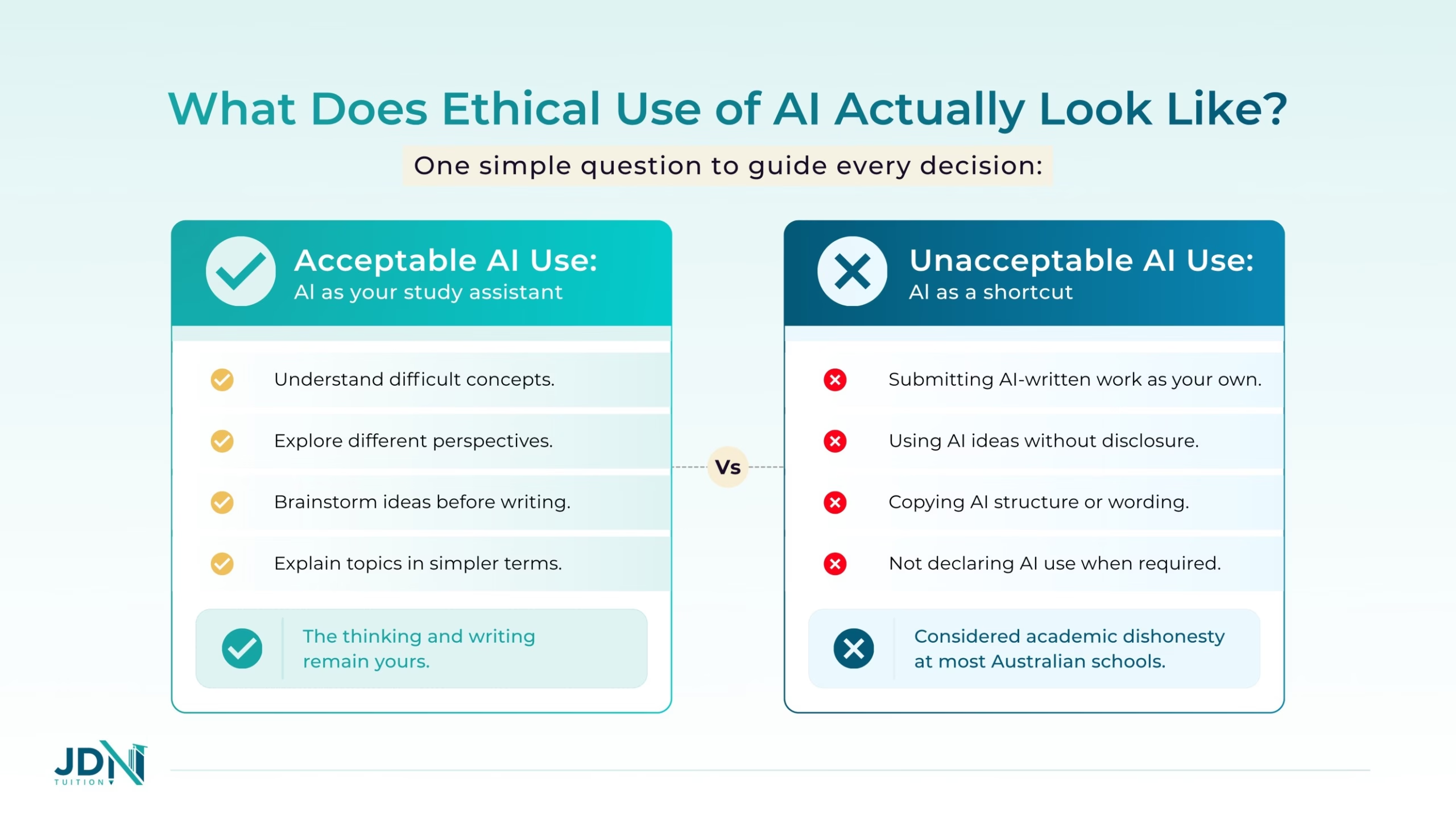
Generally, using AI to help understand a concept you are struggling with is fine. Asking a chatbot to explain photosynthesis in simpler terms, or to give you three different angles on a historical event, is a legitimate use of AI assistance in much the same way as searching a textbook or watching an explainer video. The thinking and the writing still belong to the student.
When Is AI Use Considered Ethical?
Where AI ethics become murky is when students begin borrowing the AI’s words, ideas, or structure without disclosure. Submitting AI generated content as original work, even with light editing, is considered academic dishonesty at most Australian schools. This applies to more than just essays. AI-produced responses in take-home tasks, reflections and research assignments all fall under the same expectation. Additionally, when a task or a teacher asks your child to cite AI use, ensure they do.
Most importantly, however, if you’re concerned about what the boundaries on AI in academic writing are, always consult with your child’s teacher, especially in writing. They are the person who sets how your child uses AI and should be the first person to consult.
If you’re still concerned about your child following ethical AI use, don’t worry, JDN Tuition is here to help. With specialised primary school tutoring and high school tutoring, we help students across Australia adapt to new AI trends and excel in the classroom.
Where can AI Genuinely Support Your Child’s Learning?
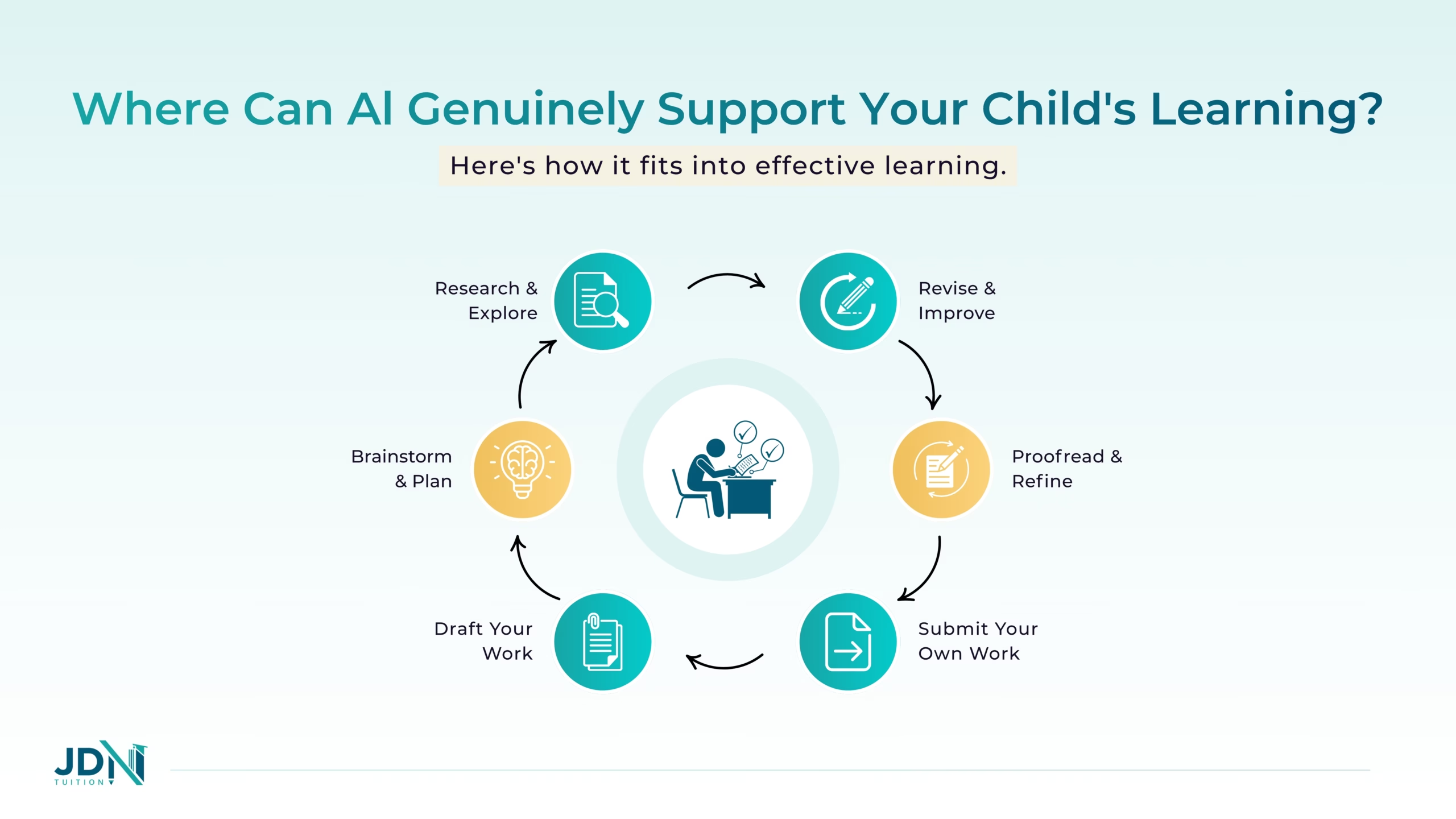
Used thoughtfully, AI can be a genuinely valuable part of how students learn. The key word is thoughtfully. Here is a look at the areas where AI adds real value when students engage with it actively rather than passively.

Research and Information Gathering
AI research tools have changed how students begin an assignment. Rather than staring at a blank search results page, students can use AI for research to get a quick overview of a topic. They can identify key themes and decide which questions are worth exploring further. Tools can then help them explore those questions in greater depth. Tools like ChatGPT Deep Research can help students survey a subject more efficiently than scrolling through multiple websites, though any information pulled from AI still needs verification through reliable sources. Several ChatGPT alternatives offer similar research capabilities, so it is worth helping your child find one their school permits.
Brainstorming and Planning
This is arguably where AI earns its place most legitimately in a student’s workflow. Brainstorming tools help students who are stuck on where to begin, offering angles, arguments, and structures they may not have considered. Using AI tools for idea generation before writing a single word keeps the student in the driver’s seat while giving them something concrete to react to. Using AI tools for content creation at the planning stage can be helpful. Keeping AI out of the writing stage respects the line between AI-assisted and AI-generated work.
Writing and Proofreading
AI writing tools are most appropriate when they improve a student’s existing work rather than replace it. Understanding how to use AI to proofread correctly means a student pastes in their own draft and uses the feedback to identify weaknesses in their writing. Grammarly AI is a well-known example of this kind of tool, flagging grammar, clarity, and tone issues for the student to address themselves.
Additionally, AI paraphrasing tools can help students reword clunky sentences, provided the underlying ideas remain the student’s own. Used this way, these are among the best AI tools for students because they build writing ability rather than bypass it. Generative AI tools used purely to rewrite a student’s work wholesale, however, cross into territory most schools would flag as misuse.
Study Assistance and Practice
Beyond assignment support, educational platforms increasingly integrate AI learning tools to help students practise skills, revisit tricky content, and test their own understanding. Access to quality online learning material powered by AI means students can get additional explanations of classroom content at any hour, which is particularly useful for students preparing for exams.
Where Can AI Hold Your Child Back?
For all its usefulness, there is a real risk that comes with leaning on AI too heavily, and it does not always show up immediately.
The skills schools are most focused on developing, critical thinking skills, are built through struggle. When a student works through a difficult problem, drafts an argument, reconsiders it, and revises it, they are doing the hard cognitive work that actually develops their ability to think. When AI does that work instead, the student gets the output without any of the growth.
The same applies to creative skills. Writing an original short story, crafting a persuasive speech, or developing a personal view on a complex issue builds self-expression and reasoning. Students who regularly outsource these tasks to AI may struggle to develop their own voice. They may also miss the confidence that comes from completing these tasks themselves.
It is also worth considering the longer view. The workforce increasingly values AI development skills, but it also demands the ability to think critically about what AI produces.
AI Detection and Why Schools are Taking it Seriously
Schools are not simply trusting students to make the right call on their own. AI detection tools are now a standard part of how many Australian schools and universities assess submitted work, and their capabilities are improving steadily.
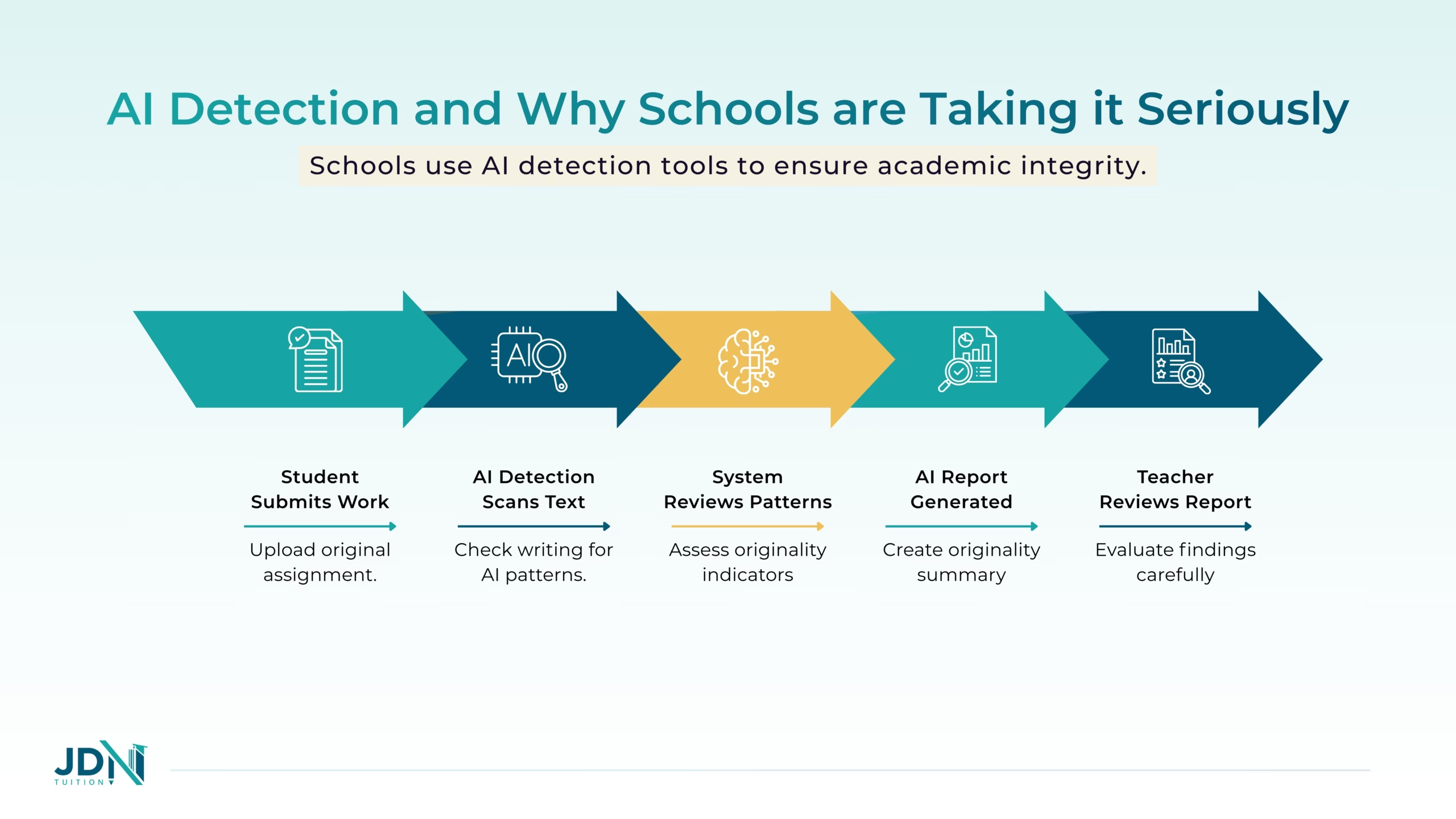
Turnitin AI detection is one of the most widely used systems in Australian schools and universities. It analyses submitted writing for patterns linked to AI generation. These include consistent tone, unusual sentence structures, and statistical patterns that differ from human writing. Although these systems are not perfect, they still identify work that warrants closer examination.
How to Talk to Your Child About Using AI Tools the Right Way?
Opening a conversation about AI at home does not need to be a formal sit-down. It can start as simply as asking your child which tools they are using for schoolwork and whether their teacher knows about it.
From there, a few practical steps go a long way. Ask your child’s school directly for a copy of their AI policy and read it together. If your child is genuinely interested in how these tools work, enrolling them in an AI course that covers both capability and ethics is a worthwhile investment. Understanding AI at a deeper level builds the AI in tutoring literacy that is increasingly expected across senior schooling and beyond. Students heading toward STEM pathways will find that AI in engineering and similar fields requires more than comfort with these tools. They also need the judgement to use them responsibly.
AI tutoring systems, when used transparently alongside a student’s own efforts, can also be a legitimate and effective support structure. The difference between helpful and harmful AI use almost always comes down to whether the student is still doing their own thinking.
Conclusion: How can Students Use AI Tools Ethically?
Students can use AI tools ethically when they approach them with intention, transparency, and a genuine commitment to learning. The conversation starts at home, so be sure to talk to your child about the dangers and benefits of AI.
If you want to know more about AI or how your child can get the most out of it, JDN Tuition’s expert tutors can help. Check out our Google Business Profile to read reviews from families we have worked with. Ready to get started? Contact us or call us to get your child started with AI today.
Start Improving Results Today
 Book a FREE Call: (02) 7202 1930
 Email us: contact@jdntuition.com.au
What is the best way to use AI tools ethically?
The most straightforward rule is to use AI to support your thinking rather than replace it. Your child uses AI ethically when their work genuinely reflects their own ideas, arguments, and words. Additionally, be sure to ask your school, teacher, or whoever's in charge about their stance on AI, and be sure to seek clarification whenever necessary.
Is it ethical to use AI as a learning tool?
Yes. Your child can use AI ethically to understand and explore ideas. They should not use it to generate work for submission. AI becomes a problem when it bypasses the learning process. Instead, it should help students engage with ideas more deeply.
How to avoid AI hallucinations?
AI hallucinations occur when a tool confidently produces information that is factually incorrect. Students should always verify AI-generated facts against reliable, original sources. Use AI as a starting point for research instead of a final authority. Always verify its information before relying on it.