



How Does Home Tutoring in Sydney Benefit Students?
Home Tutor | Private Tutoring | Primary School Tutoring
Home tutoring can make finding the right academic support for your child much easier. Between busy schedules, varying school curriculums and a sea of options online, many Sydney parents aren’t sure where to start. With personalised support from a home tutor, your child can learn in a comfortable environment while receiving guidance tailored to their individual needs.
The best private home tutoring brings qualified, experienced educators directly to your door. Your child learns in a familiar environment, free from classroom distractions and social pressures. Sessions are built around their individual needs, their pace, and their goals.
In this guide, we’ll walk you through everything you need to know about home tutoring in Sydney. From choosing the right tutor to understanding what great sessions look like, you’ll finish this article with the confidence to make the best decision for your child.
Want to see more like this? Take a look at the JDN Tuition Blog Page for more.
What Is In-Home Tutoring and How Does It Work?
In-home tutoring brings a qualified tutor directly to your home to work with your child in a comfortable, familiar environment.
Unlike attending a tutoring centre, a home-based tutor works around your family’s schedule. Sessions typically run for one to two hours and can take place after school, on weekends or during school holidays. The frequency depends on your child’s needs. Some families book weekly sessions while others prefer an intensive approach during exam periods.
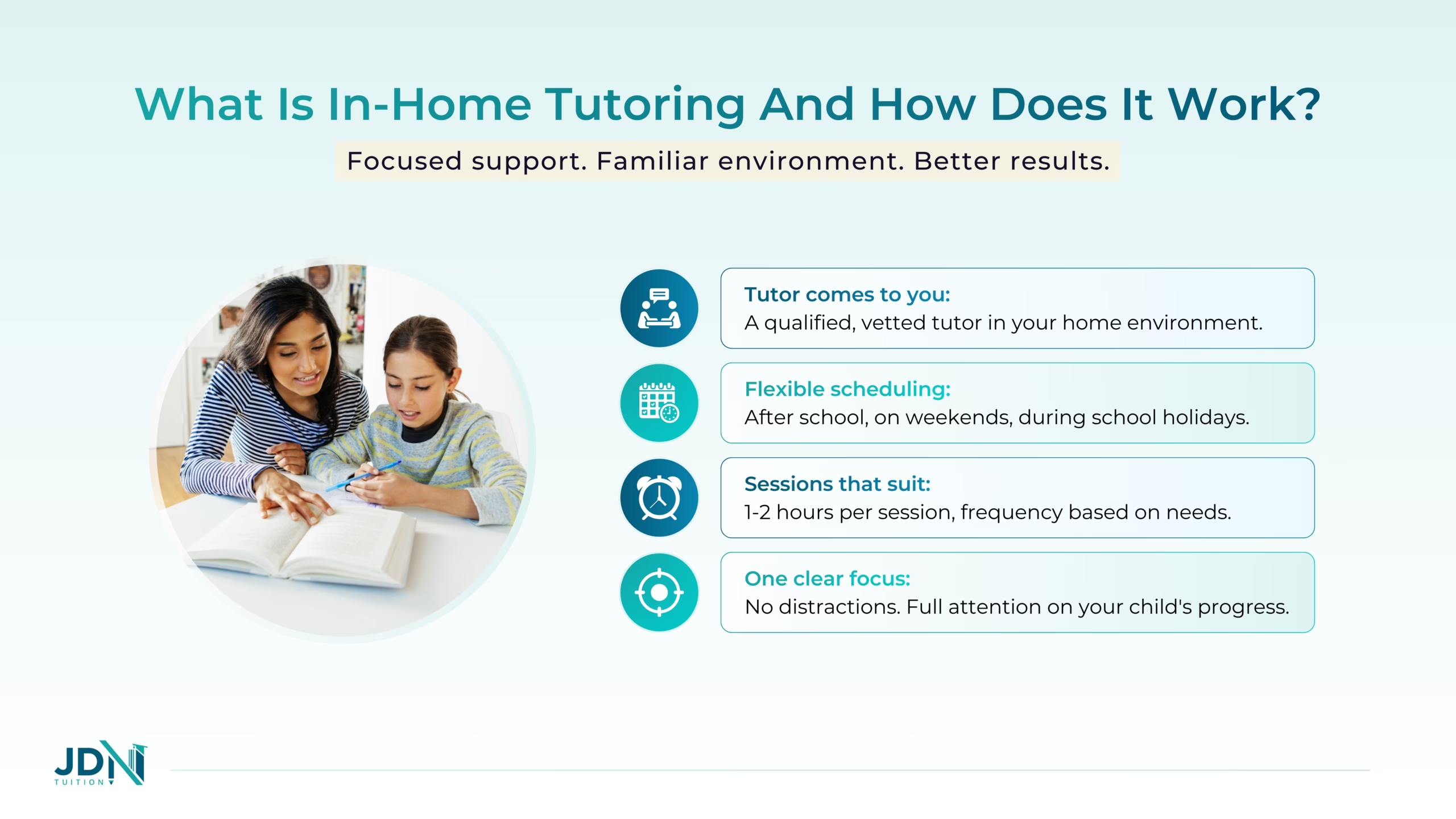
One on one tutoring looks very different from classroom learning or small group tutoring. There are no competing voices, no waiting for the teacher to circle back and no pressure to keep up with thirty other students. Your child’s tutor gives their full attention to one goal: understanding where your child is at and moving them forward.
A typical session might begin with a quick review of the previous week’s work, move into targeted practice on a challenging concept, and finish with a preview of what’s coming next at school. Over time, this rhythm builds familiarity and confidence. Your child knows what to expect and starts to look forward to sessions rather than dreading them. It’s a structured but relaxed approach that suits students of all year levels.
How Does Home Tutoring Benefit Your Child’s Learning?
Home tutoring gives your child targeted support that directly addresses their individual strengths and weaknesses.
Personalised Learning That Targets Gaps
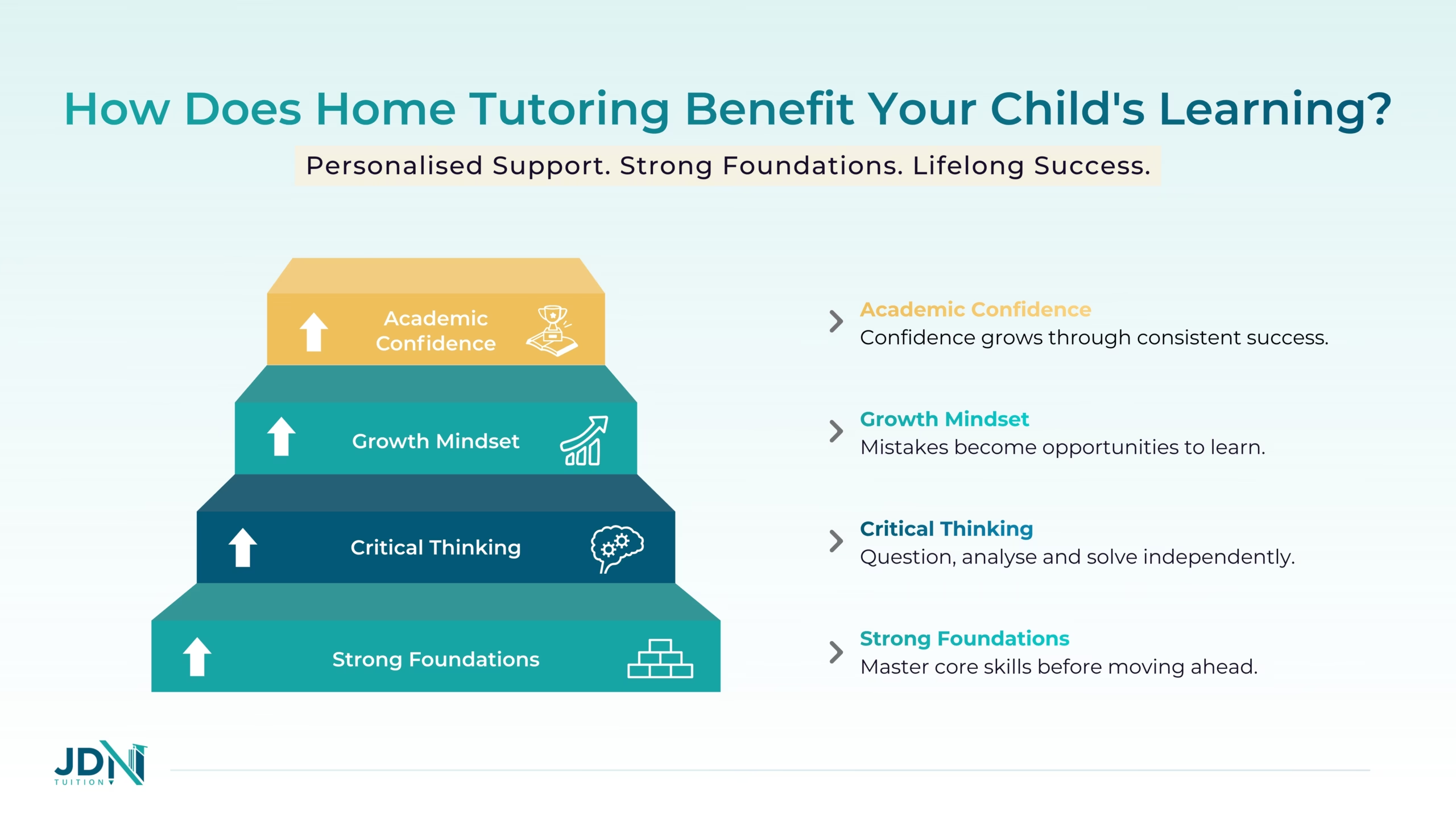
One of the biggest advantages is that tutors build personalised lesson plans around your child from the very first session. There’s no generic curriculum to follow. Instead, the tutor identifies the exact gaps in your child’s understanding and works backwards to fill them. This targeted approach saves time and produces faster results than generalised classroom revision.
Every child absorbs information differently. Some are visual learners who thrive with diagrams and colour coding. Others prefer talking through problems out loud or working through written examples step by step. A skilled tutor recognises these learning styles early and adapts their teaching accordingly. When your child receives information in the way that actually works for their brain, progress follows naturally.
Furthermore, strong foundational skills are the backbone of academic success. A tutor can identify when a student has moved ahead in the curriculum without fully grasping earlier concepts. These gaps often go unnoticed in a classroom setting until they become serious problems. In-home tutoring addresses them early, before they compound.
Building Skills and Confidence
Beyond academic content, tutoring builds critical thinking skills that benefit your child far beyond school. Tutors guide students to question, analyse, and reason rather than simply memorise answers. Paired with a growth mindset, where your child learns to treat mistakes as part of the learning process, this creates students who approach challenges with resilience rather than anxiety.
Encouraging Student Engagement
Finally, student engagement increases dramatically in a one-on-one setting. Without the social dynamics of a full classroom, your child is more likely to ask questions, admit confusion, and take risks with their learning. That openness is where real progress happens.
Ready to give your child the personalised support they deserve? At JDN Tuition, our experienced tutors build tailored sessions around your child’s unique needs from day one. Whether your child needs a confidence boost or a serious academic push, our Primary School Tutors and High School Tutors are trained to deliver real, lasting results. Get in touch with JDN Tuition today to find the perfect tutor for your child.
Which Subjects Can a Home Tutor in Sydney Cover?
A home tutor in Sydney can support your child across a broad range of subjects, including maths, English, the humanities and science.
For younger students, primary school home tutoring typically focuses on building core literacy and numeracy skills. English tutoring at this level develops reading comprehension, writing structure and vocabulary. An English home tutor works through the exact texts and writing tasks your child encounters at school, making sessions immediately relevant and practical.
On the opposite end of this, maths tutoring is one of the most requested subjects at both primary and high school level. A dedicated maths tutor can work through everything from basic number operations in Year 3 to complex calculus and statistics in Year 11 and 12. Maths is a subject where gaps in understanding compound quickly, making early intervention especially valuable.
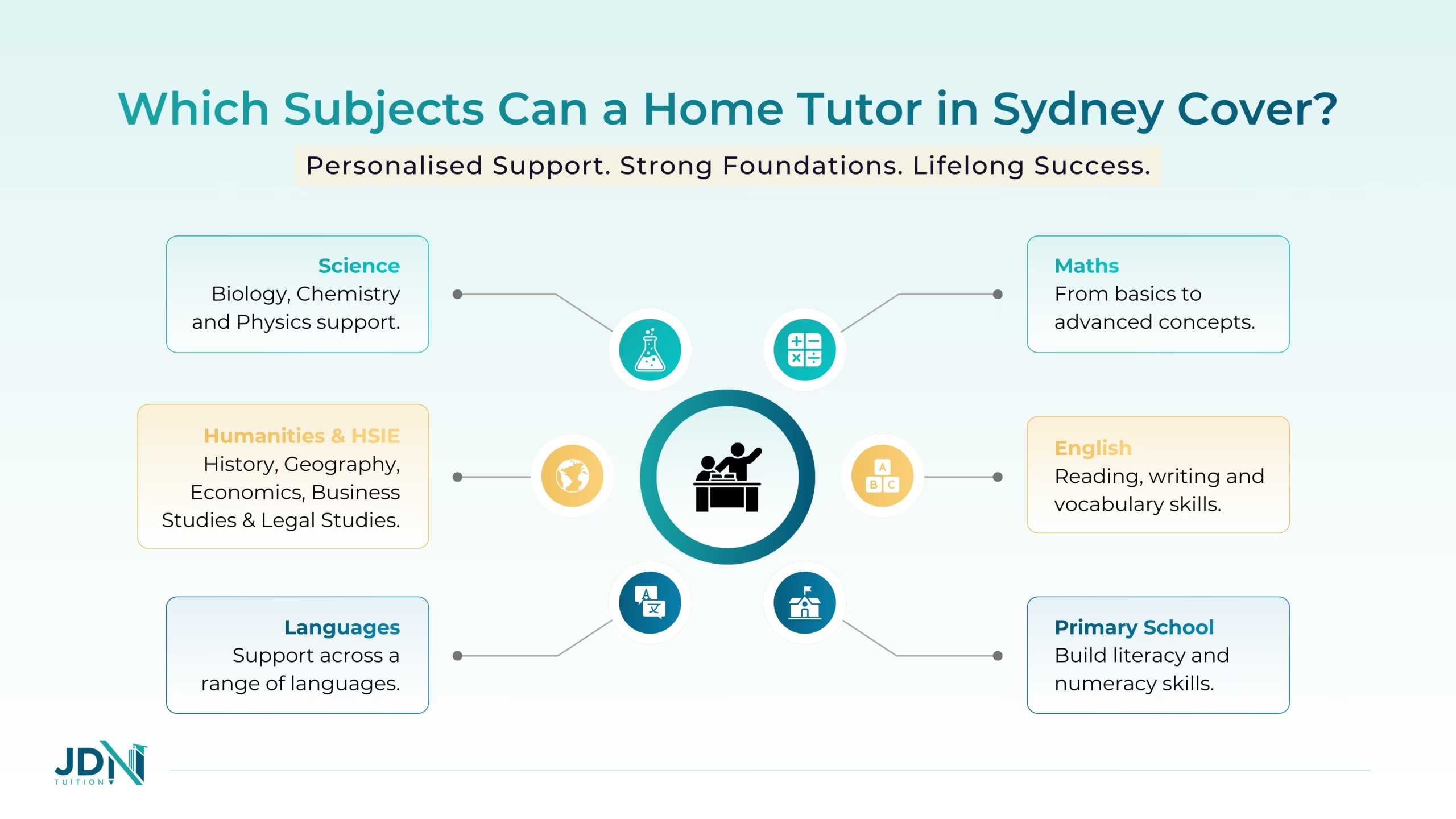
For older students, high school tutoring covers a much broader range of subjects. Science is a popular area of support, and finding science tutors near me through a reputable tutoring agency ensures your child is matched with someone who specialises in their specific science stream, whether that’s Biology, Chemistry or Physics.
Beyond the core subjects, tutors can also support students in humanities, HSIE and even languages depending on the tutor’s background. If your child is struggling in a specific subject, there’s a very strong chance the right specialist is available in Sydney.
How Do You Find the Right Home Tutor in Sydney?
Finding the right home tutor in Sydney starts with knowing exactly what your child needs from their sessions.
Before you start searching, get clear on the specifics. Which subject is your child struggling with? What year level are they in? Do they need help building confidence, catching up on missed content, or preparing for an upcoming exam? Having clear answers to these questions makes the search far more focused and productive.
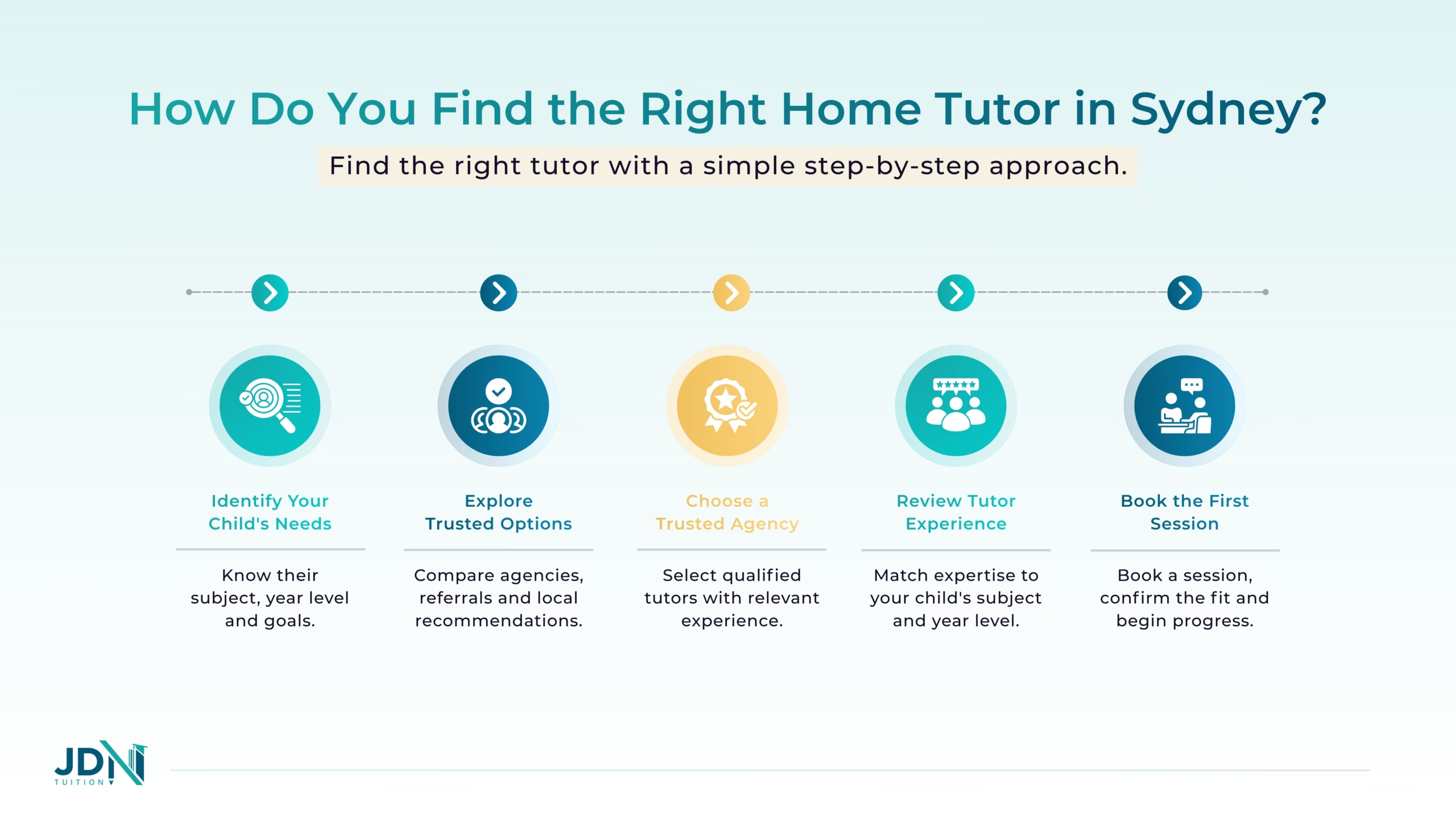
When looking for a tutor near me, most parents start with a quick online search. This is a reasonable first step, but the results can be overwhelming. Tutoring agencies are often the most reliable option because they pre-screen tutors for qualifications and experience. You’re not taking a chance on an unknown individual. You’re choosing from a vetted pool of professionals.
Word-of-mouth referrals from other Sydney parents are also worth pursuing. If another family has had a great experience with a tutor, that personal recommendation carries real weight. Ask around at school pickup, in your local parent Facebook group, or through your child’s school community.
Whilst searching for home tutors near me or browsing agency profiles, pay close attention to experience with specific year levels. A tutor who specialises in primary school may not be the right fit for a Year 10 student. Similarly, look for high school tutors who have a strong track record with Year 11 and 12 students if your child is approaching their HSC years.
Looking for experienced, trusted tutors for your high school student? JDN Tuition offers specialist High School Tutors aiming for top marks in the HSC and VCE. Don’t just take our word for it. Visit our Google Business Profile and read our Reviews from Sydney families who’ve seen the difference JDN Tuition makes. Find the right tutor for your child today.
What Should You Look for in a Quality Home Tutor?
A quality home tutor should be patient, communicative, and capable of building a genuine connection with your child.
Strong effective communication skills sit at the top of the list. A great tutor doesn’t just know their subject. They know how to explain it in a way that makes sense to your child specifically. They adjust their language, their examples, and their pace based on how your child is responding in real time, matching their pace with your child’s own social skills.
Watch for tutors who rely heavily on open-ended questions during sessions. Rather than asking “Do you understand?” a skilled tutor asks “Can you explain that back to me in your own words?” This approach deepens comprehension and reveals gaps that simple yes or no answers would mask.
Finally, a quality tutor actively teaches study techniques your child can use independently. The goal isn’t dependency on the tutor. It’s building a student who knows how to approach their own learning with confidence and structure.
How Can Home Tutoring Support NAPLAN and Years 11 and 12?
Home tutoring gives students targeted NAPLAN practice and builds the academic habits they need through the secondary school years.
NAPLAN preparation is one of the most common reasons Sydney parents seek tutoring support. The test covers reading, NAPLAN writing, conventions of language and numeracy across Years 3, 5, 7 and 9. A home tutor works through past papers, identifies your child’s weaker areas and builds familiarity with the test’s format and timing. This reduces anxiety and builds genuine competence that will build into their NAPLAN results.
For students preparing for their HSC, the stakes feel significantly higher. Year 11 and 12 bring heavier workloads, more complex content and the pressure of HSC assessments that directly affect ATAR outcomes. Regular one-on-one sessions give students in Years 11 and 12 a dedicated space to work through difficult concepts, build their time management skills and stay on top of an increasingly demanding curriculum.
The investment in tutoring during the final years of high school is one that pays off well beyond the HSC. The discipline, self-awareness, and academic resilience your child builds during this period carry into university and beyond.
Is Online Tutoring a Good Alternative to In-Home Sessions?
Online tutoring is a flexible option, but in-home sessions often deliver stronger connections and fewer distractions for younger students.
Online tutoring Australia has grown significantly in recent years, and for good reason. It removes geographic barriers, suits families with unpredictable schedules, and gives students access to specialist tutors who may not be available locally. For regional families or students with specific accessibility needs, online tutoring is a genuinely practical solution.
That said, in-home sessions offer something online platforms struggle to replicate. A tutor sitting alongside your child can read body language, notice when attention is drifting, and respond immediately. Younger students in particular benefit from that physical presence. The screen can become a distraction rather than a tool, especially for primary-aged children who are still building their study habits.
For many Sydney families, the ideal approach depends on the child. Some students thrive online and appreciate the convenience. Others need the structure and human connection that comes from a tutor in the room. It’s worth trialling both formats if you’re unsure, and being honest about which environment brings out the best in your child.
Conclusion: Is Home Tutoring the Right Fit for Your Child?
Home tutoring in Sydney offers your child something a classroom simply cannot: undivided attention, personalised support and a learning experience built entirely around them.
Throughout this guide, we’ve covered how in-home tutoring works, the subjects it covers, what to look for in a quality tutor and how it supports students from NAPLAN right through to the HSC. The common thread running through all of it is that every child learns differently, and every child deserves support that reflects that.
Whether your child is falling behind, ready to accelerate, or simply needs a confidence boost, a home tutor can make a genuine difference. The earlier you act, the more time your child has to build the skills, habits, and self-belief that carry them through school and beyond.
If you’re ready to take the next step, JDN Tuition is here to help. Our experienced tutors work with students across all year levels and subjects, delivering results that Sydney families trust. Contact us today to find the right tutor for your child. Call us or send an email, and our team will be happy to help get your home tutoring journey started.
Boost Confidence. Improve Results. Start Today.
 Book a FREE Call: +61 2 7202 1930
Email us: contact@jdntuition.com.au
Is in-home tutoring better than online tutoring?
It depends on your child. In-home sessions tend to suit younger students or those who need stronger structure and human connection to stay focused.
Does in-home tutoring cost more?
In-home tutoring can be slightly more expensive than online sessions due to travel time and logistics. Many Sydney families find the results justify the investment.
Why should I get in-home tutoring?
In-home tutoring gives your child personalised, face-to-face support in a comfortable and familiar environment. It's one of the most effective ways to target specific learning gaps and build lasting academic confidence.