





How to Achieve a Band 6 in HSC English Essays?
HSC Exam | Academic Success | Private Tutoring
Every parent wants to see their child walk out of the HSC exam hall feeling confident. For many families, the final year of high school can feel overwhelming. HSC English essays and assessments sit right at the centre of that pressure. In English Advanced and Standard, essay writing can determine whether your child lands in Band 4 or soars to Band 6.
This guide explains how to write a Band 6 essay step by step. Importantly, Band 6 is the highest mark band in the HSC. It represents exceptional writing, deep analysis, and a genuine command of the texts. The good news is that it is absolutely achievable. With the right structure, strong evidence, and consistent practice, your child can write at that level.
The truth is that Band 6 is not reserved for a select few. In fact, any student who prepares well and understands what markers look for can reach it. For more HSC tips, check out the JDN Tuition Blog Page.
What Does a Band 6 Essay Actually Look Like?
A Band 6 English essay demonstrates sophisticated analysis, strong textual evidence and a clear, sustained argument throughout.
The HSC English syllabus is the foundation of every marking decision. It outlines exactly what students need to demonstrate and guides how markers assess responses. Understanding the HSC syllabus helps your child write directly toward the criteria. Students who understand the marking guidelines stop guessing and start writing with real purpose.
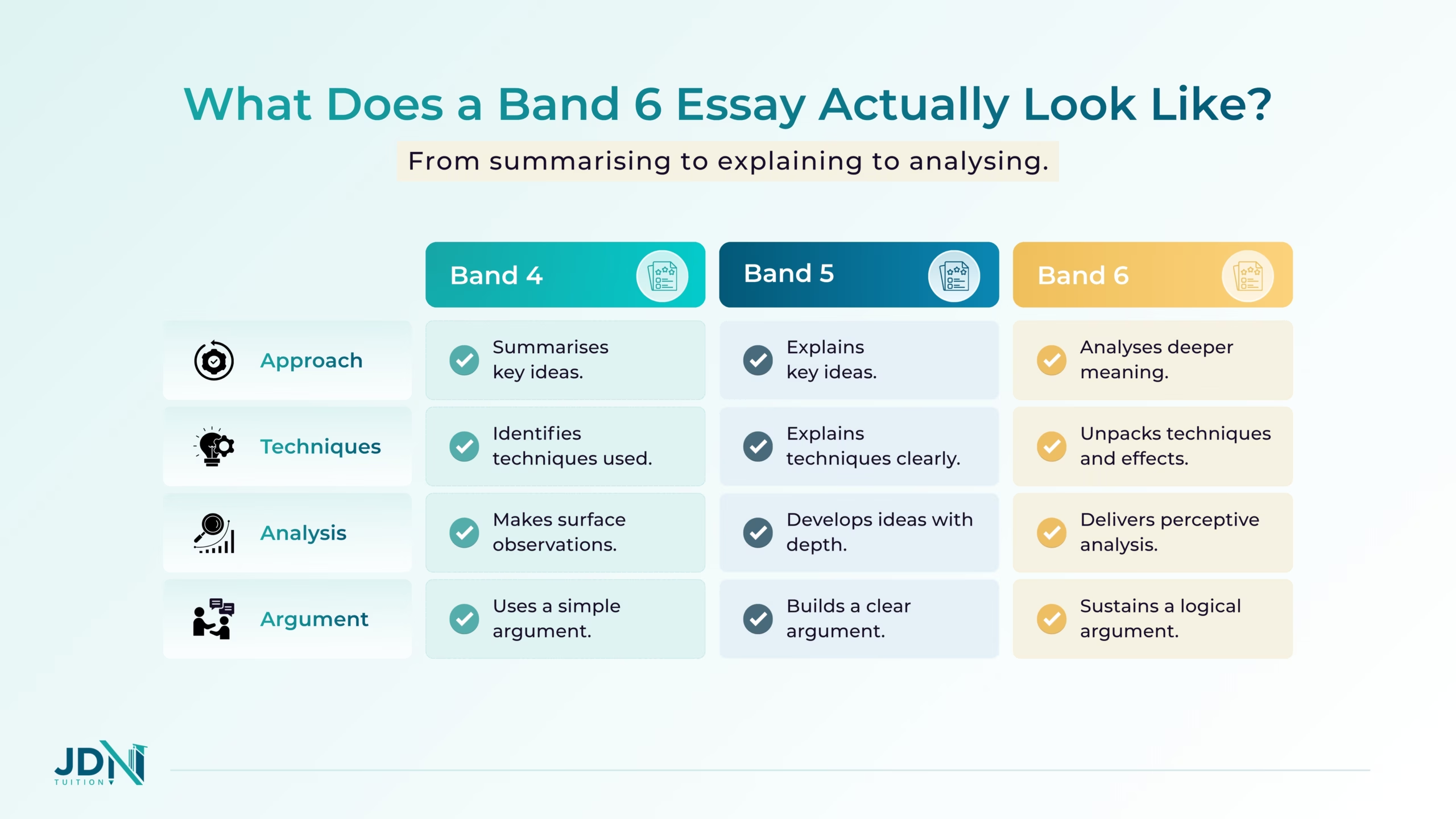
How Does A Band 6 Essay Differ?
So what separates a Band 6 from a Band 4 or 5? Lower band responses often summarise texts rather than analyse them. They might identify a literary technique but fail to explain its effect on meaning. A Band 6 essay, by contrast, unpacks the reasoning behind every technique it discusses. It shows the marker that your child understands how the author has constructed meaning and why those choices matter. The language is precise, the argument is logical, and the analysis goes beyond the surface.
Strong essay writing at this level also demands a consistent voice and a firm argument. Therefore, every paragraph must connect back to the thesis. Every piece of evidence must earn its place. As a result, the ones that stand out hold a clear point of view from the opening sentence to the final line. Markers read hundreds of essays per sitting.
Why Does Band 6 Writing Matter?
Achieving this standard contributes directly to your child’s academic success in the HSC English. When students can build a strong analytical argument, that skill carries into every written task across their subjects. The benefits reach well beyond the English classroom.
Knowing what Band 6 looks like gives your child a clear target to aim for. Once that target is clear, the next step is building the study habits and structure needed to prepare for it. Therefore, your child can approach their HSC preparation with greater focus and direction.
How Should Your Child Build a Study Plan for HSC English Essays?
Building a consistent study timetable helps your child stay on track across all their HSC subjects.
Without a clear plan, English essay practice is easy to push aside. Subjects with upcoming assessments always seem more urgent. Before long, English revision falls behind and exam time arrives with your child feeling underprepared. A study timetable removes that problem. It gives every subject a dedicated slot and ensures English gets consistent attention throughout the year.
How Can Your Child Organise HSC Study Sessions?
Start by mapping sessions to the HSC exam timetable. Knowing when each exam falls lets your child work backwards and set clear weekly targets. Aligning study time with the official HSC timetable also prevents last-minute pressure and keeps preparation steady across the whole year.
Every student learns differently, and learning styles play a big role in how your child prepares best. Some students absorb material through reading and written practice. Others retain ideas more effectively by talking through arguments or using visual tools like mind maps. A study plan that reflects how your child actually learns will always outperform a generic template.
When it comes to English specifically, regular timed writing is one of the most effective strategies. Setting a timer and writing a full essay without notes replicates real exam conditions. Over time, this builds both speed and confidence. Your child will enter the exam room having already done the hard work.
How Can Your Child Balance English With Other HSC Subjects?
Balance is equally important. English essay practice needs dedicated time, but so do all other HSC subjects. A well-structured timetable distributes effort fairly and builds in regular rest. Short breaks between study blocks help students stay focused over a long and demanding school year.
Getting that balance right can be challenging on your own. At JDN Tuition, our professional High School Tutors for Juniors and High School Tutors for Year 11 and 12 help students build personalised study plans. Therefore, we work with your child to manage their time effectively and prepare with real confidence. As a result, they can approach their studies with greater structure and focus. Get in touch today to learn more.
What Structure Does a Band 6 HSC Essay Follow?
Understanding how to write a HSC essay starts with mastering a clear and logical structure from introduction to conclusion.
Every Band 6 essay is built on three core parts: the introduction, the body paragraphs, and the conclusion. Each section has a specific job. Together they form a cohesive argument that guides the marker from your child’s opening claim to their final point. Most students understand this structure in theory. What separates Band 6 from lower bands is the ability to execute each part with precision and purpose.
Build A Strong Introduction
The introduction is where the essay sets its direction. A strong thesis statement opens with a clear and arguable position on the question. It signals to the marker exactly what your child intends to prove and how they plan to prove it. A vague or descriptive opening weakens the essay before it begins. A precise, purposeful thesis gives your child an immediate advantage.
Use PEEL For Body Paragraphs
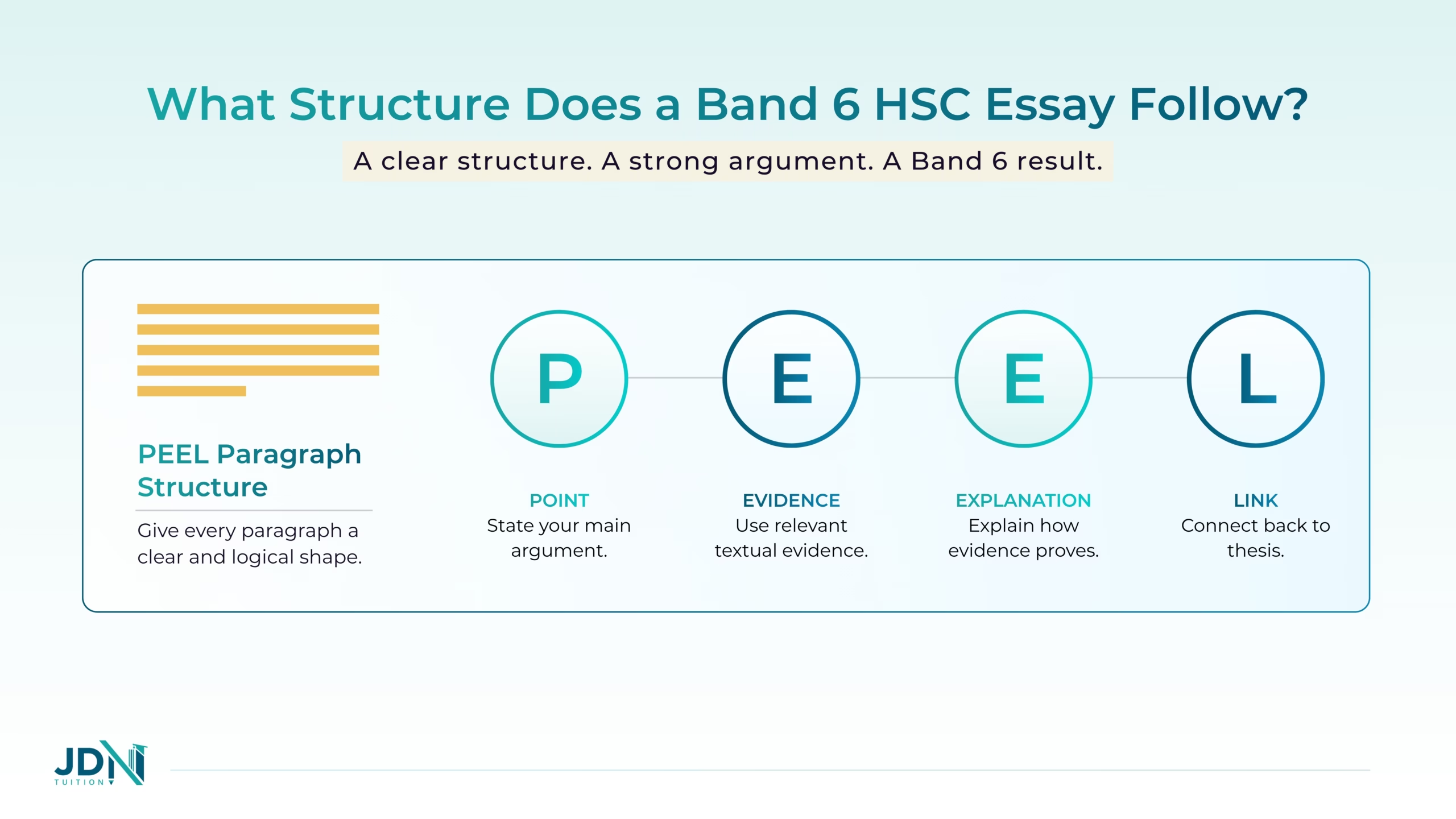
Body paragraphs are where the real work happens. A reliable framework like PEEL (Point, Evidence, Explanation and Link) gives each paragraph a consistent shape. The point introduces the argument. The evidence supports it. The explanation unpacks how the evidence proves the point. The link connects back to the thesis and often transitions into the next paragraph. When this structure is applied consistently, the essay builds momentum with every page.
Textual evidence must also be contextualised rather than dropped directly into a paragraph. Your child should explain why the technique matters and what effect it creates. For example, quoting a metaphor without unpacking its meaning does very little. Instead, explaining its purpose shows genuine analytical thinking.
Strengthen Communication Skills
Strong communication skills tie the whole essay together. Precise word choice, varied sentence structure, and a consistent academic tone all signal sophistication to the marker. As a result, Band 6 essays read as though every word has been chosen deliberately. However, that level of control comes with practice and a strong understanding of the text. Therefore, students who invest time in developing their written voice will notice a clear difference in their final result.
With these skills in place, the next step is putting them into practice under real exam conditions.
How Do Past Papers Help Your Child Write Better Essays?
Practising with HSC exams past papers gives your child real exam experience and builds genuine writing confidence.
Understand HSC Question Patterns
Past papers show students exactly how questions are phrased and what examiners expect from a strong response. By working through them regularly, your child removes the element of surprise on exam day. As a result, they begin to recognise question patterns and develop a clear sense of how to approach each task. That familiarity is one of the most powerful advantages a prepared student can have.
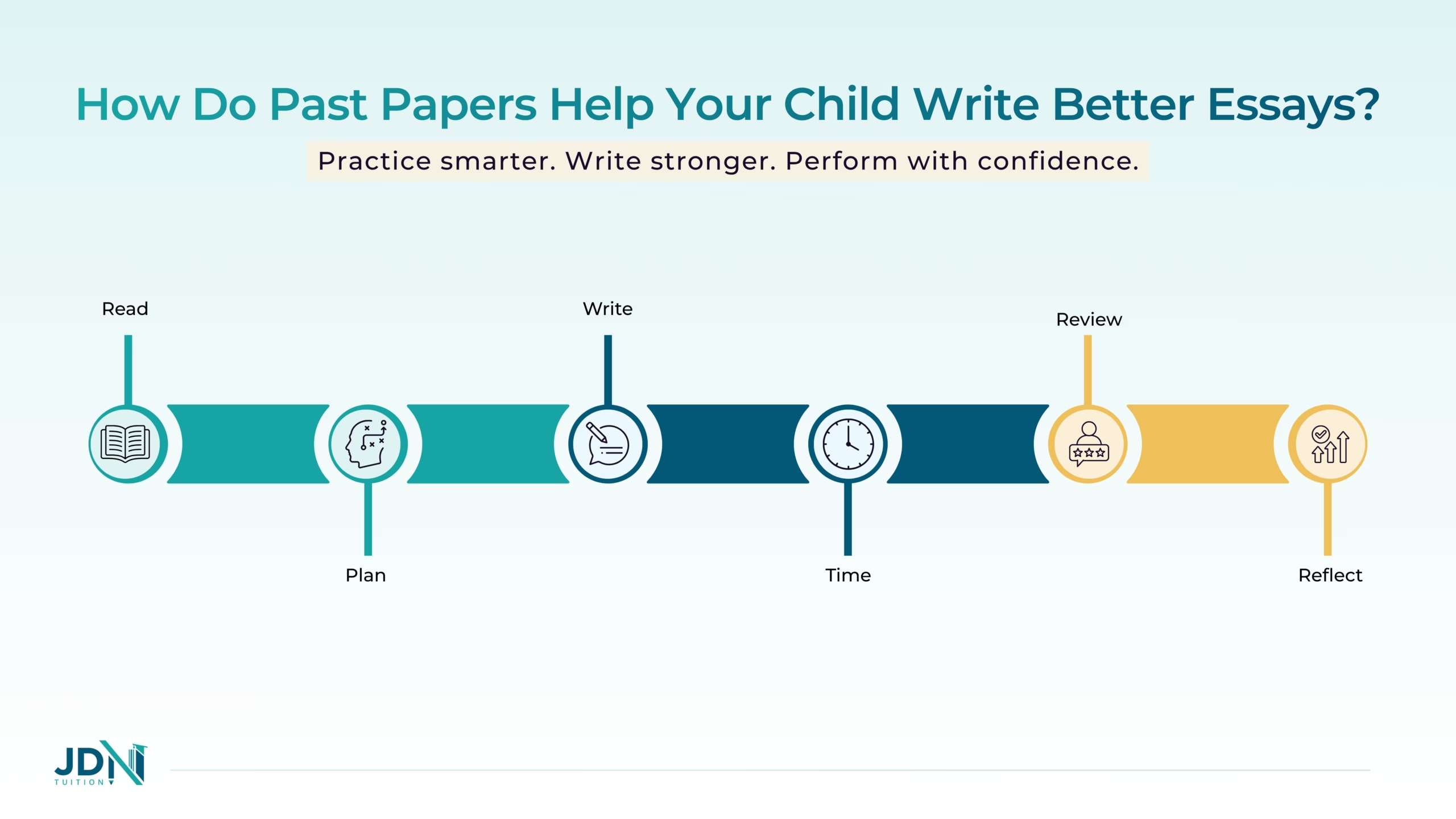
Past papers also highlight recurring themes and question structures. This means your child can prepare targeted responses for likely scenarios rather than approaching the exam cold.
Build Confidence With Timed Practice
Timed practice takes this a step further. In particular, writing a full essay under exam conditions forces your child to think fast and structure their argument clearly. Over time, the more often they do this, the more natural it becomes. Students who practise this way consistently therefore arrive at the exam with a significant head start.
Private tutoring and one-on-one tutoring are particularly effective for HSC English past paper practice. A tutor can set a paper, mark the response, and provide detailed feedback in the same session. Self-study rarely replicates that kind of focused, expert feedback.
This feedback directly shows your child where their argument weakens and where their evidence falls short. As a result, your child knows exactly how to improve their next draft. Over time, this process builds steady improvement and real confidence in the exam room.
Choose The Right HSC Tutoring Support
Finding the right HSC tutoring support in your local area can transform your child’s preparation. When parents search for tutors near me, the best results come from specialists with a proven HSC record. A reliable tutor near me will work through papers with your child and identify where improvement is needed.
If you want exactly that for your child, JDN Tuition offers personalised HSC tutoring as well as Primary School Tutoring for every stage of your child’s education. Check our Google Business Profile and Reviews to see how we have helped students across Sydney reach their goals.
How Can an English Tutor Help Your Child Reach Band 6?
A skilled English tutor gives your child personalised feedback and strategies that classroom teaching often cannot provide.

Get Personalised Essay Feedback
In a classroom of twenty or more students, individual feedback is limited. A teacher may return an essay with comments but rarely unpacks every weakness in detail. An English tutor HSC specialist can do exactly that. They read your child’s essay closely and identify the specific patterns holding their score back. From there, they build a targeted plan to address those weaknesses directly. That level of attention simply cannot happen in a full classroom environment.
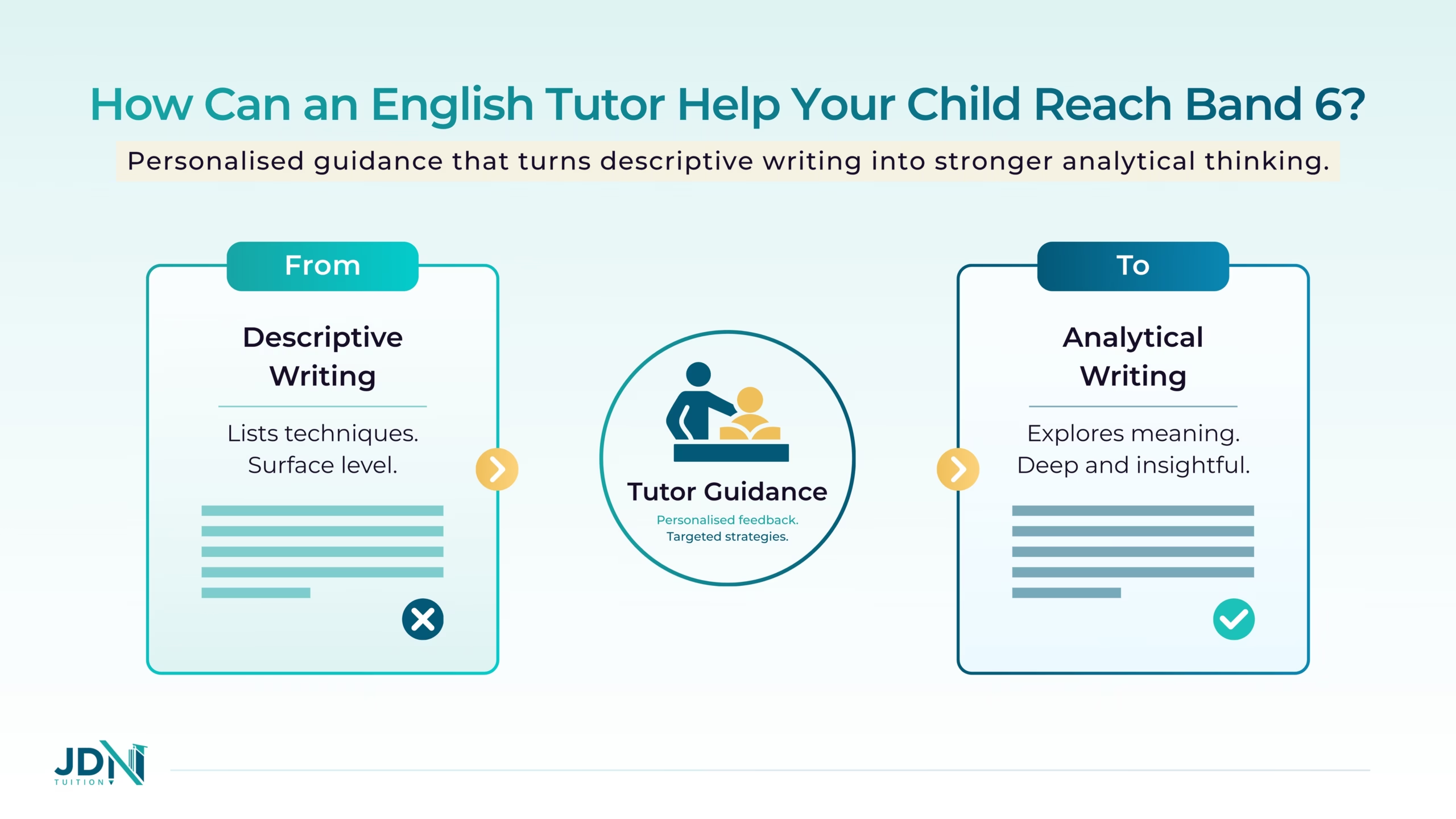
Regular essay marking is where tutoring makes the biggest difference. High school tutors who specialise in HSC English mark your child’s work against real band criteria. Therefore, they can clearly explain the gap between where your child currently sits and where Band 6 starts. As a result, your child gets detailed, criteria-based feedback that is rarely available in a standard classroom setting.
Develop Stronger Analytical Skills
shift in thinking becomes second nature. As a result, your child stops writing descriptively and starts writing analytically. Ultimately, that transition is often what separates students who plateau at Band 5 from those who consistently reach Band 6.
Choose The Right HSC Tutor
When choosing an HSC tutor, look for someone with experience marking HSC essays or a strong academic record in English. Consistent written feedback after every session is a strong indicator of a quality tutor. The best tutors do more than correct errors. They build your child’s confidence and help them find their own strong analytical voice. That confidence is just as important as technique when the exam arrives.
Conclusion: What is the Best Way to Achieve a Band 6 in HSC English?
Achieving Band 6 in HSC English is within your child’s reach with the right preparation and support.
The path there is clearer than many families realise. It begins with understanding what markers look for. From there, it builds through structured study, strong essay technique, and consistent practice under exam conditions. As a result, students who know the criteria, follow a solid structure, and review their work regularly give themselves a genuine advantage.
Every student learns and progresses differently. Some need help with essay structure. Others need guidance analysing texts more deeply or managing their time across subjects. What matters most is that your child receives support that matches their specific needs rather than a one-size-fits-all approach. Personalised support builds confidence and momentum that generic study routines rarely achieve on their own.
That is exactly what professional tutoring provides. With the right guidance, your child can develop the analytical voice and writing confidence that Band 6 demands. Ultimately, progress in HSC English comes through repetition, detailed feedback, and guidance from someone who understands the marking process.
If you are ready to support your child’s HSC English journey, we would love to hear from you. Contact us at JDN Tuition today by phone or email. Let us help your child reach Band 6.
Improve Results. Start Today.
 Book a FREE Call: (02) 7202 1930
 Email us: contact@jdntuition.com.au
How to write a band 6 HSC essay?
A Band 6 HSC essay needs a clear thesis, well-structured paragraphs, and deep analysis of the text. Therefore, students who practise regularly and understand the marking criteria give themselves the best chance of achieving this result.
How hard is it to get a band 6 in English?
Band 6 in English is challenging but achievable with consistent effort and a strong study approach. It demands genuine analytical thinking beyond content recall, which is why targeted practice and consistent feedback are essential.
How to get better at English?
Your child improves in English by writing regularly, reading widely, and seeking detailed feedback on their essays. In addition, consistent practice with essay structure, combined with expert guidance, builds the skills needed to deliver real results.