





How Can Parents Help Teens Use AI Study Tools Safely?
How Does AI Work | Generative Artificial Intelligence | AI Tools
It usually starts the same way. You glance over your child’s shoulder and see them using AI study tools instead of Google to find answers, explain a topic, or help with their schoolwork. “I’m just using AI,” they say, as if that explains everything. For many parents, it doesn’t.
AI study tools have become a fixture in how Australian students research, write and revise, and most parents have had little say in the matter. That’s not a reason to panic, but it is a reason to get informed.
Artificial intelligence and education are becoming increasingly intertwined, and AI in education in Australia is a growing national conversation involving schools, parents and policymakers alike. This guide breaks down what AI actually is, which tools your teen is likely using, how it can genuinely help their learning, and what risks to watch for. If you want more on how AI is impacting education, take a look at the JDN Tuition Blog Page.
What is AI and How Does it Actually Work?
Before looking at which tools your teen might be using, it helps to understand what AI actually is at a basic level.
So, how does AI work in plain terms? Think of it like a very well-read assistant that has processed billions of pages of text, conversations, books, and websites. It learns by spotting patterns in all of that information, and when you ask it a question, it predicts what a helpful response would look like based on those patterns.
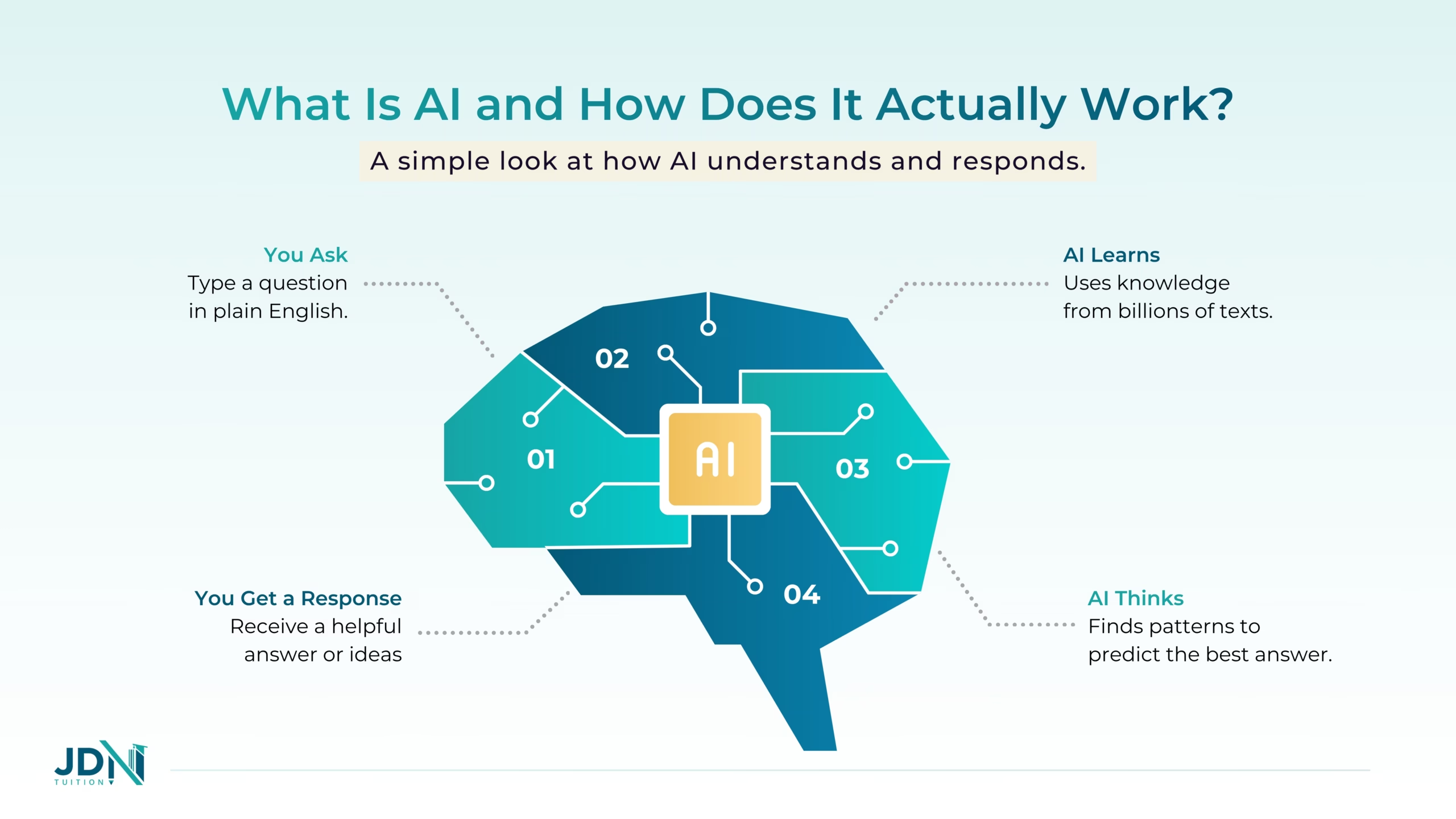
The type of AI your teen is most likely using falls under a category called generative artificial intelligence. This is AI that creates something new, such as a paragraph, a summary, or a set of practice questions. Underpinning all of this is something called natural language processing, which is what allows AI to understand a question written in plain English and respond in kind. It’s why your teen can type “explain photosynthesis like I’m in Year 8” and actually get a useful answer.
Beyond chatbots, AI technologies already exist in tools your family uses every day, from the autocomplete on your phone to the algorithm deciding what to watch next and spell-check. AI and machine learning in education refers specifically to how these technologies are being shaped to help students learn, track progress and receive personalised support.
How AI is Showing Up in Australian Classrooms?
AI in Education is already inside the platforms, apps and systems that many Australian students interact with as part of a normal school day.
The AI tools used in education vary widely. Some are quietly built into learning management systems, personalising quiz difficulty based on how a student has been performing. Others generate automated feedback on writing drafts, flag potential plagiarism, or help students practise a foreign language through simulated conversation. The range is broad and growing quickly.
Above all, however, the benefits of AI in education for students are genuine. A student struggling with a concept can ask an AI tool to explain it five different ways until something clicks, without the discomfort of asking a teacher repeatedly in front of the class. Practice is available at midnight before a big exam, not just during school hours. Feedback can arrive instantly rather than a week after submitting an assignment.
AI in tutoring is also on the rise. Many tutoring platforms now incorporate AI study tools and features to help students practise between sessions. This allows them to arrive at their next lesson with a clearer sense of where they’re stuck.
That said, human tutors still offer something AI simply cannot. They provide a real relationship, genuine encouragement and the ability to recognise when a student needs to slow down.
Additionally, a private tutor from JDN Tuition can aid your child in using AI to its maximum potential in the classroom. To see how we’ve helped countless Australian families do just that, check out our JDN Tuition Google Business Profile and plethora of reviews.
The AI Tools Your Teen Is Probably Already Using
Here’s the section you’re really here for: the tools themselves. The world of AI tools is vast and expanding quickly, but there’s a handful your teen has almost certainly heard of, used or been tempted to try.
The most recognisable name is ChatGPT. AI and ChatGPT have become so synonymous in everyday conversation that many students use the name to refer to any AI chatbot, regardless of which one they’re actually on. In reality, the space is broader than one product. AI tools like ChatGPT, Google Gemini, Microsoft Copilot, and Anthropic’s Claude are all capable of holding a conversation, answering questions, and helping with written work.
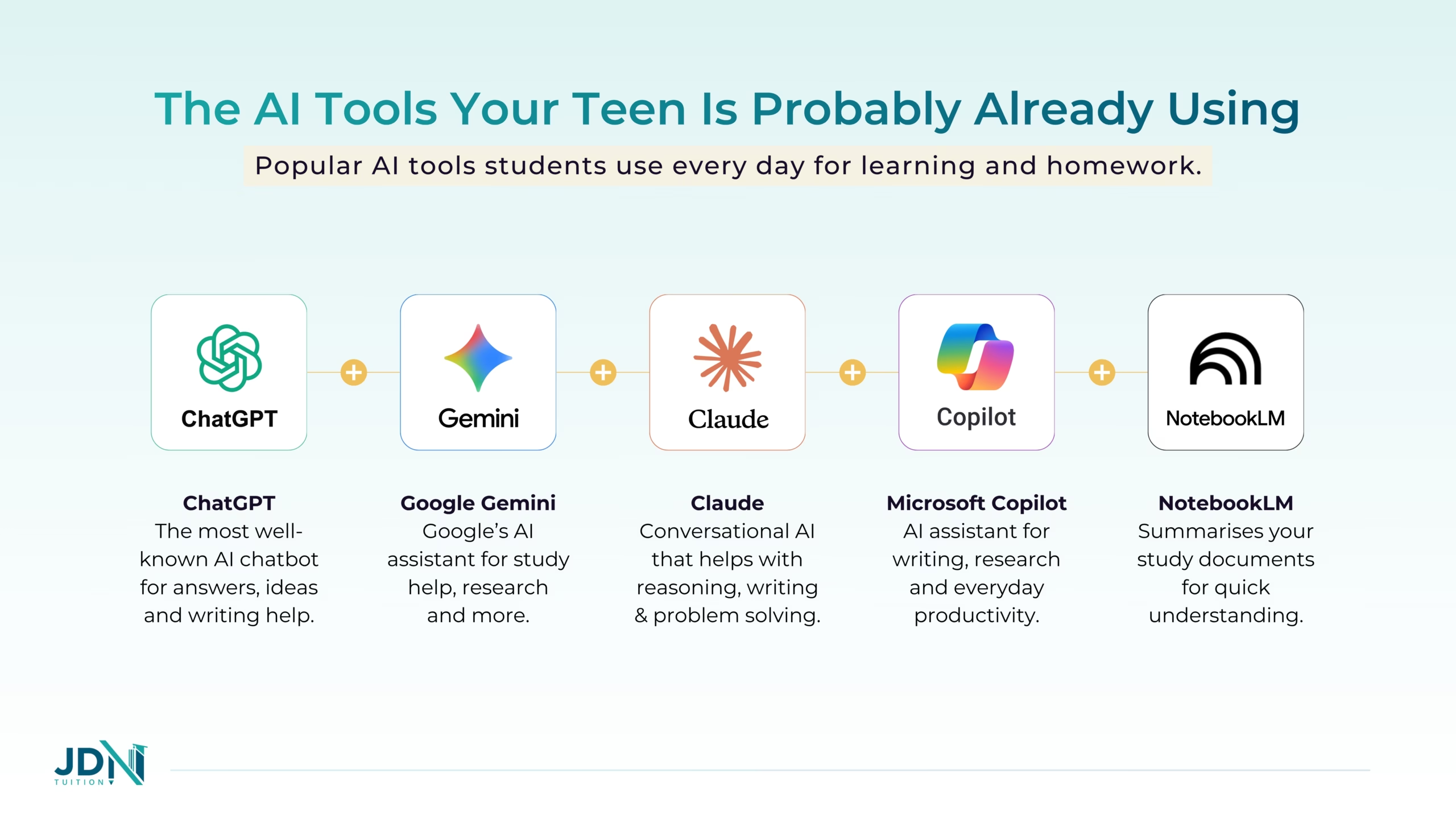
When it comes to the best AI tools for students, the answer depends on what they’re trying to do. For general questions and essay brainstorming, free AI tools like the standard tier of ChatGPT or Google Gemini are the most common entry points. The Google AI tools suite, which includes Gemini and NotebookLM, which can summarise uploaded study documents, has become popular among students who are already working within the Google ecosystem.
Smart AI tools built with learning in mind, like Khan Academy’s Khanmigo, guide students toward answers using questions rather than just handing solutions over. These AI learning tools are worth knowing about because they actively support the thinking process rather than bypassing it. For students studying a second language, language learning apps like Duolingo now use AI to personalise lessons and simulate realistic conversation practice.
AI Writing and Research Tools
Writing and research are where AI gets the most use for students. AI writing tools help students draft, structure and refine their work, which, used responsibly, can genuinely strengthen a student’s process. The concern arises when students use an AI paraphrasing tool like QuillBot to disguise content that isn’t their own, rewording AI-generated or plagiarised text to appear original. Schools are increasingly aware of this practice.
On the research side, ChatGPT deep research and similar deep research features allow AI to browse and synthesise information across multiple sources in minutes, producing detailed reports on almost any topic. The output can be impressive, but accuracy isn’t guaranteed, and critical evaluation is essential.
These tools also carry real implications for educators. One growing benefit of AI for teachers is its ability to identify patterns in student writing. These patterns can flag over-reliance on AI assistance and allow early, supportive intervention.
How Can AI Actually Help Your Child Study?
Used well, AI study tools can be a genuinely powerful study companion. The key distinction is between a student who uses AI to understand something better and one who uses it to avoid thinking altogether.
How to use AI to help study effectively comes down to treating AI study tools like a tutor rather than a ghostwriter. A student confused by a chapter on the French Revolution can ask AI to explain the causes in plain terms, then ask follow-up questions until the concept clicks. That’s AI for learning in its most valuable form.
Furthermore, the uses of AI that build genuine knowledge are broader than many parents expect. AI can generate practice questions on any topic and quiz students on weak areas. It can also provide instant feedback on writing drafts, even at 10 pm on a Sunday.
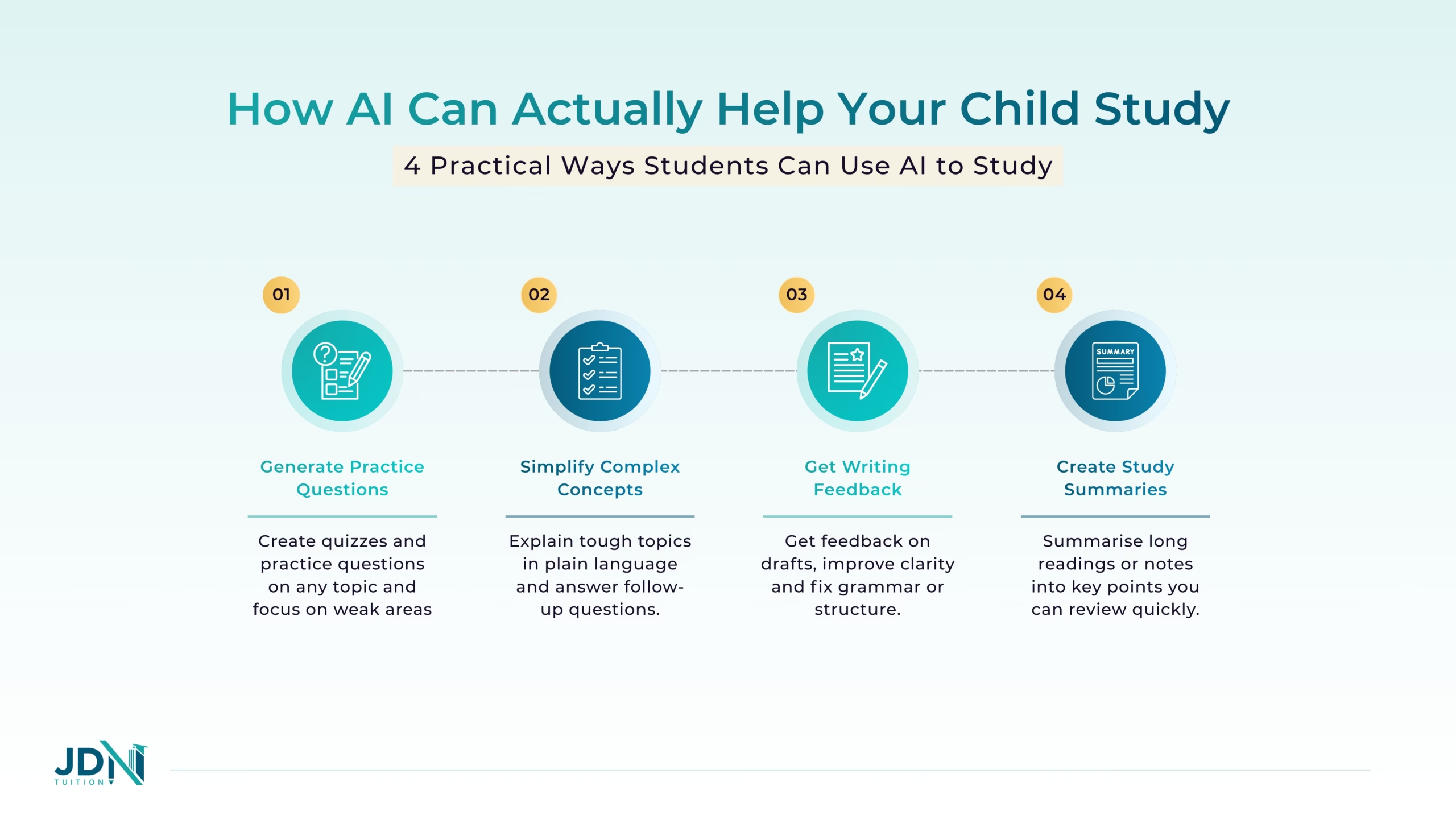
A particularly useful habit is learning how to take notes alongside AI rather than copying from it. Students should ask AI to break a topic down, then rewrite the key points in their own words.
Additionally, Platforms built around intelligent tutoring systems take this further. AI tutoring systems and smart tutoring systems guide students toward answers through questions and hints rather than providing solutions outright. These fit naturally within the world of online learning, supplementing classroom instruction rather than replacing it. Students who use them thoughtfully are also developing AI skills that universities and employers are beginning to look for.
What Are the Main Risks of AI for Students?
None of this means AI comes without complications. There are real risks worth understanding, and they deserve a clear-eyed look without tipping into alarm.
Academic Integrity and Critical Thinking
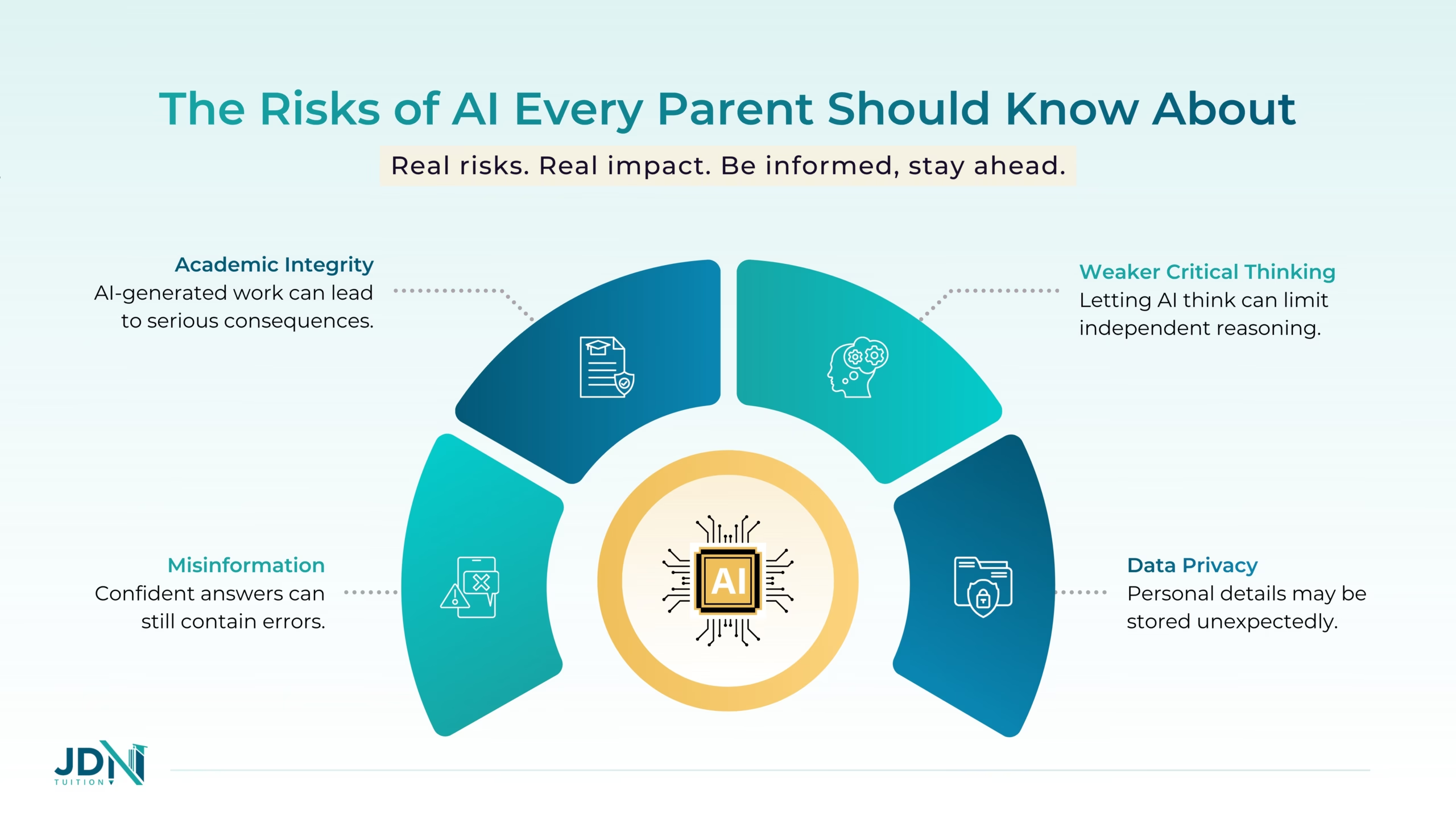
The most pressing concern in schools right now is academic integrity. Many institutions now use an AI detection tool to identify work generated or heavily assisted by AI and submitted as a student’s own. Schools are paying close attention, and the consequences for dishonesty can be significant.
Beyond getting caught, there’s a more important issue. When AI thinks, students miss the chance to develop critical thinking skills that no shortcut can replace. Writing an argument and arriving at a conclusion independently are processes that build the mind. Those gaps tend to surface in exams, where AI isn’t available.
Misinformation and Privacy Risks
Misinformation is another risk worth discussing with your teen when using AI study tools. AI responds with confidence regardless of accuracy, and students who don’t verify what they’re told may include errors in their work without realising it. This is especially common with historical facts, scientific claims, and statistics.
Privacy matters too. Students may share personal details, school names, or assignment content with AI platforms. They may not realise that this information can be stored or used in ways they haven’t anticipated.
Building Responsible AI Habits
Encouragingly, AI courses teaching responsible use are becoming more common in Australian schools. Building digital literacy, the ability to evaluate and engage with digital tools critically, is now widely recognised as a foundational skill for life in a connected world.
Don’t want to risk your child using AI the wrong way? JDN Tuition can help. With tutors dedicated to teaching your children amidst the ever-changing education landscape, AI is something we know well. Take a look at our primary school tutoring and high school tutoring options to see how we can assist your child.
How to Set Boundaries to Keep Your Child Safe Online?
Internet safety for students in the age of AI starts with basic ground rules. Most major AI platforms have minimum age requirements of 13 or above. It’s worth having a direct conversation about online safety. Teach your teen not to share real names, school details, or personal information in AI conversations.
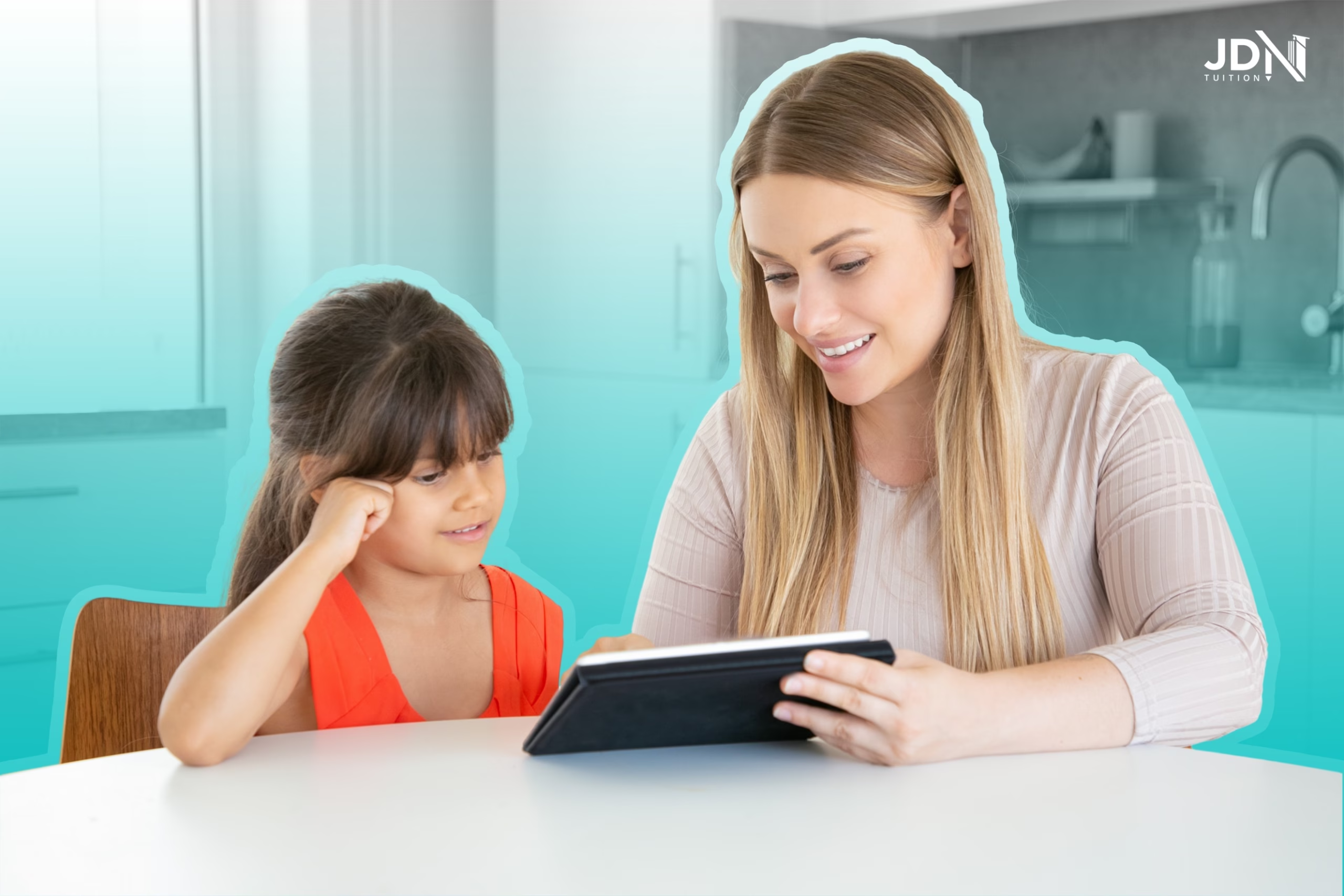
Parental control applications offer a more structured approach. Screen time tools and DNS-level filters can flag unfamiliar platforms or limit access during certain hours. That said, teens who feel monitored tend to find workarounds, while those who feel trusted are far more likely to make sensible choices.
A more sustainable solution is setting household guidelines together as a family. Decide which tools your teen can use and how they should use them. Also agree on clear expectations around honesty. When teens have a say in setting those boundaries, they’re more likely to respect them.
AI parent communication tools are also worth looking into. Some tutoring and school platforms now offer parent-facing dashboards that give visibility into how a student is engaging with AI features, without the need to look over their shoulder.
Conclusion: AI Study Tools for Your Teen
AI study tools aren’t going anywhere, and neither is your teen’s access to it. The goal should never be to keep your student away from these tools, but to raise them to use them thoughtfully.
Looking for expert support to help your child build real AI study skills? JDN Tuition offers personalised tutoring that sets students up for long-term success. Ready to get started? Contact us today by phone or by email to find the right fit for your child.
Improve Results. Start Today.
 Book a FREE Call: (02) 7202 1930
 Email us: contact@jdntuition.com.au
What are some AI tools for studying?
The most widely used include ChatGPT, Google Gemini and Khan Academy's Khanmigo. These tools can explain concepts, generate practice questions and provide writing feedback. More specialised tools like Quizlet's AI features and NotebookLM are also popular among students for summarising and reviewing study material.
How can AI be used as a study tool?
AI works best as a study companion when students use it to clarify confusing concepts. They can also use it to practise with questions or get early feedback on a draft before submitting it. The key is to use AI to support their thinking rather than replace it entirely.
What is the biggest danger of AI in education?
The greatest risk is over-reliance. Students may use AI to skip the thinking process altogether. This can prevent them from developing critical skills that exams and future workplaces will demand. Academic dishonesty is a close second. Schools increasingly use detection tools to identify AI-generated work submitted as a student's own.