





Top Literacy Skills for Year 3–6 Students: A Parent’s Guide
Reading Skills | Writing Skills | Phonological Awareness
Discover what literacy skills are vital for Year 3 to 6 students and how tutoring can help your child get ahead.
Imagine your child has finally cracked the phonics code, only to find themselves standing at the edge of a much deeper ocean. In the early years of school, the focus remains firmly on decoding individual words, but as students enter Year 3, the goalposts shift dramatically. This is a critical period where success in the classroom depends on more than just language skills. Now, the ability to extract meaning from dense textbooks and complex instructions becomes the primary vehicle for learning in every single subject.
In this article, we go over how students can take the next step from graphic novels to full-fledged chapter books and make the most of their literacy skills. Want to know more about how to boost your child’s child development? Check out our JDN Tuition Blog Page for more.
The Pillars of Reading for Primary School Students
Reading in the primary school years is a sophisticated process that goes far beyond simply sounding out text on a page. In the early stages of education, the primary focus rests on decoding and memorising basic vocabulary to build a foundation. However, as students progress into Year 3 and beyond, the cognitive load shifts significantly. When parents ask about literacy skills at this level, the answer involves three key pillars. These are fluency, vocabulary, and reading comprehension.
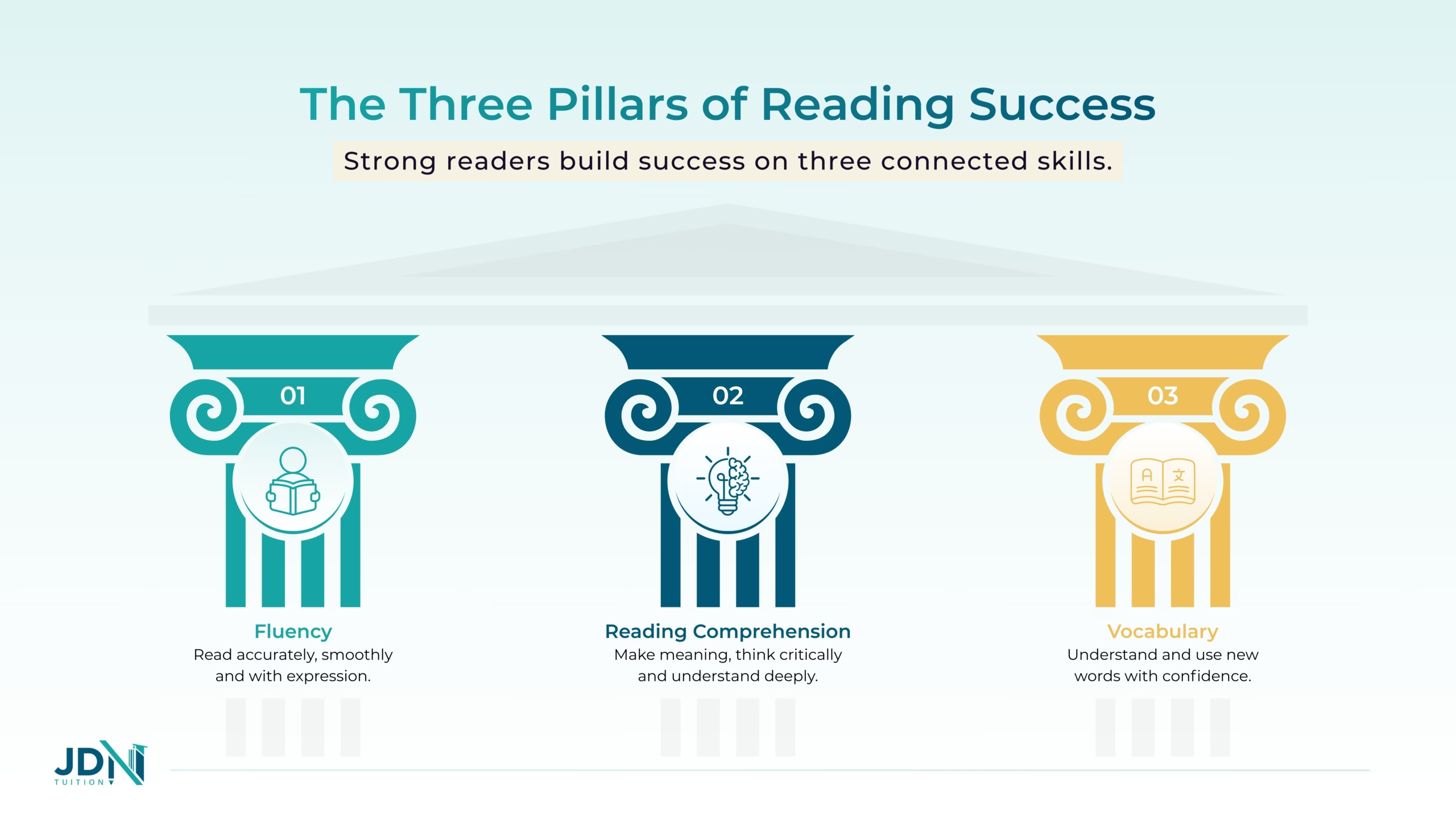
1. Reading Fluency
Fluency acts as the essential bridge between decoding words and understanding their intent. When a student reads with appropriate speed, accuracy, and expression, mental energy is freed up to focus on the meaning of the text rather than the mechanics of the English language. To support this growth, parents and educators should introduce advanced reading strategies such as re-reading difficult passages, learning to understand story structure and foreshadowing, and summarising key points. These techniques prevent the common issue where a child reads a page perfectly out loud but cannot recall the events moments later. Without fluency, the rhythm of the text is lost, making it nearly impossible to grasp the intended tone or mood of a piece.
While younger students spend years mastering sight words to improve their reading speed, Year 3 to 6 students must apply this to much longer and more complex sentences. If a child still struggles with basic word recognition, they may find it harder to keep up with the later primary school curriculum. The goal is fluent reading. This allows your child to visualise the story and absorb new information with ease.
2. Vocabulary
Helping a child grow their internal word bank is one of the most important things a parent can do. For example, when you build your vocabulary skills, you can start to grasp trickier concepts. The same applies to your child. As they grow, they’ll begin encountering more types of vocabulary even in subjects that are not English, such as Science and History. Soon enough, these academic terms begin turning up in school books and even begin infiltrating everyday conversations. Vocabulary is something that needs to grow as your child grows. This growth is a big part of why spotting English literary techniques like metaphors and personification is so important, as their rarity steadily decreases as your child ages. Because of this, if a student lacks this vocabulary, they risk falling behind.
Often, children can use literacy worksheets to get used to these new words, but nothing beats seeing them in action during a good story. No matter if that’s in their own handcrafted recount of their weekend or directly in a book, a key part of vocabulary is learning the ‘vibe,’ also known as the connotation of the word, to learn how it works within the narrative structure. This contextual learning is what allows them to eventually use those same words in their own writing, marking the transition from a passive reader to a skilled communicator and the path towards learning how to improve vocabulary.
3. Reading Comprehension
True proficiency involves mastering various types of literacy skills ranging from simple literal recall to complex inferential thinking. Reading comprehension skills are the ability to state facts from the text and create inferences, known as ‘reading between the lines’, to discover what the author is implying. As students prepare for high school, analysing and critiquing texts becomes increasingly important. These skills also support success in senior exams, such as the HSC or VCE.
A firm grasp of a story’s structure helps students understand the arc of a story, from the initial complication to the final resolution. By identifying these patterns, students can better predict outcomes and understand character motivations. This analytical approach is what separates a good reader from an exceptional one.
If your child finds the transition to complex reading difficult, professional English tutoring can make the difference and stop them from falling behind. JDN Tuition does just that for hundreds of students across Australia, helping them build the confidence needed for academic success. Check out our Google Business Profile and reviews to see how we can help your child in their literacy journey.
From Sentences to Structures: How to Make Your Child Write With Purpose
Writing is a powerful way for students to express their thoughts. However, moving from a single sentence to a cohesive paragraph can often be a challenge. In the early years, children focus on the basics like spelling and simple sentence patterns.
However, by the time your child reaches Year 5 or 6, the expectation is much higher. Beyond kindergarten sight words, students must learn to structure arguments and create vivid worlds. This is one of the major developmental milestones where a child learns that every sentence needs a purpose, whether it is to persuade a reader or to provide information.
Helping Your Child Write With Purpose
To write with real intention, a student must understand what makes each type of writing unique. Whether a child is working on a story for a class project or getting ready for the formal essay writing that comes later in school, the starting point is always the same.
Good writing needs to flow in a way that makes sense. Students begin to use words like ‘because’ or ‘although’ to link their ideas together. This helps them create more engaging sentences that hold a reader’s attention. They can then build from brainstorming to full paragraphs and, eventually, complete stories.
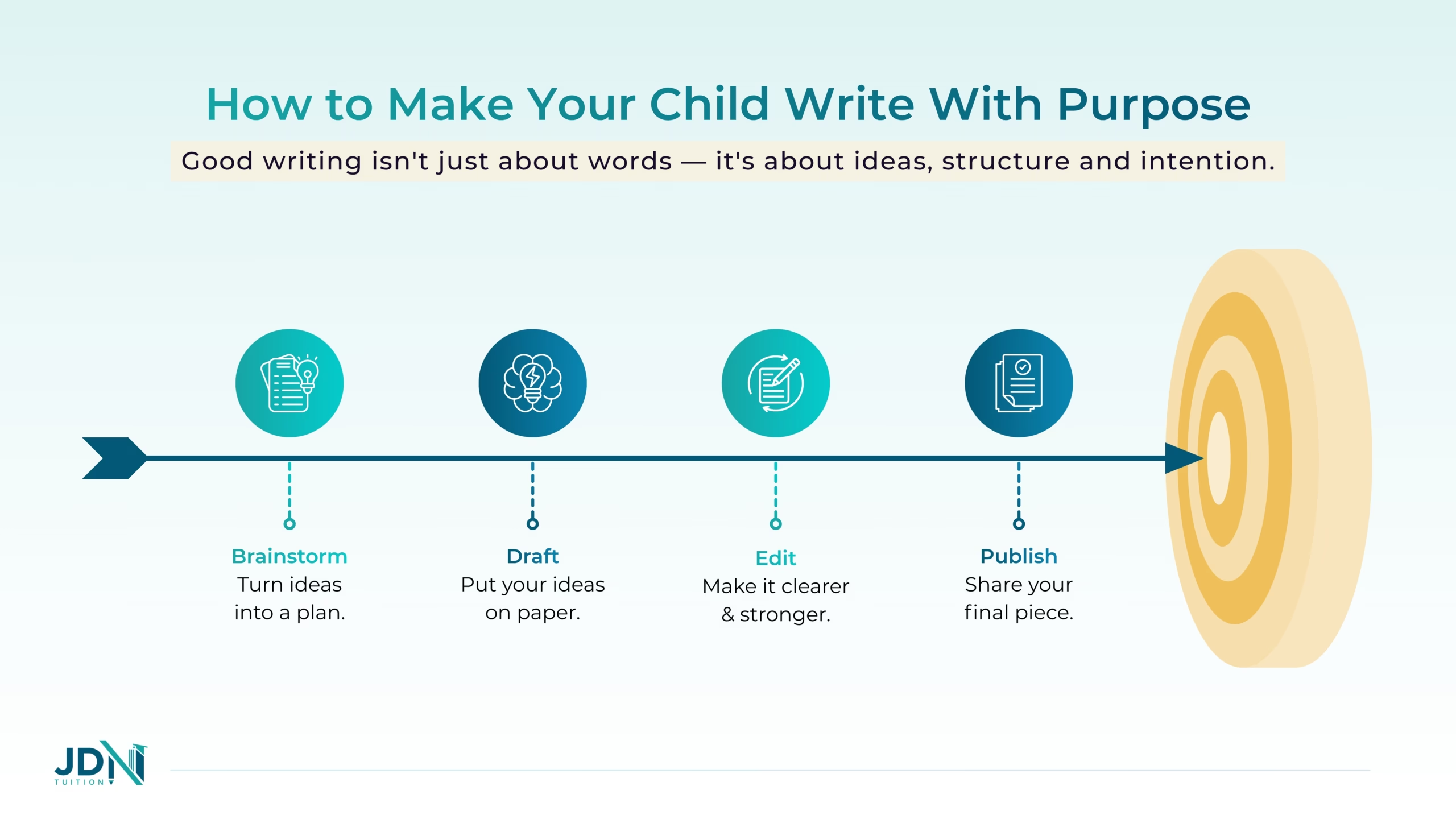
Visual stories can also be a great place to start. Looking at how characters talk and move in graphic novels helps children see how to build excitement or show a character’s feelings without needing a huge amount of text. Once they have a grasp of the story arc, they can begin to experiment with English literary techniques and beyond.
The final part of the journey is learning to edit. This helps a child understand that the first attempt is just a draft. Looking back over their work to make it better is where the most progress happens, after all.
The Language Conventions of Spelling, Grammar and Punctuation
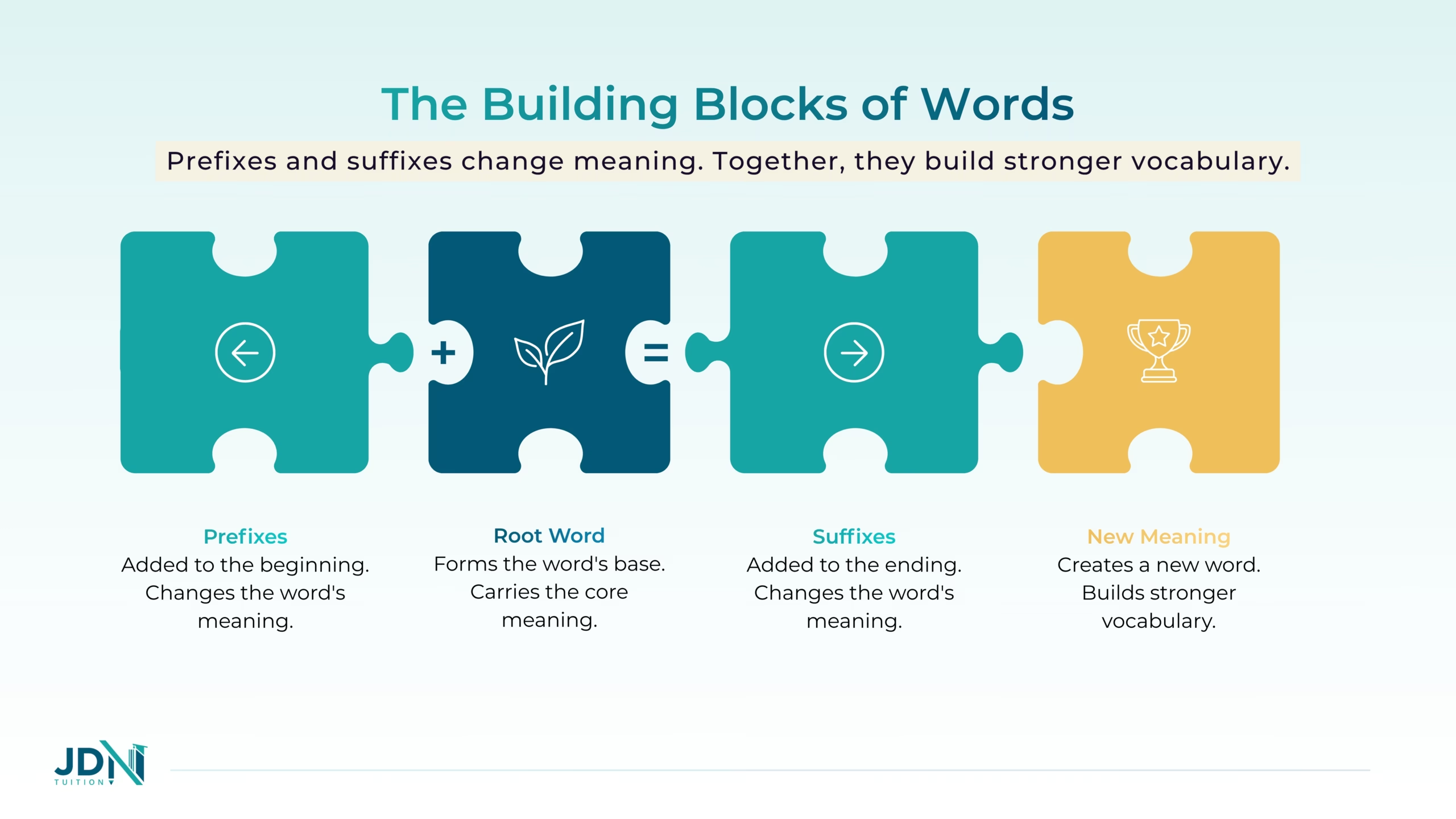
As students progress through the middle years of primary school, the focus of spelling shifts from simple phonics. This involves understanding how prefixes and suffixes change the meaning of a base word. Mastering these patterns allows a child to move beyond basic decoding skills and start to tackle the complex terminology found in high school texts.
Grammar and punctuation are often viewed as rigid rules, but they are actually the tools that allow a writer to be understood. In Years 3 to 6, children begin using commas and apostrophes to add detail and clarity to their work. This functional approach to grammar ensures that their ideas remain clear as their writing becomes more sophisticated. With the rise of AI in education, it is more important than ever for students to understand these foundations personally so they can evaluate and edit their own work effectively.
While school provides the basics, many parents find that a specialised online English language tutor can offer the targeted feedback needed to master these conventions. Through expert primary school tutoring at JDN Tuition, children build the fundamental literacy skills needed to master language conventions and ensure they are ready for the rigours of high school tutoring and beyond.
Navigating NAPLAN and School Assessments
In the Australian school system, NAPLAN marks a significant milestone in Year 3 and Year 5. These tests provide a snapshot of a child’s progress in reading, writing, and language conventions. However, they should be viewed as a guide rather than a final verdict on academic ability.
One of the most valuable skills a student can develop during assessment periods is self-monitoring. This involves a child checking their own work for meaning and accuracy as they go, rather than waiting until the end to find mistakes. As the curriculum increasingly incorporates technology, some students may even practice their drafting using digital writing pads or other interactive tools to improve their speed and legibility.
Ultimately, the best preparation for school assessments happens through consistent habits at home. Regular reading and casual writing practice build the stamina required for longer tasks. By focusing on learning rather than raw scores, parents can help children develop a positive relationship with education. This mindset can support them well into high school.
Practical Strategies For Parents to Make Literacy Stick
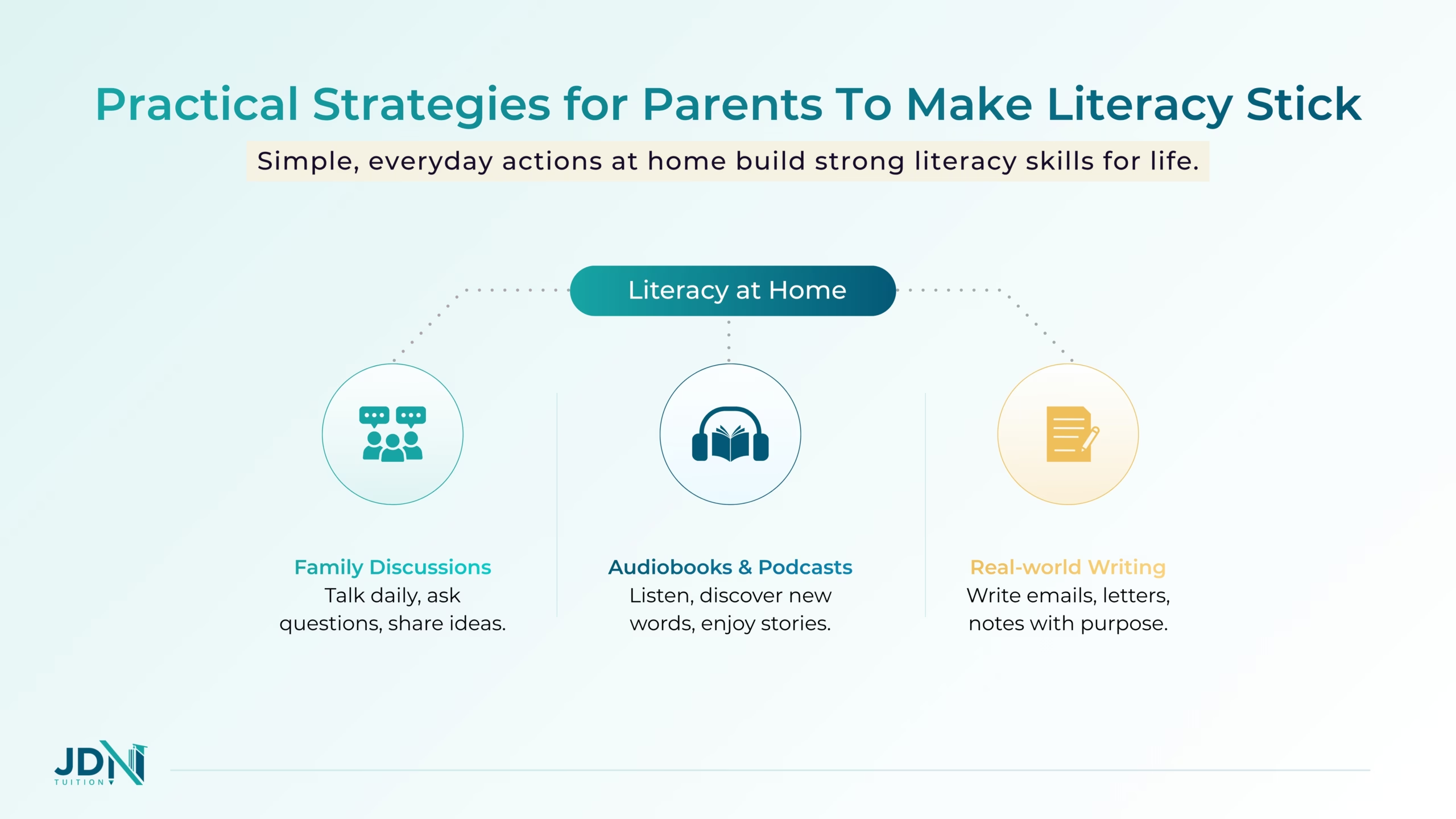
Small, consistent activities at home can make a big difference. They help children build confidence and enjoy literacy beyond the classroom.
Supporting a child’s literacy journey does not have to feel like an extension of the school day. In fact, the most effective learning often happens through casual, everyday interactions. When a child sees reading and writing as useful life skills, they are more likely to engage with them deeply.
Encourage a Growth Mindset
Encouraging a growth mindset at home is essential. When a child encounters a difficult word or complex sentence, treat it as a learning opportunity. This approach helps build resilience. This approach is especially helpful for tasks that place a high load on working memory. These may include multi-step writing projects or dense reading passages. By breaking these tasks into smaller, manageable chunks, parents can help their children maintain focus and gain confidence.
Make Literacy Part of Everyday Life
Using technology can also provide a fresh perspective. Audiobooks and podcasts are fantastic tools for exposing children to sophisticated vocabulary. They also introduce complex sentence structures while children are on the go. Parents can also involve children in real-world writing tasks. For example, they can draft emails or write to a relative or pen pal. These activities show children the practical value of their literacy skills.
Conclusion: Why Literacy Skills are Important in Primary School?
Developing strong literacy skills in primary school is an academic requirement. It is the foundation for future success and a critical tool for navigating the world. Strengthening these skills today can help ensure a smoother transition into high school.
Don’t let your child fall behind in English and literacy. JDN Tuition provides tailored one-on-one private tutoring support to help every student reach their full potential. To learn more about how to start your child’s educational journey, please contact us today or reach out to us by email or call.
Improve Results. Start Today.
 Book a FREE Call: (02) 7202 1930
 Email us: contact@jdntuition.com.au
What are the three essential reading skills?
The three core components are fluency, vocabulary and comprehension. These foundations allow a student to decode words effectively and understand the deeper meaning of a text.
What reading skills should Year 6 students have?
A Year 6 student should be capable of interpreting complex themes and evaluating the perspective of an author. They also need to demonstrate a high level of independence when reading longer, information-dense texts.
How do you develop literacy skills?
Skills improve through a mix of regular reading, explicit instruction in grammar, and writing for varied audiences. Providing a range of materials like novels and informative articles helps keep the learning process engaging.